Are You A Block Detective

I love to figure out how a block was made. I saw this quilt online and thought “I bet I can make this quilt without a pattern”.
02 Idea Quilt

So I drew the block on graph paper so I could identify each unit. With the tools from Studio 180 Design you can make just about any block in any size, easily. For this block I would use the Studio 180 Design Wing Clipper I & the Tucker trimmer I.

Draft

To make a 20” finished block I determined that each square on the graph paper would represent a 2” square. I chose a black print for the center star, white background and red for the surrounding units.

Black Center Star:
The center square would measure 4” finished so I cut one 4 ½” square.  I would need 4 flying geese units.

All I had to do was check the chart in the Wing Clipper tool instructions. It lists finished sizes for flying geese units and then tells you what size to cut your fabric to achieve the results you want. I needed a finished size of 2” by 4” so I cut one 5 ½” square and four 3” squares. From this I would get 4 flying geese.

Using my Magic Wand trace a line on either side of all the 3” squares.

Magic Wand

Place two 3” squares diagonally on the white 5 ½” square as shown.

OLYMPUS DIGITAL CAMERA

Sew on the lines, cut apart and press toward the small triangles. (See Wing Clipper instructions for complete info)
OLYMPUS DIGITAL CAMERA

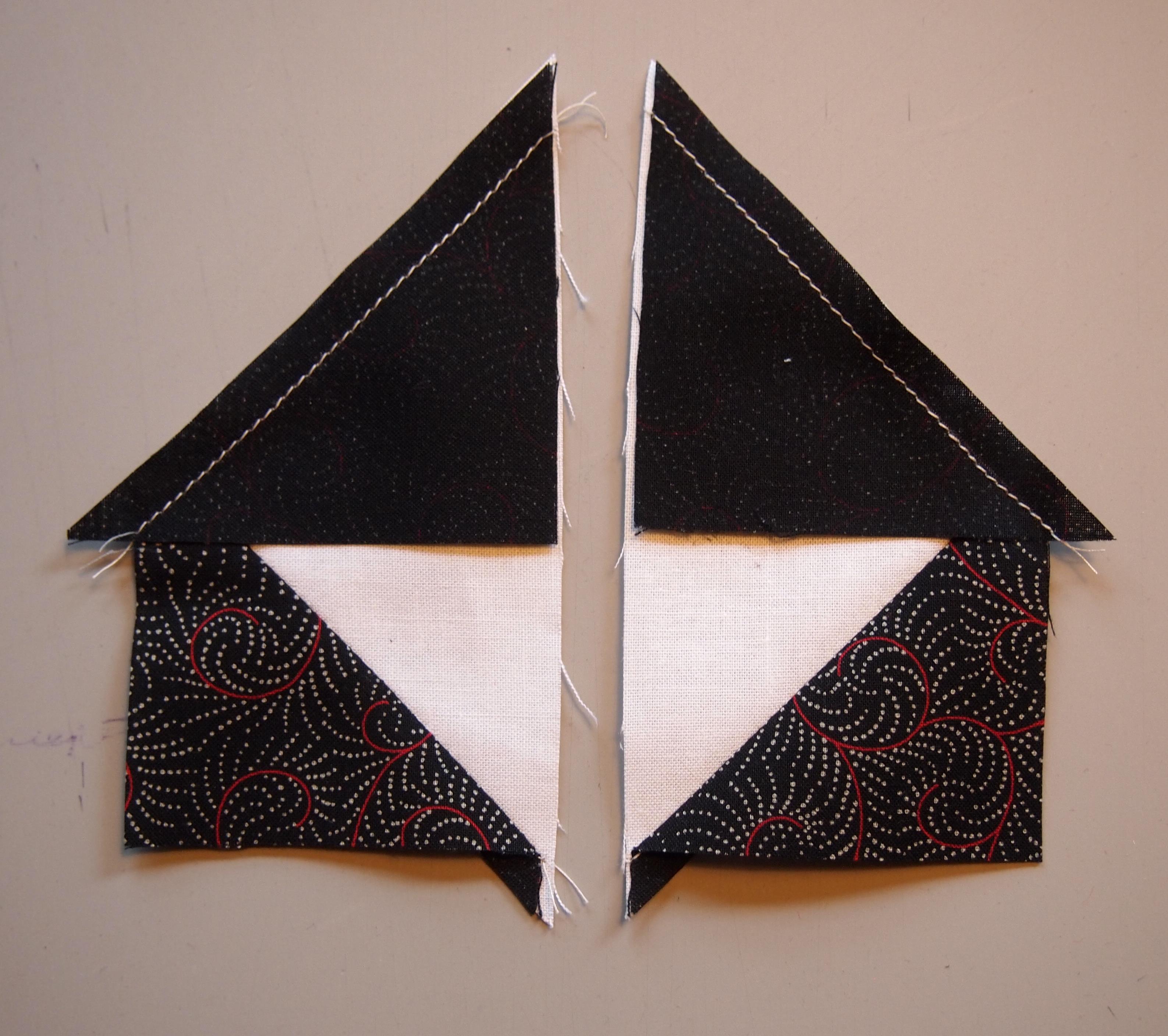
Place another square on the unit, sew on the lines.
OLYMPUS DIGITAL CAMERA

Cut apart. Press toward the small triangle.

OLYMPUS DIGITAL CAMERA

OLYMPUS DIGITAL CAMERA
Square up using your Wing Clipper.

Red Fabric:
I needed eight 2” by 4” finished flying geese units, so I cut two 5 ½” (white) squares and eight 3” (red) squares to produce 8 flying geese as before.

Cut four 2” by 4” red rectangles.

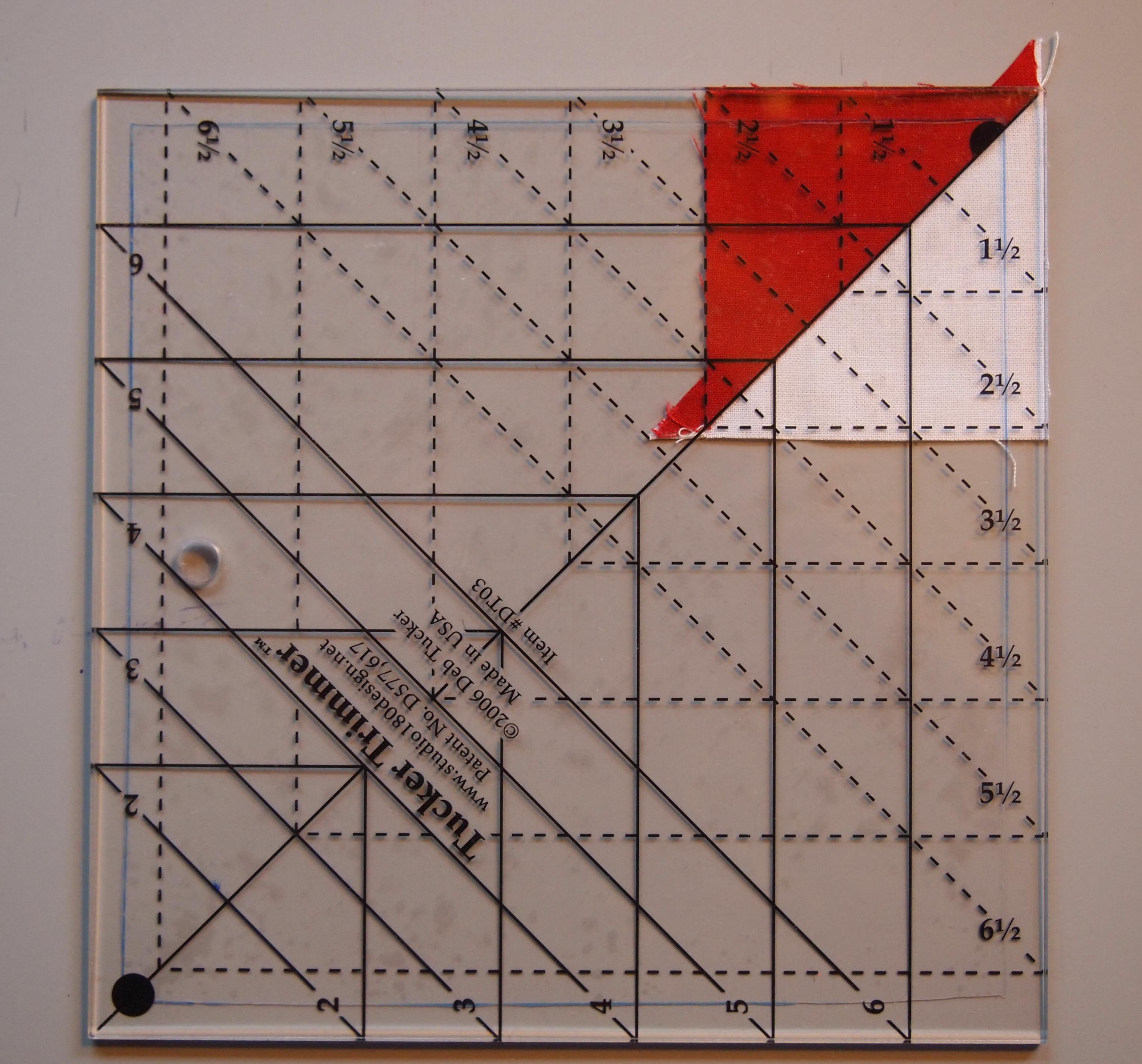
I needed 20 red and white Half Square Triangles (HST).  Once again I consulted the chart on my Tucker Trimmer instructions.  To end up with twenty 2 ½” unfinished HST, I cut 10 red 3″ squares and 10 white 3” squares.

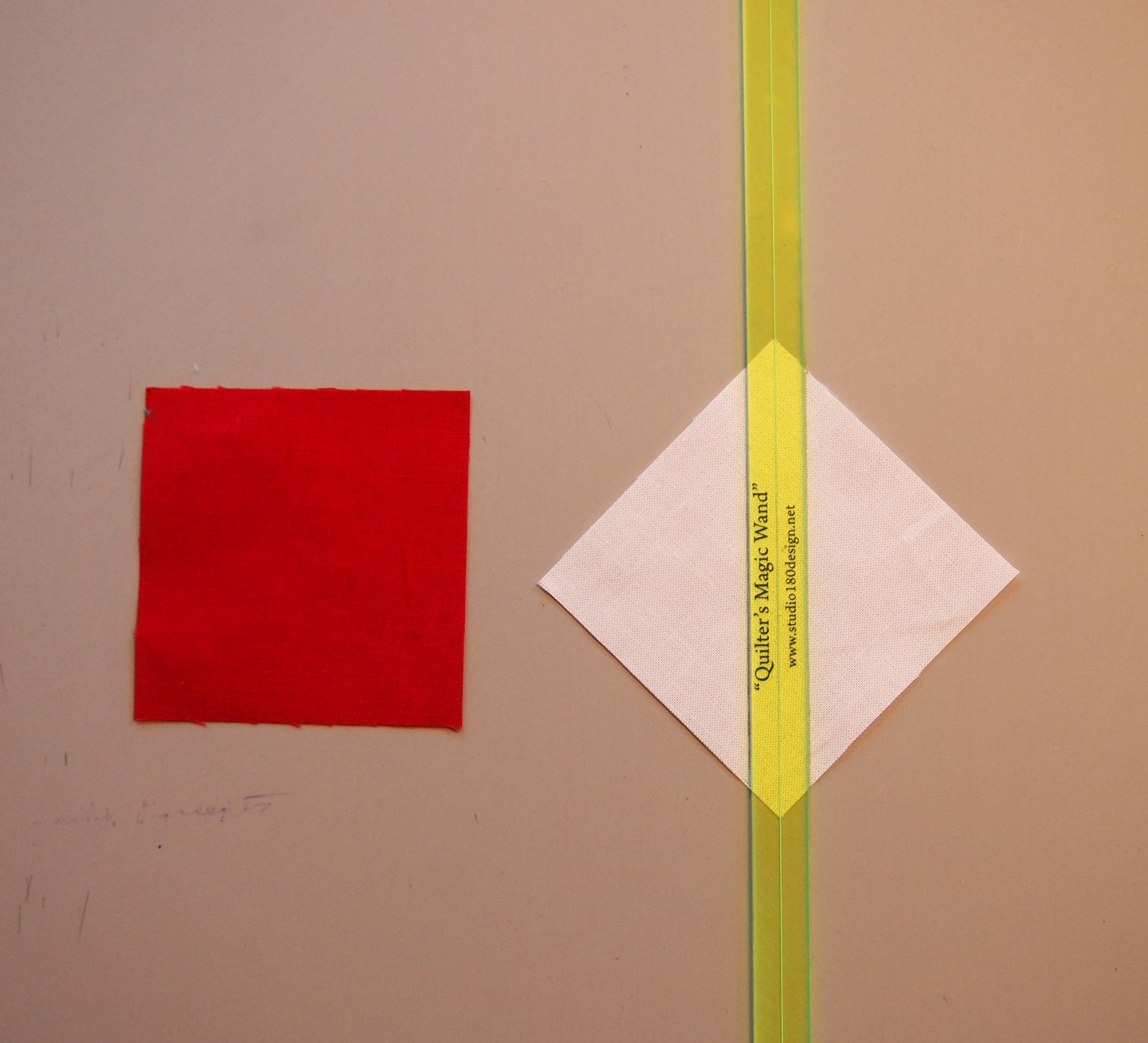
Using my Magic Wand I traced a line on either side of the white squares.
OLYMPUS DIGITAL CAMERA

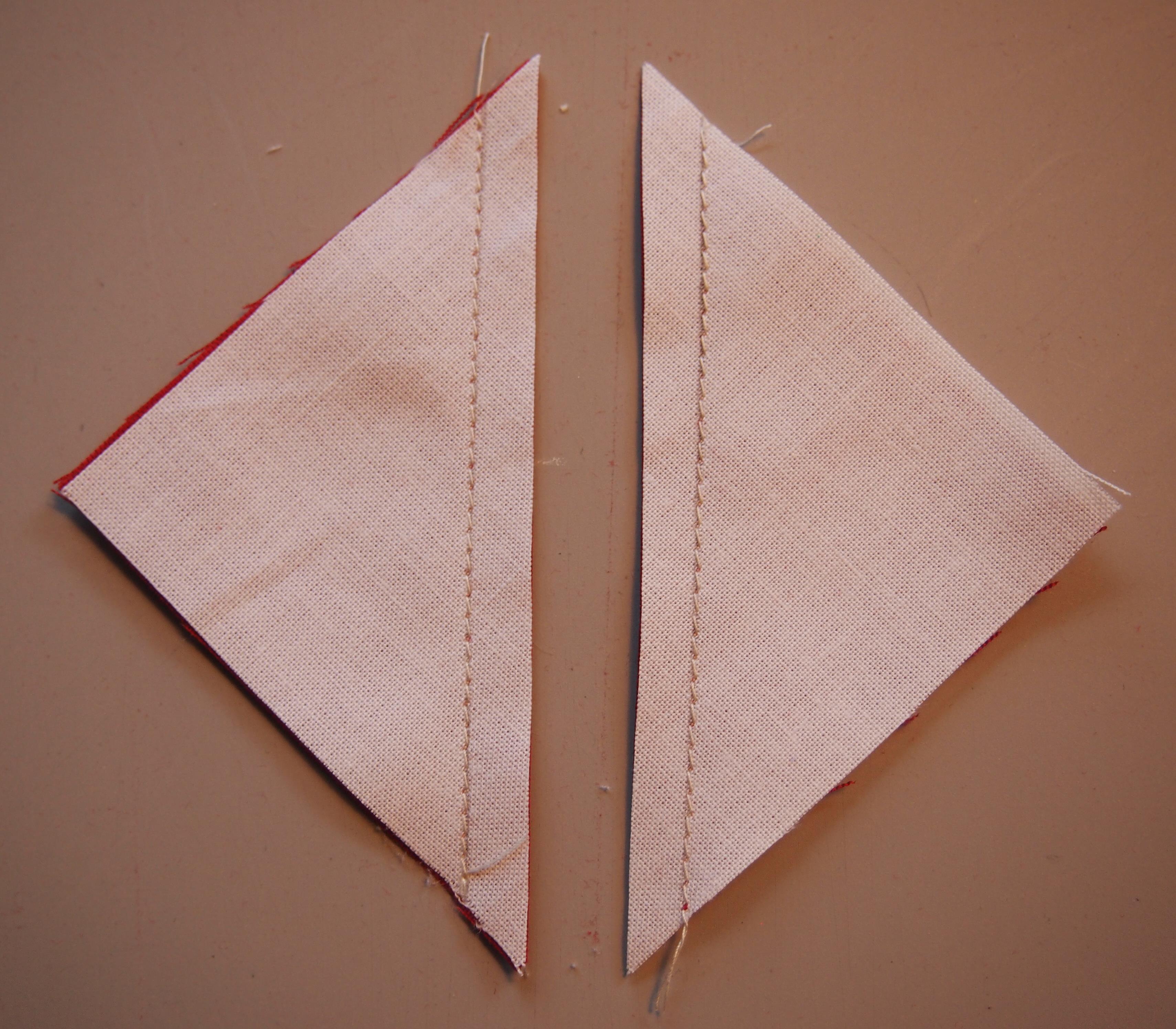
Place one red and white square together and sew on each line.

OLYMPUS DIGITAL CAMERA

Trim in half diagonally press toward the dark.
OLYMPUS DIGITAL CAMERA

Square up using your Tucker Trimmer.

OLYMPUS DIGITAL CAMERA

White Fabric:

Cut four 6 ½” squares for the corners and

Cut eight 2 ½” squares for either side of the red flying geese.

OLYMPUS DIGITAL CAMERA

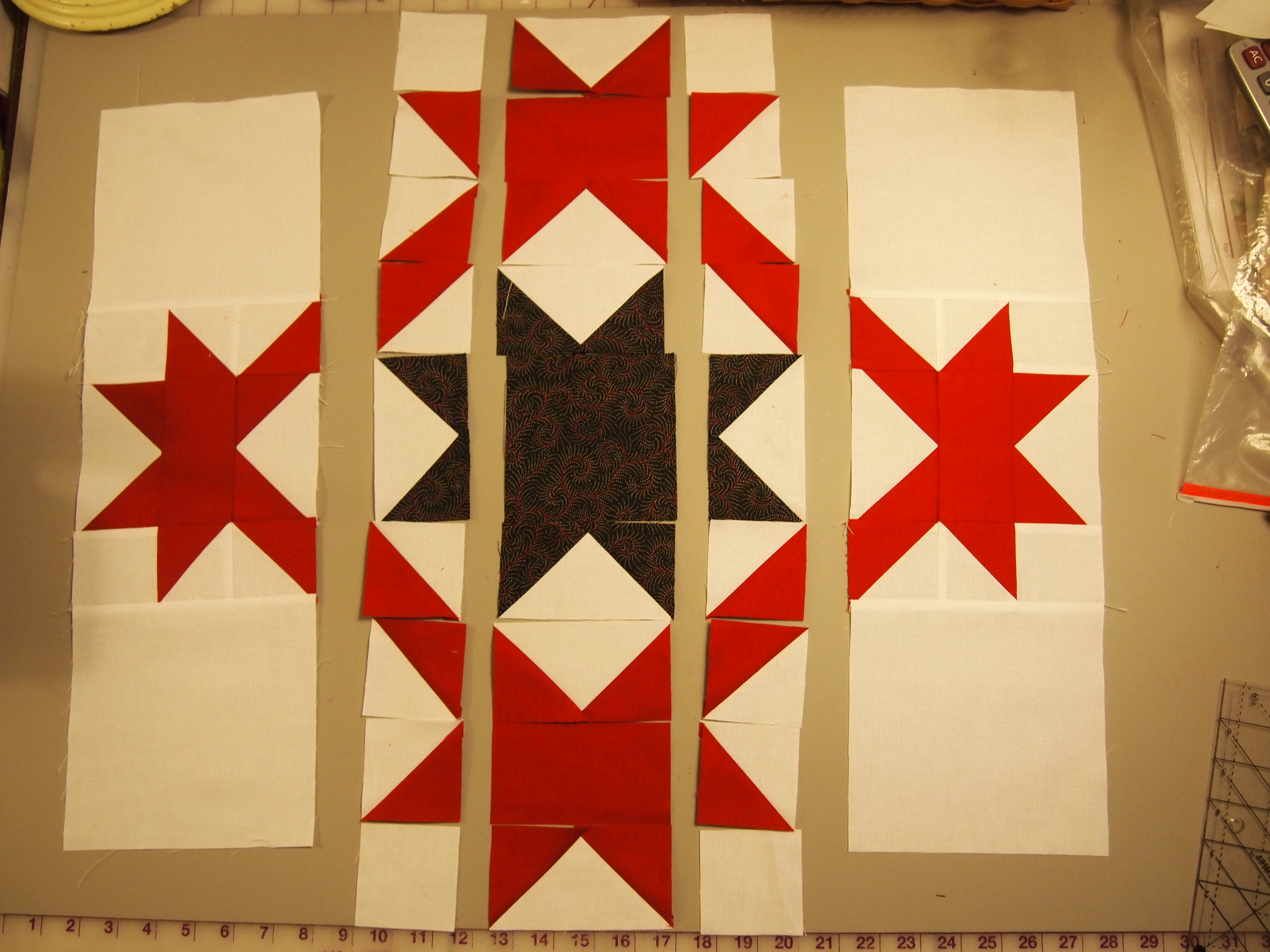
Layout your completed units

OLYMPUS DIGITAL CAMERA

I started on the right side and sewed the above units into rows.

OLYMPUS DIGITAL CAMERA

Join the rows into a block.

OLYMPUS DIGITAL CAMERA

Add the 6 1/2″ corner blocks. Repeat on the left side.

OLYMPUS DIGITAL CAMERA

As shown above, I divided the block into 4 sections. Above I sewed the right and then the left sections together.    Next I joined the units right of the center and left of the center into rows and then joined the center units together.  Finally I joined the four sections together for the finished block.  You can decide how big to make your own blocks and how many blocks to make.

OLYMPUS DIGITAL CAMERA

Quilting is a Pressing Matter

Constellation
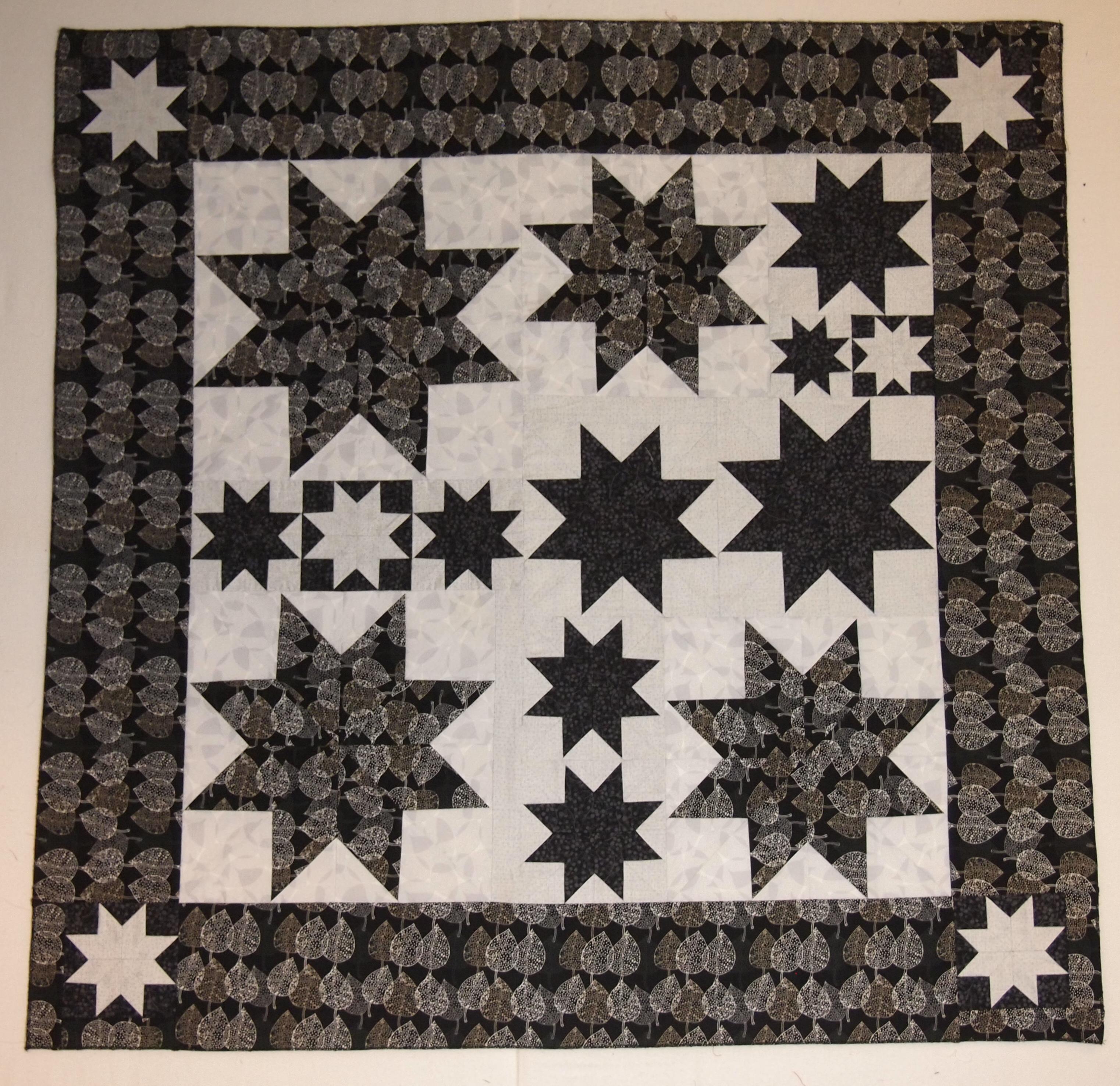
I am getting ready for a Rapid Fire Lemoyne star class using the pattern that comes with the ruler. It is called “Constellation”, you end up making every size Lemoyne star from 3″ to 12″.
OLYMPUS DIGITAL CAMERA
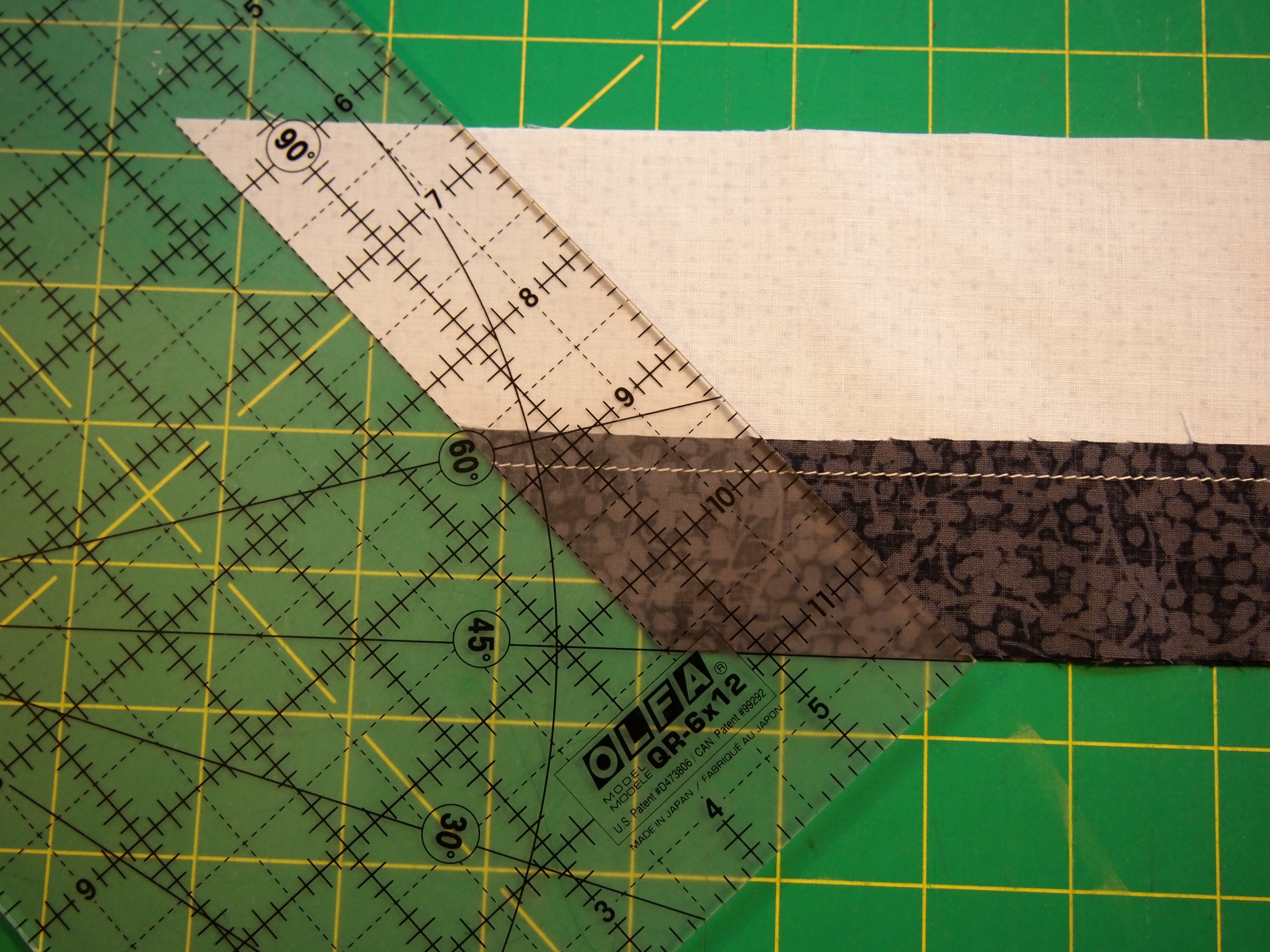
I wanted to share some organizational tips for making this block. Good pressing skills will make this block a breeze. (For complete details check your ruler instructions) We begin by making our 45 degree cuts.
OLYMPUS DIGITAL CAMERA
After the first cut, move the ruler to cut the side triangle .
OLYMPUS DIGITAL CAMERA
This shows the complete cut.
OLYMPUS DIGITAL CAMERA
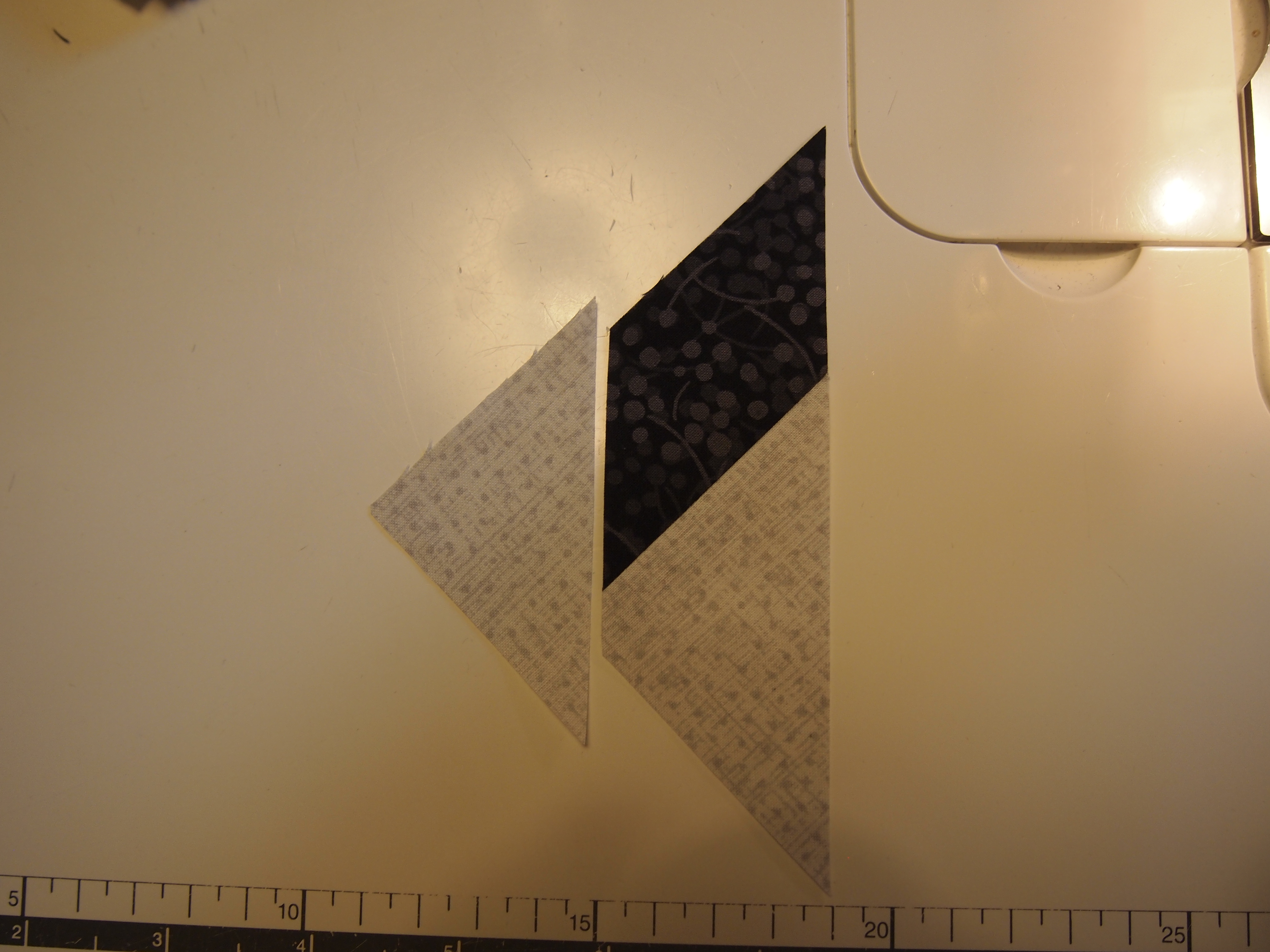
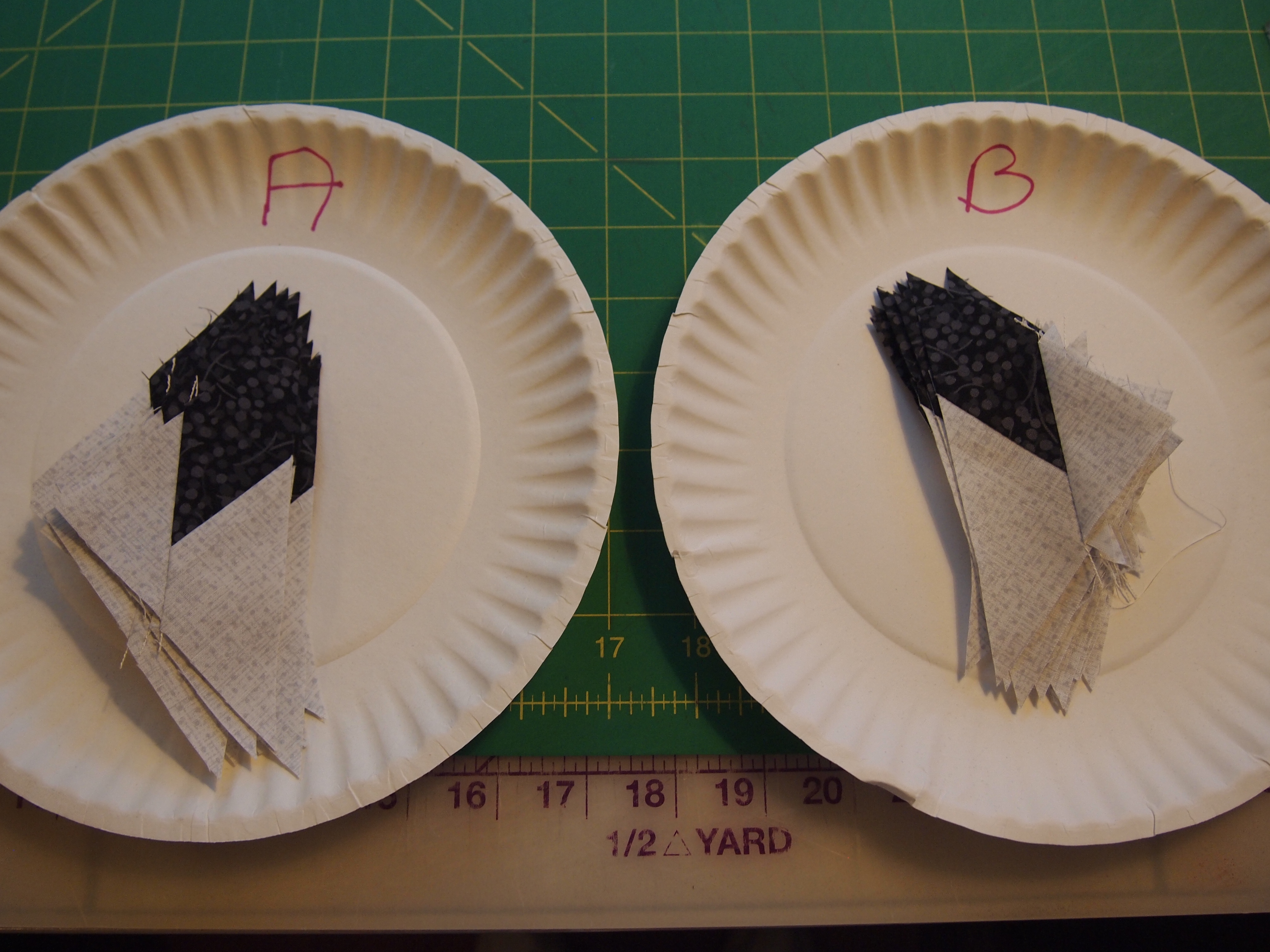
This is what I find very helpful. I take 2 paper plates and mark one “A” and one “B”. If you are right handed then the top strip was “A” and the bottom strip was “B”. Place the “A” units on the plate marked “A” and the “B” units on the plate marked “B”. Continue cutting your pieces and placing them in the appropriately named plate. Stack up the side triangles to be added later.
OLYMPUS DIGITAL CAMERA
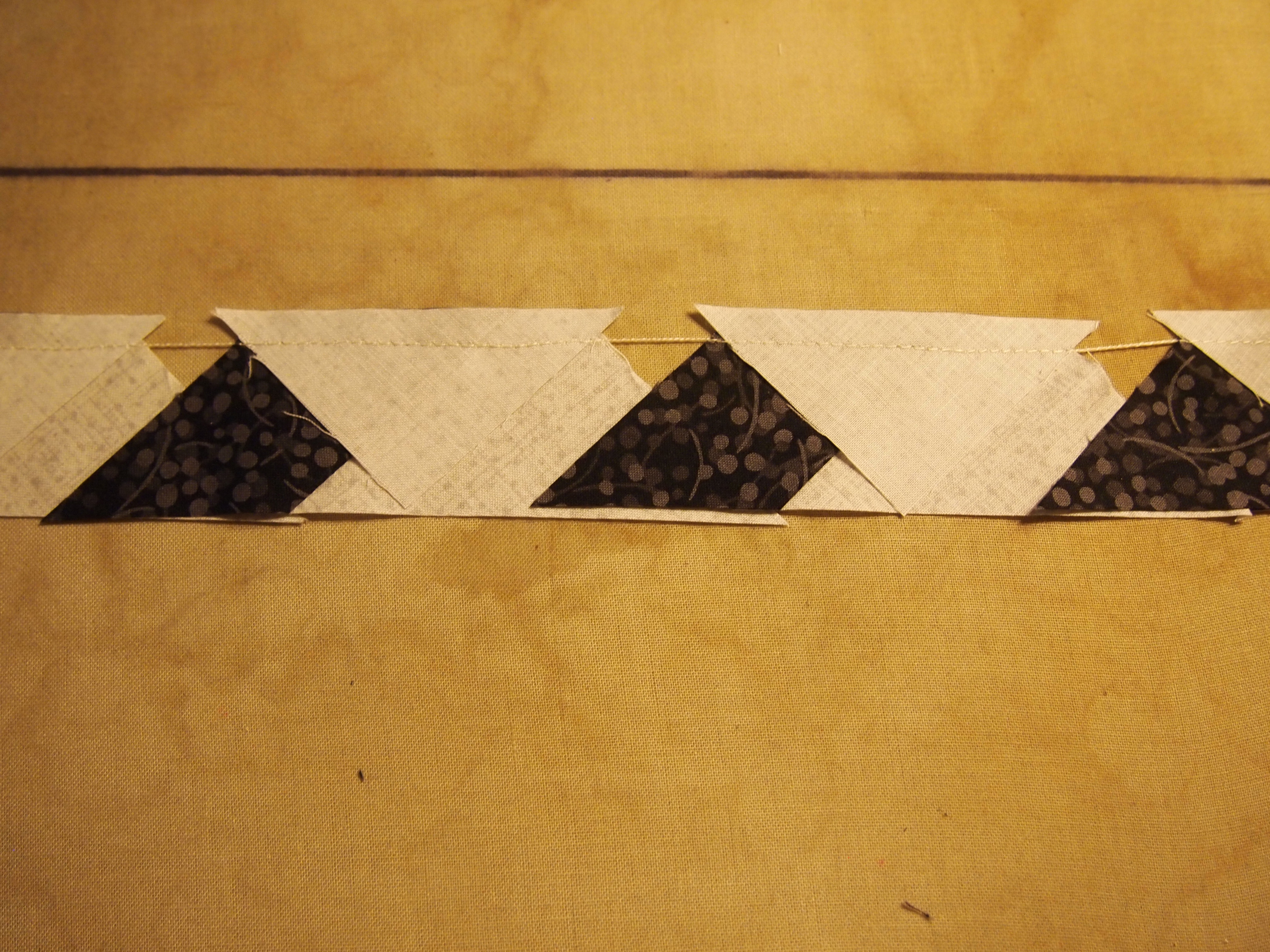
This is where we sew on the side triangles.
OLYMPUS DIGITAL CAMERA
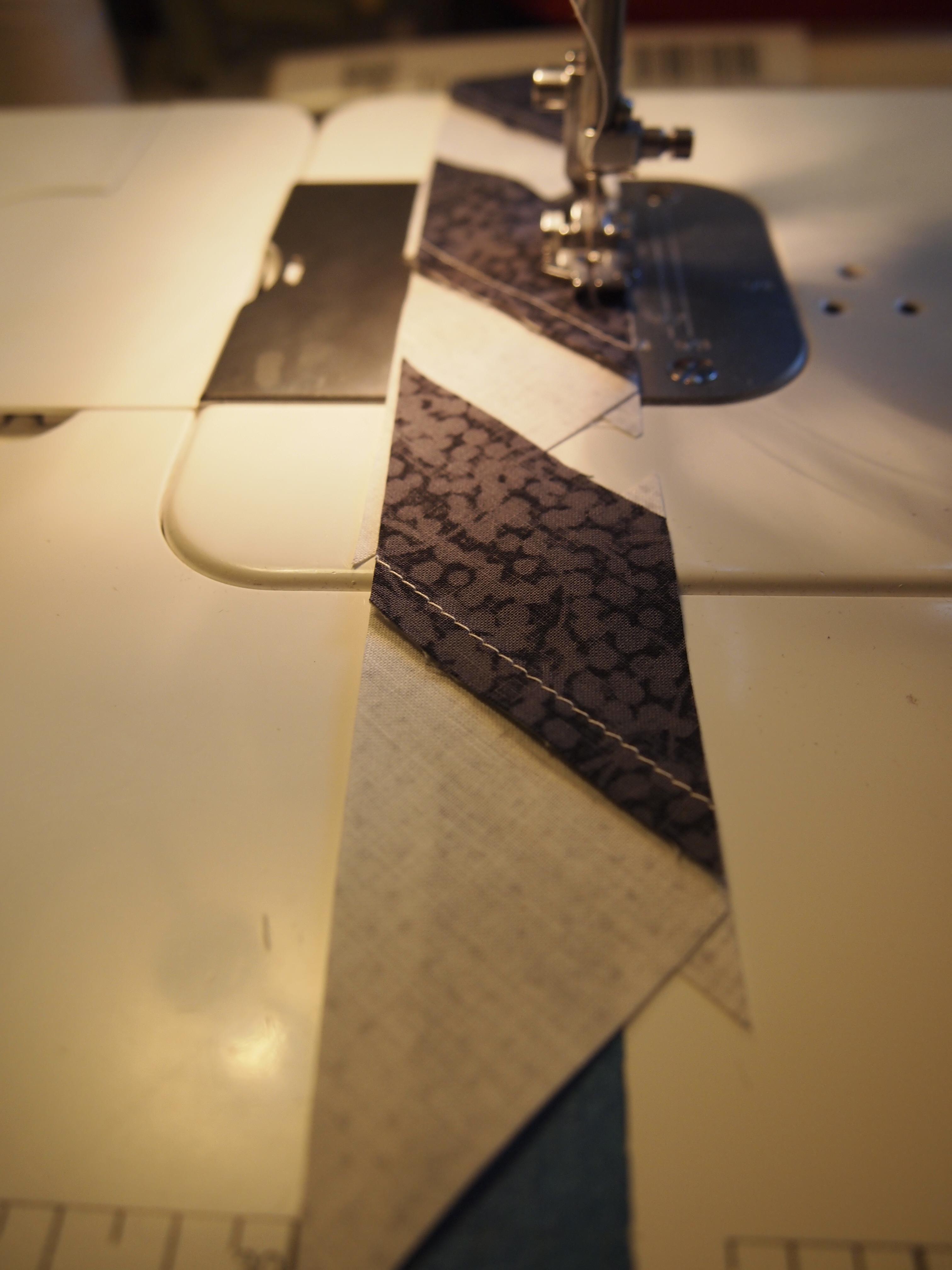
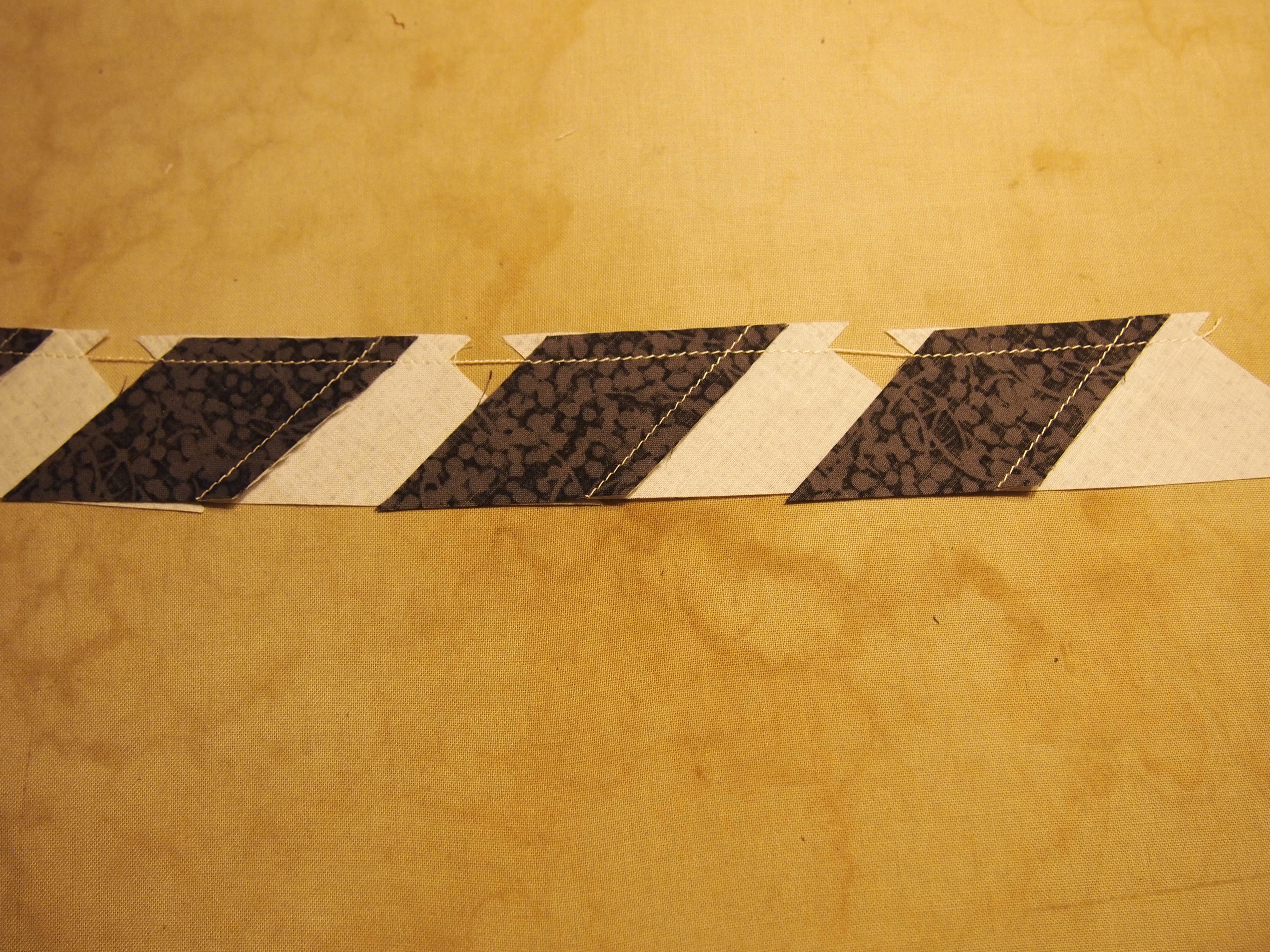
The best way to accomplish this is to take the “A” units and strip piece the side triangles one after the other.
OLYMPUS DIGITAL CAMERA
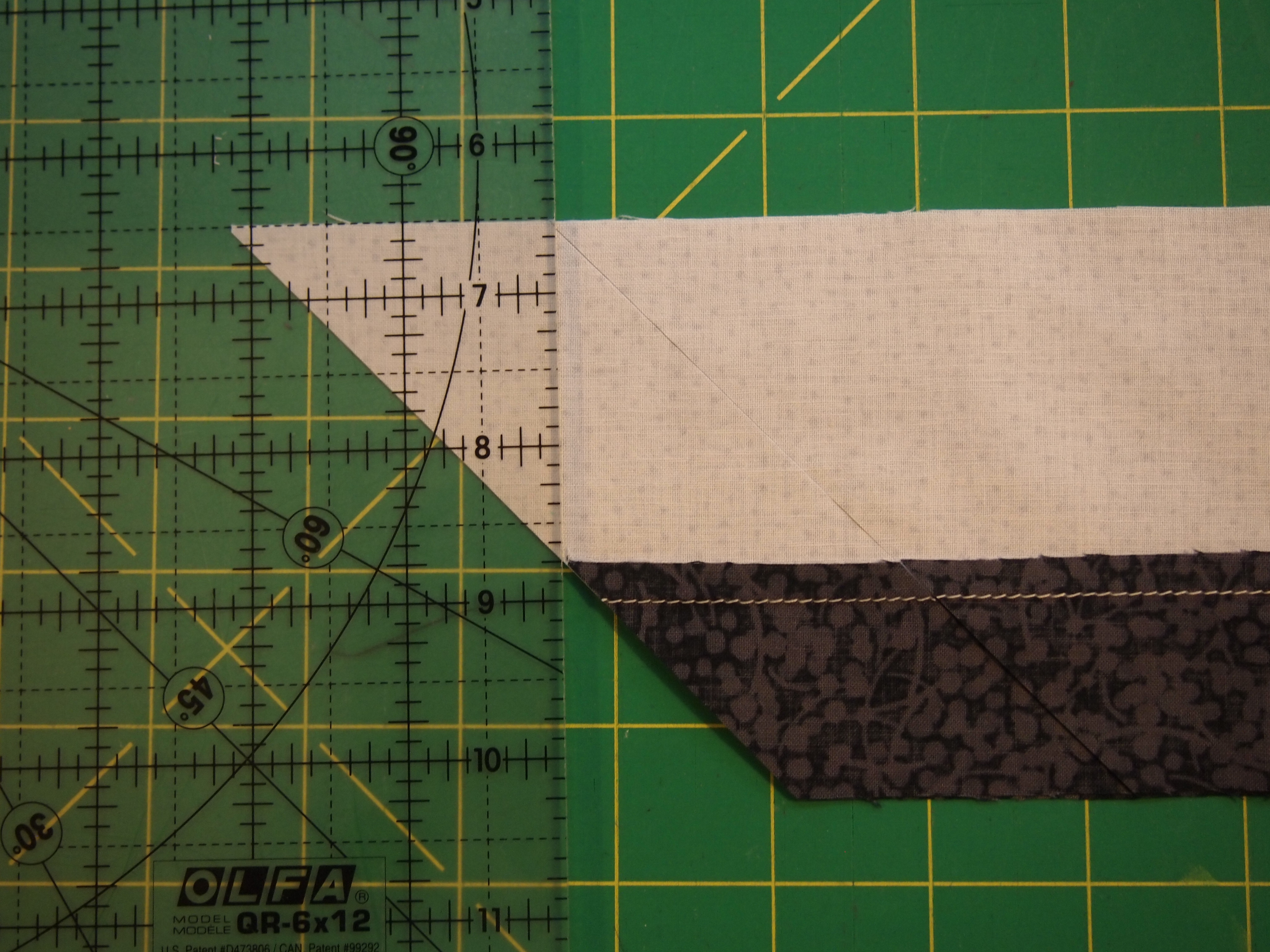
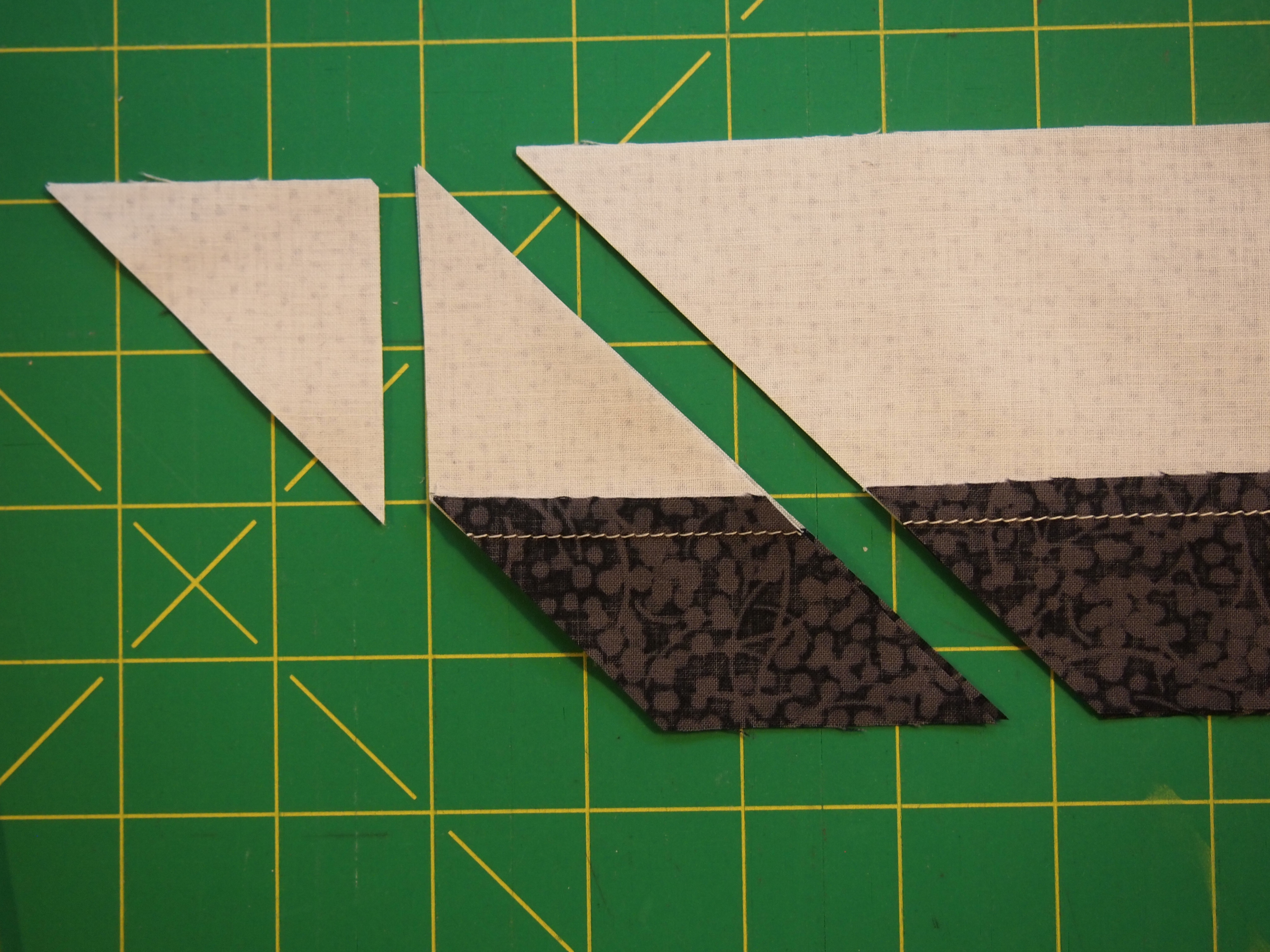
When you are done take the strip pieced units to the ironing board. (I know mine needs to be washed). When pressing, “what you are pressing toward always goes on top”! So, for the “A” units I placed the star point side on top, and set the seams.
OLYMPUS DIGITAL CAMERA
Then begin to flip back and press. By strip piecing and taking all the units to the iron you avoid the confusion of what way to press the seams.
OLYMPUS DIGITAL CAMERA
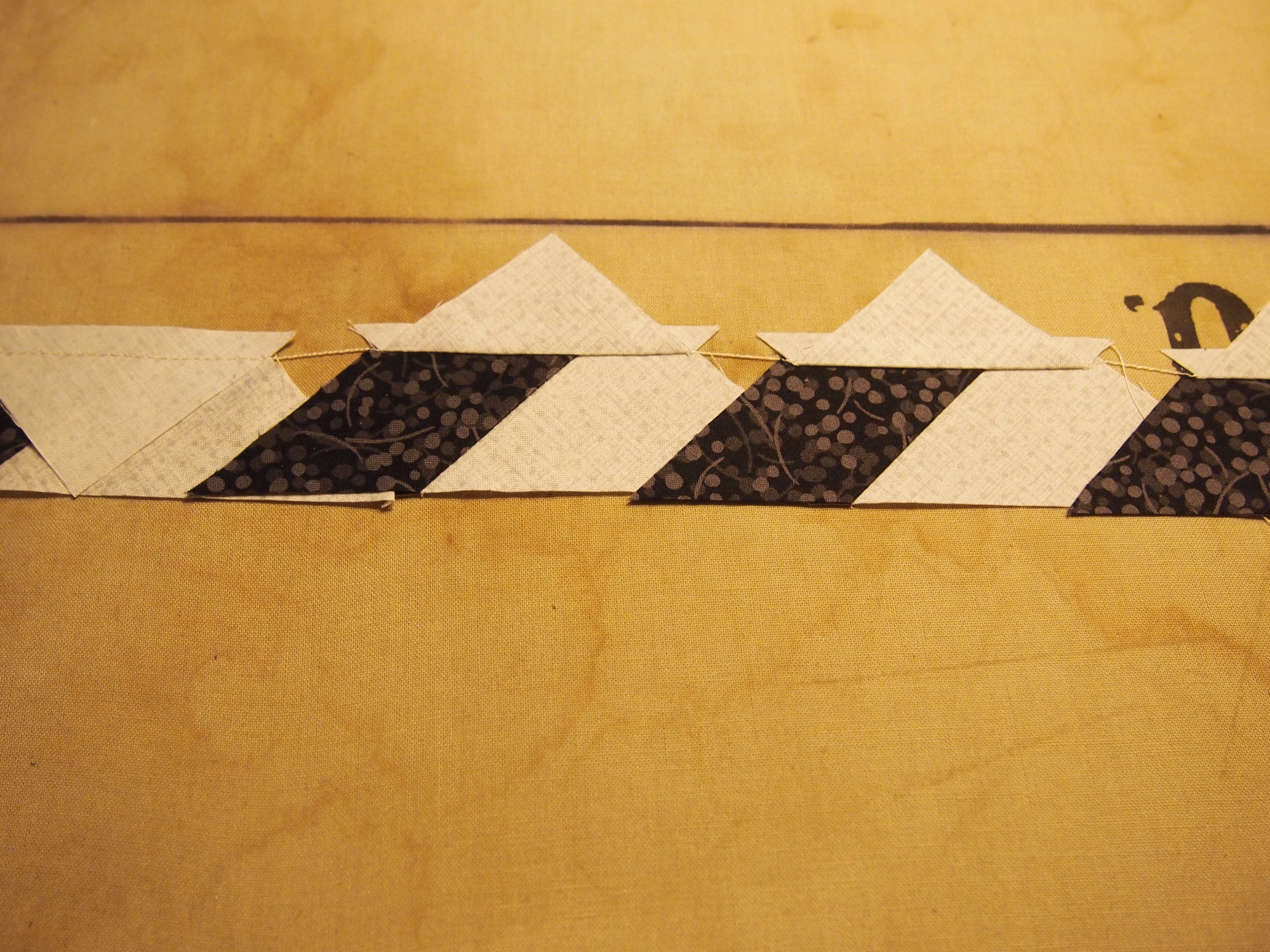
Take the “B” units to the ironing board and set the seams.
OLYMPUS DIGITAL CAMERA
For the “B” units we are press toward the side triangle so that goes on top.
OLYMPUS DIGITAL CAMERA
We are now ready to trim the units to size.

I Believe

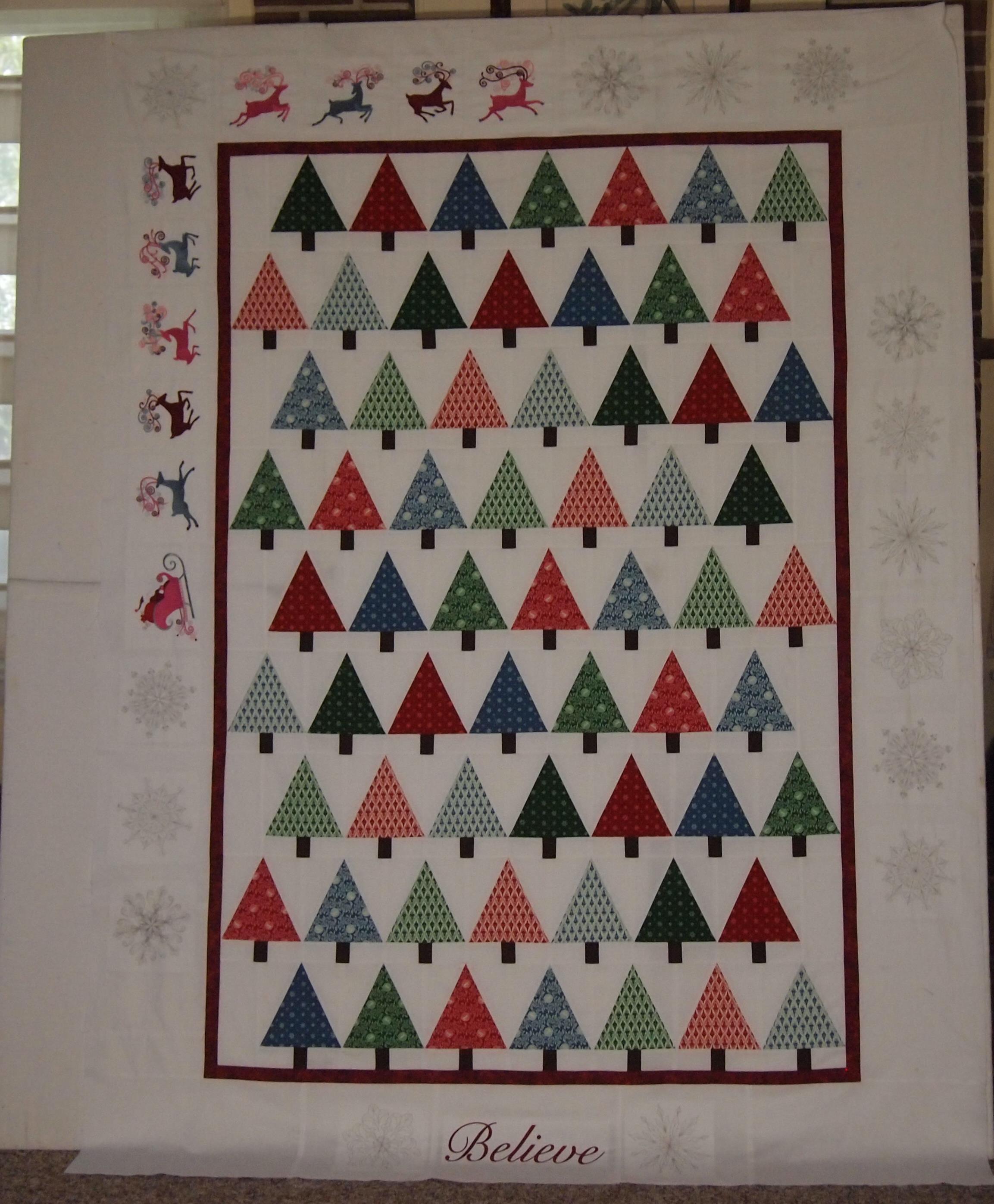
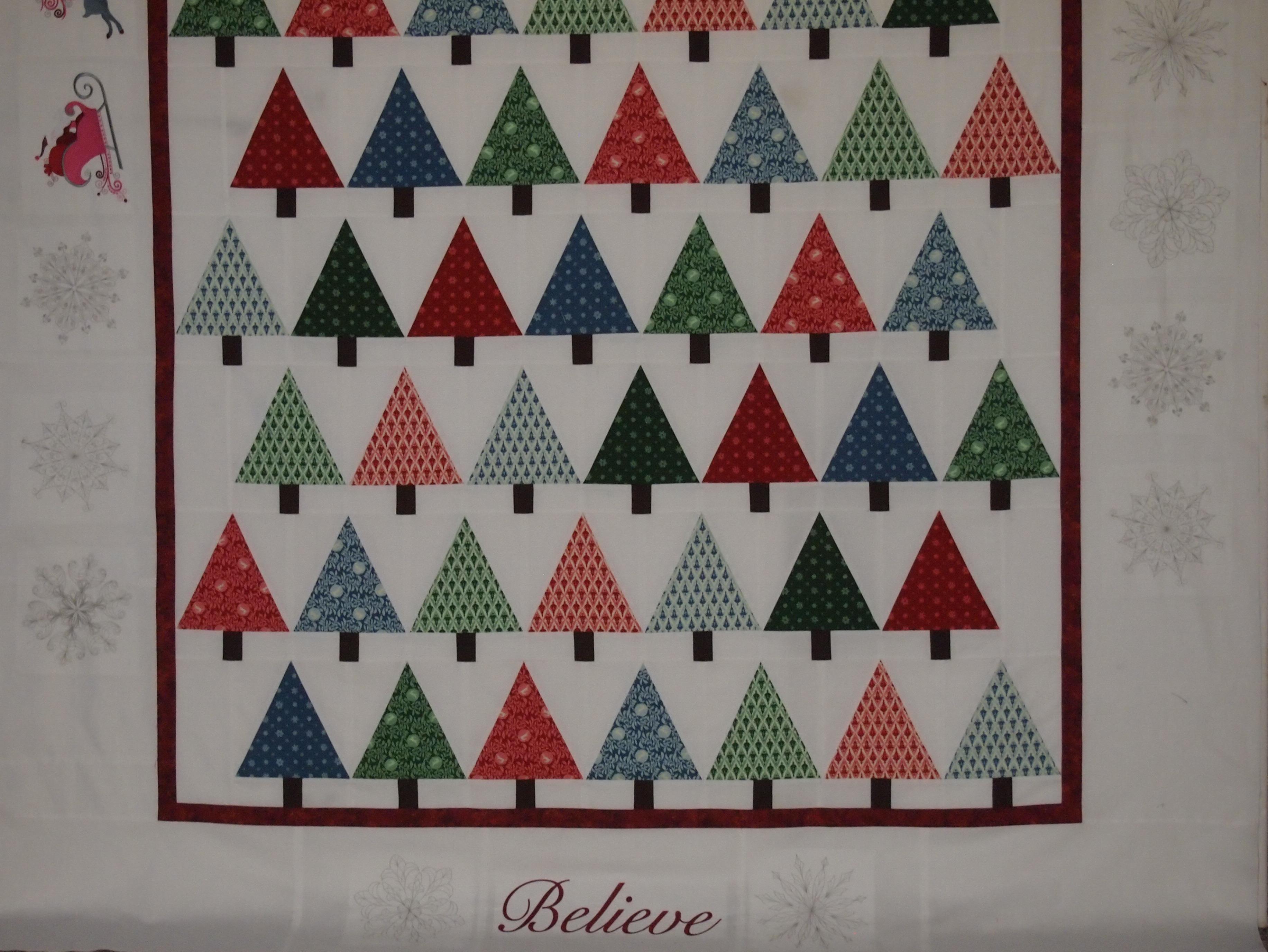
I love Christmas Tree quilts. I wanted to try making one with the Studio 180 Design V Block Tool. It was pretty easy.
I Believe Christmas quilt
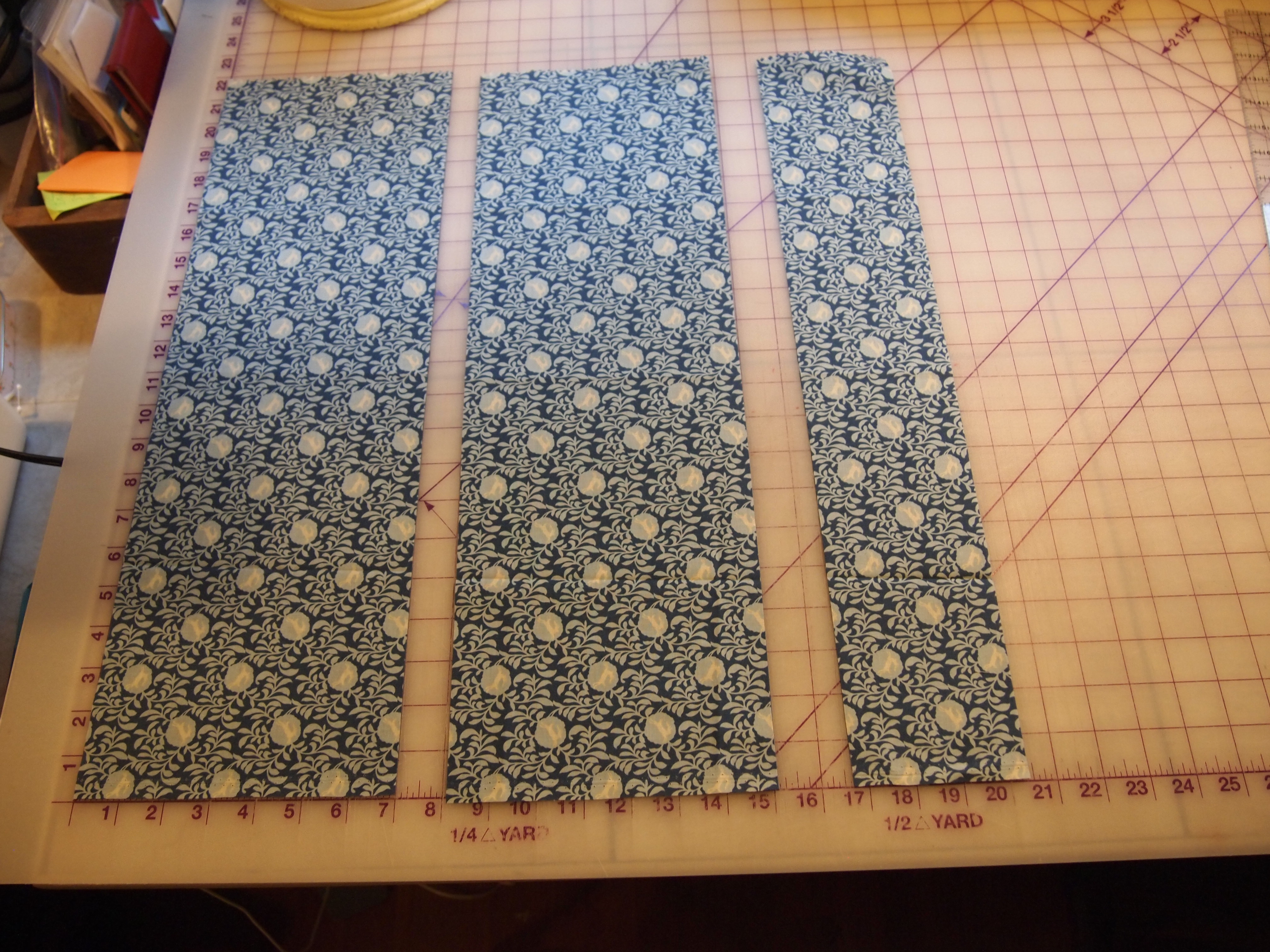
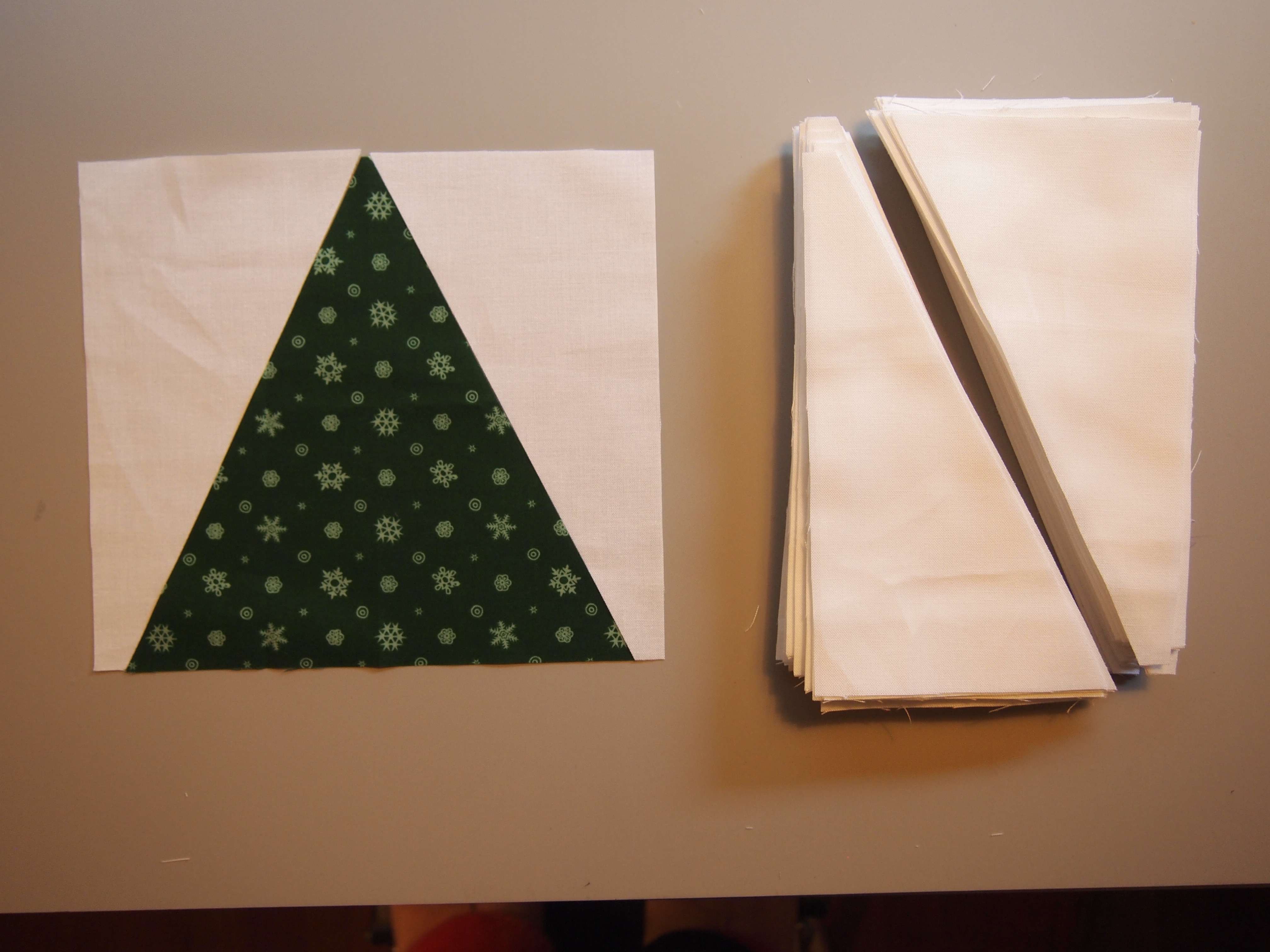
I started with 9 Christmas fat quarters, 3 green, 3 red and 3 blue. I decided to make 6” blocks, so per the directions on the V Block tool I layered 3 fat quarters and cuts 7” strips.
OLYMPUS DIGITAL CAMERA
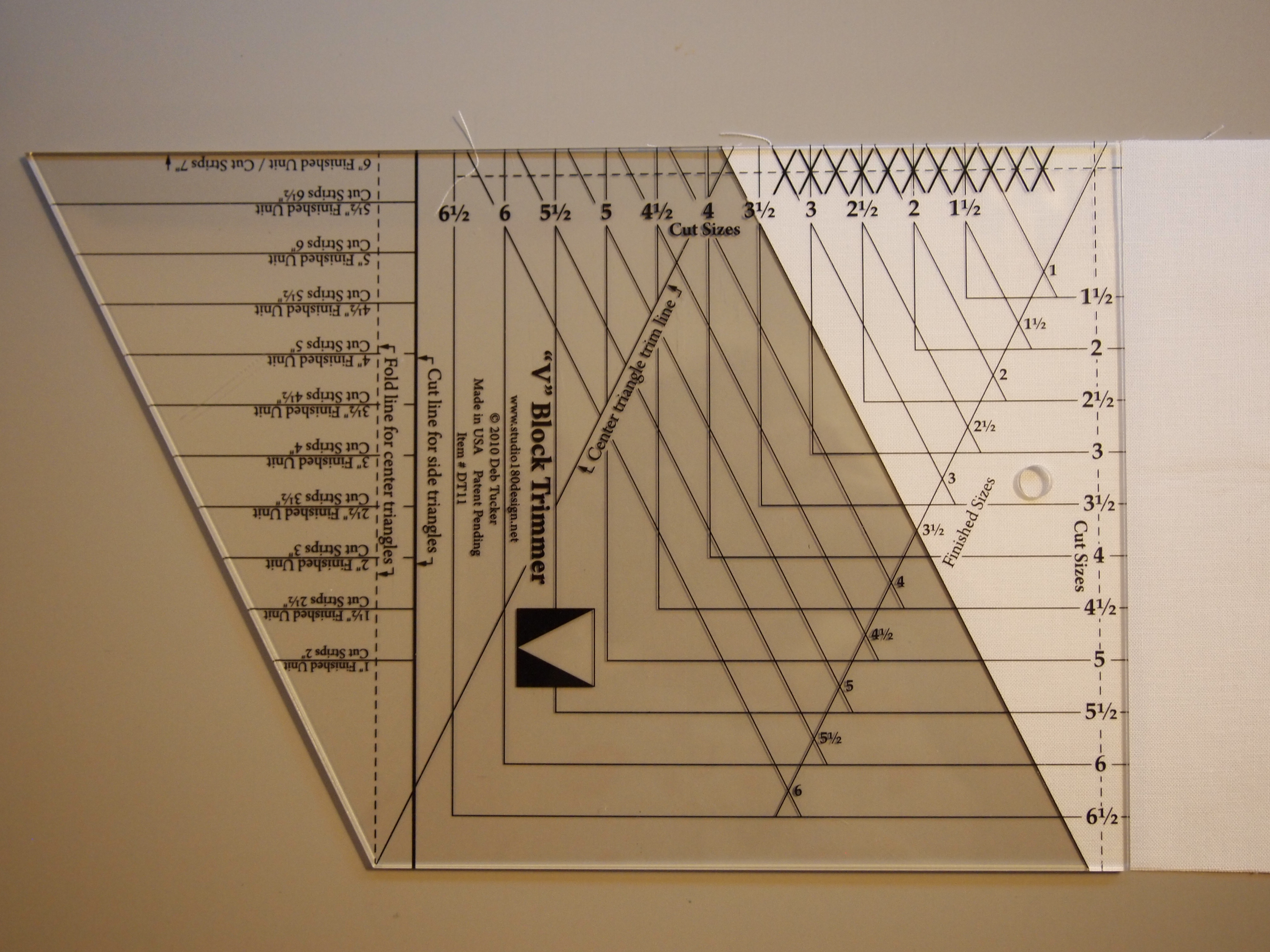
I used the V Block Tool and placed the line for the cutting the center triangles on the folded fabric.
OLYMPUS DIGITAL CAMERA
Second cut for center triangles. Keep going until you have used up the strip.
OLYMPUS DIGITAL CAMERA
The 9 fat quarters yielded 72 center triangles.
OLYMPUS DIGITAL CAMERA
I used white Kona Cotton for the side triangles. It took about 1 ½ yards. Per the directions on the tool I cut 7” strips for the side triangles also. There is a line on the tool for cutting the side triangles
OLYMPUS DIGITAL CAMERA
Rotate the tool for the second cut for side triangles, keep going until you have two side triangles for each center triangle.
OLYMPUS DIGITAL CAMERA
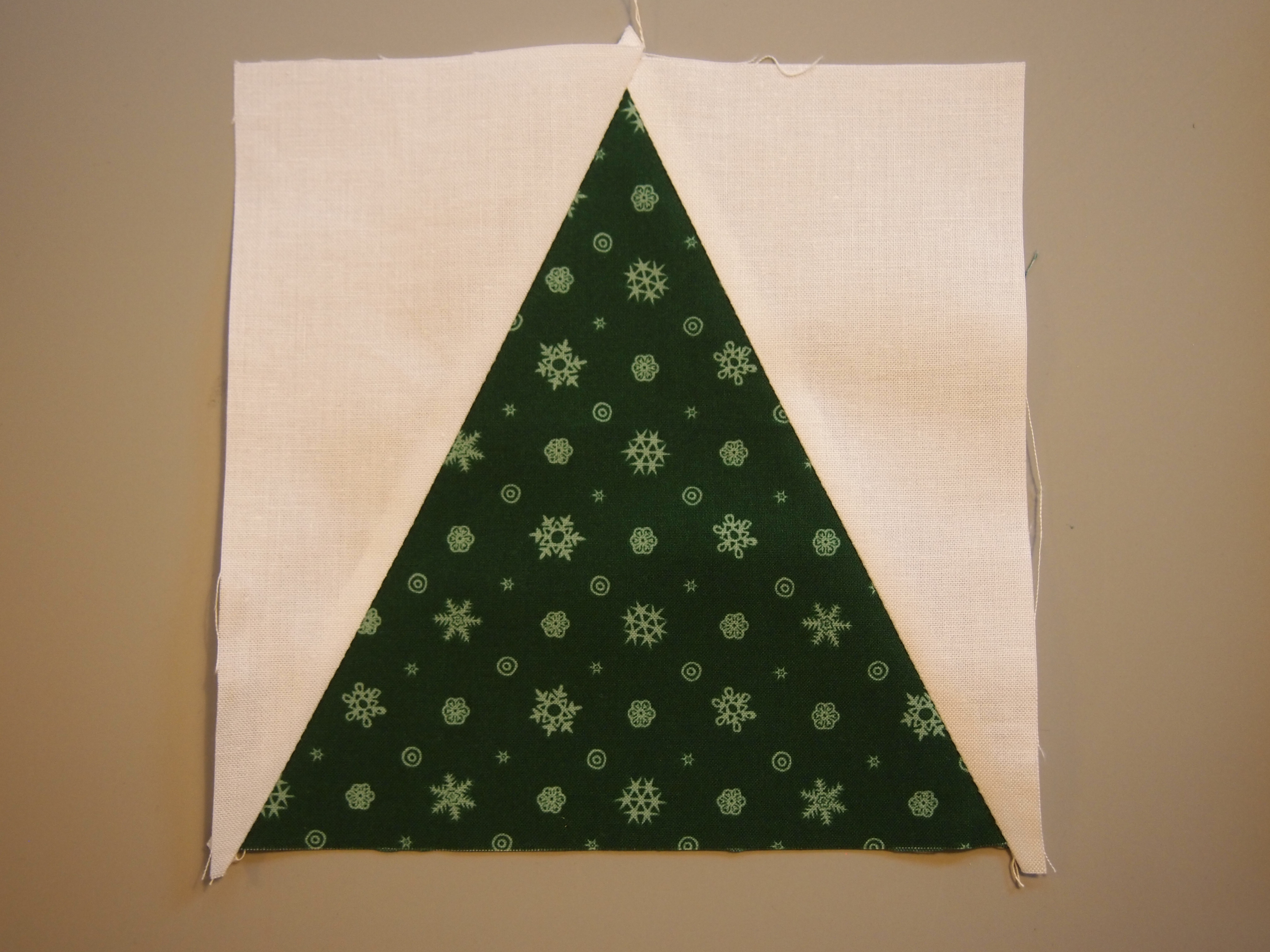
Sew on the first side triangle.
OLYMPUS DIGITAL CAMERA
Press toward the side triangle.
OLYMPUS DIGITAL CAMERA
Add the second triangle.
OLYMPUS DIGITAL CAMERA
Press toward the side triangle.
OLYMPUS DIGITAL CAMERA
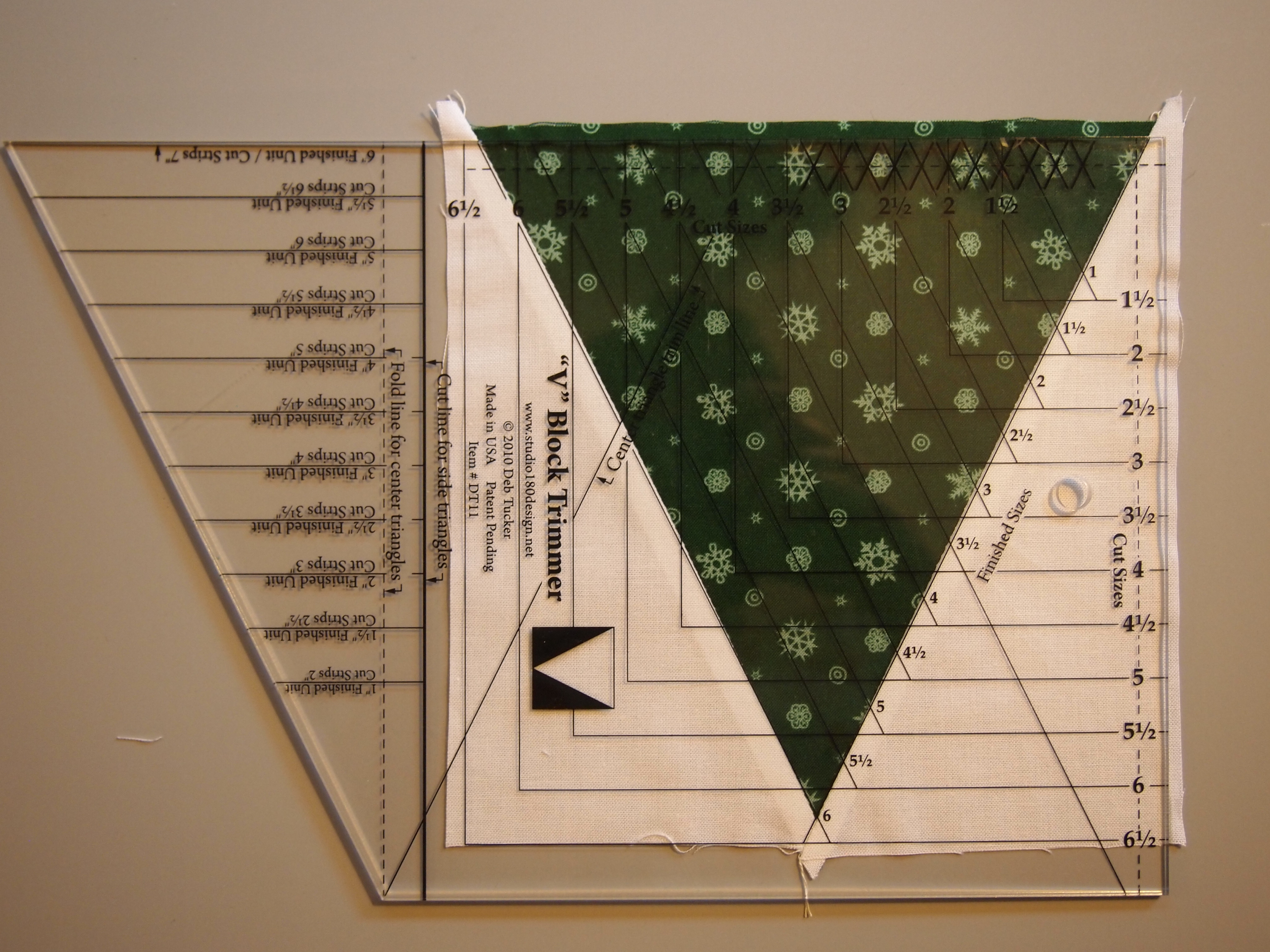
Square up the V Blocks by pointing it toward you, square up two sides.
OLYMPUS DIGITAL CAMERA
Rotate the block and square up the. other two sides.
OLYMPUS DIGITAL CAMERA
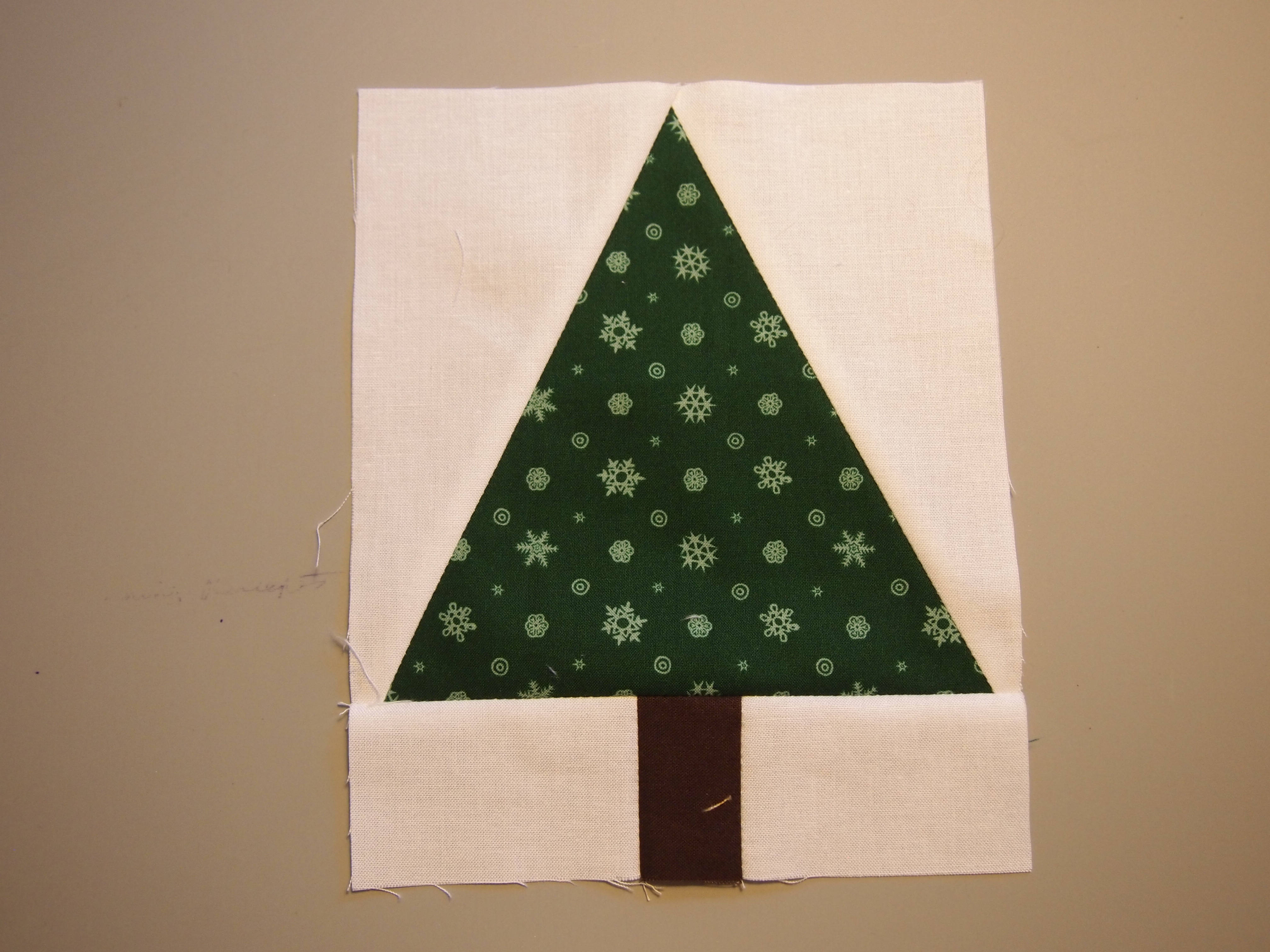
For each tree block I cut two 2″ x 3″ white rectangles and one 1 1/2″ x 2″ brown rectangles for the tree trunk.
OLYMPUS DIGITAL CAMERA
Sew these sashings to the bottom of each block.
OLYMPUS DIGITAL CAMERA
I cut nine 3 1/2″ x 8″ rectangles to be used to stagger the tree blocks. I sewed one rectangle to row 1,3, 5, 7, and 9. And one rectangle to the end of row 2, 4, 6, and 8.

I cut 1 1/2″ red inner borders (1/2 yard). The white outer borders took about 2 yards white Kona cotton. I cut 9″ borders and machine embroidered Santa and his reindeer in reds, blues and pinks. And randomly scattered machine embroidered silver snowflakes around the border. In the center of the bottom of the quilt I embroidered “Believe”. The quilt measures 65″ x 87″ un-quilted. I purchased my embroidery designs from Embroidery LibraryOLYMPUS DIGITAL CAMERA
OLYMPUS DIGITAL CAMERA

Ride the Wave with SueNami

SueNami
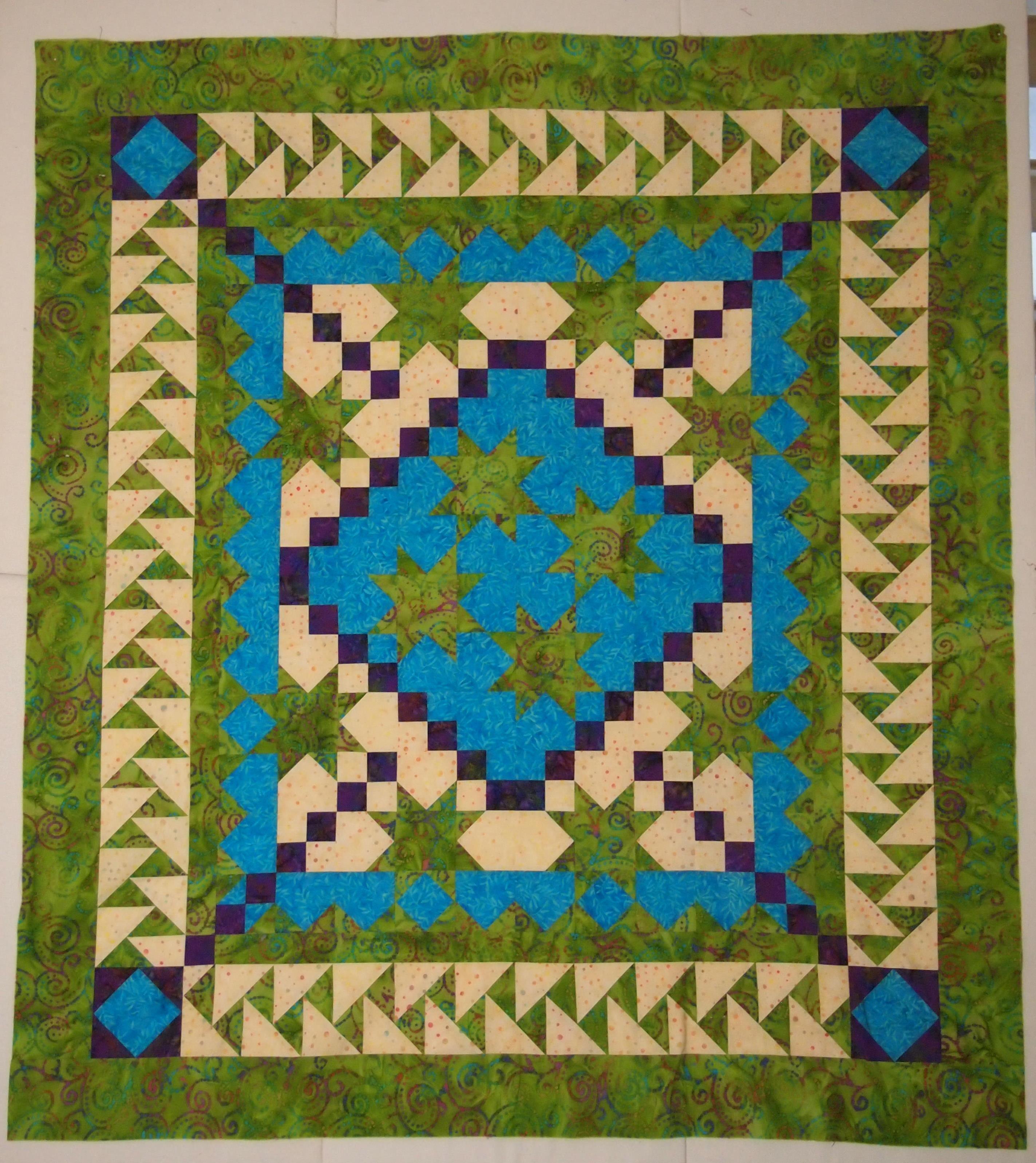
I just finished my class sample for the Hunter Star class I’m teaching in January. The pattern is called “SueNami” created by Sue Tucker. Her SueNami won the Blue Ribbon, Viewer’s Choice, and Best Adult Beginner at the 2009 Vermont Quilt Festival.

This is a companion pattern for the Studio 180 Design’s Rapid Fire Hunter Star Petite, Wing Clipper I, and Tucker Trimmer I tools. This quilt measure 68″ by 68″. SueNami is an unusual Hunter Star medallion style layout. It was great fun, but I would say it is not for beginners. It’s not difficult, but you must use your best organizational skills.

The inner border is made from Flying Geese blocks. A flying goose with a large light triangle always follows a flying goose with a large dark triangle. Each large triangle is the same color as the small triangles of the goose following. By doing that, the seam line disappears and it fools the eye into seeing chevrons.

We go to the design wall with triangles so we can arrange them with a good balance of colors. When you are pleased with the layout, you take down 2 triangles at a time and sew them into a square and put them back on the design wall so as not to mess up your design. when all the triangles are sewn into squares and back on the design wall, you begin again to take them down one at a time and square each one up and place back on the design wall. when everyone is square you can sew the blocks into rows and then join the rows. If you don’t have a design wall, a 60″ by 60″ flannel back table cloth will do. That way if you need to put it away you can pin the blocks onto the table cloth and roll it up so you don’t mess up your design.
SueNamie Center

Soho Sunflowers at Houston Quilt Festival 2013

I made this hexagon quilt specifically to donate to Quilters Dream Batting for ALS Research. As of this date I have made 52 OBW’s.

This quilt is made from one piece of fabric (not including the inner border).  I bought the fabric from eQuilter.com. The fabric was called Soho Sunflowers so that is what I named it. The quilt measures 64″ by 84″. I had great fun making it!
Houston Soho Sunflowers

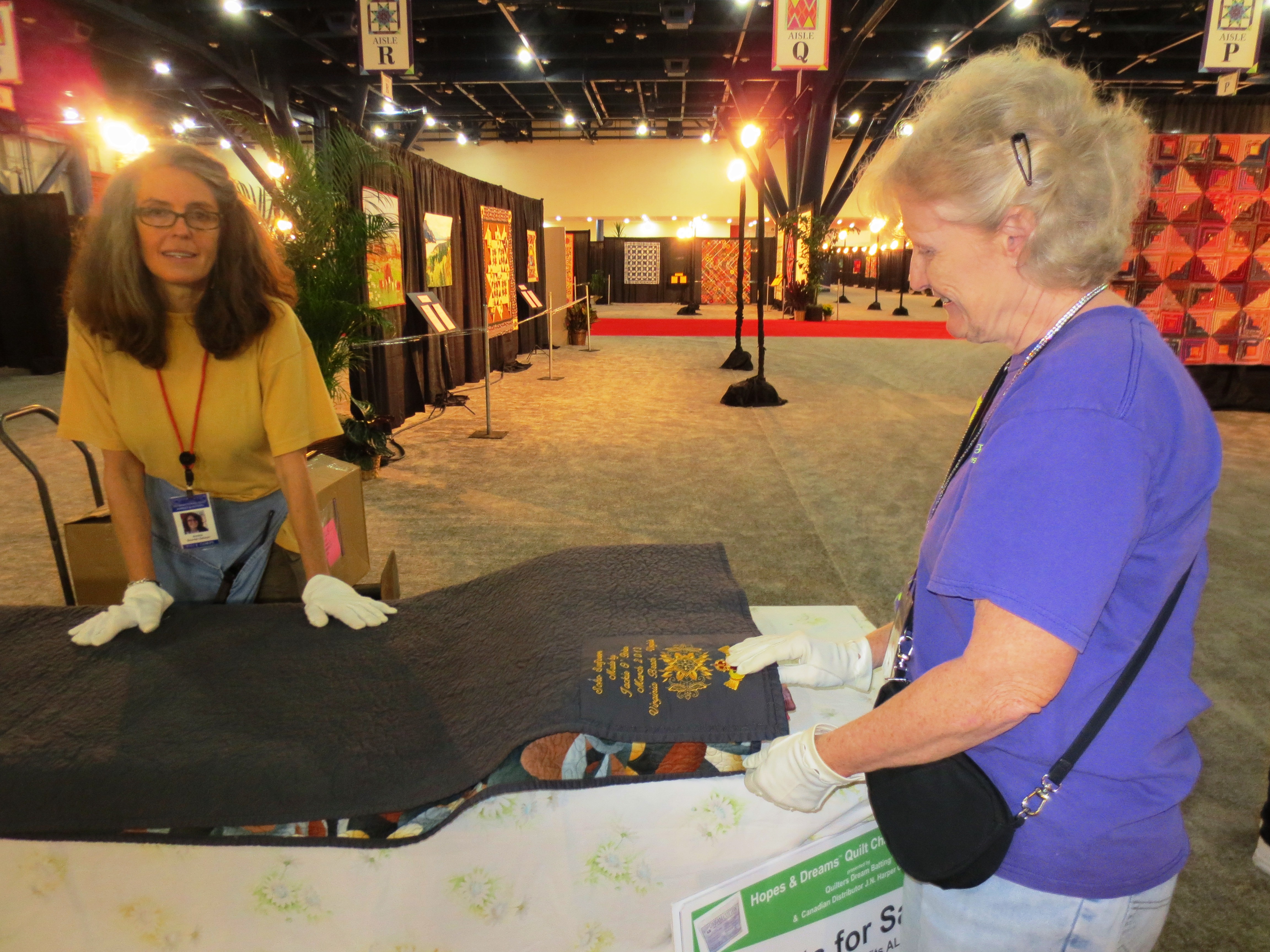
These ladies are members of the “Piece Corps” for the Festival. They are responsible for unpacking each quilt that will hang at Festival. They wear white gloves and literally write down the condition of each quilt that is hanging in the show. They start by writing down how the quilt is folded, then look at the sleeve, then open up carefully and write down if they see threads hanging, the condition of the binding and they literally look at every square inch to see if there are any seams that might have torn or a stitch loose, etc. They write this down for insurance purposes so that when the quilt is returned the recipient will also know if there needs to be any repairs and what condition the quilt arrived in.
???????????????????????????????

???????????????????????????????

???????????????????????????????

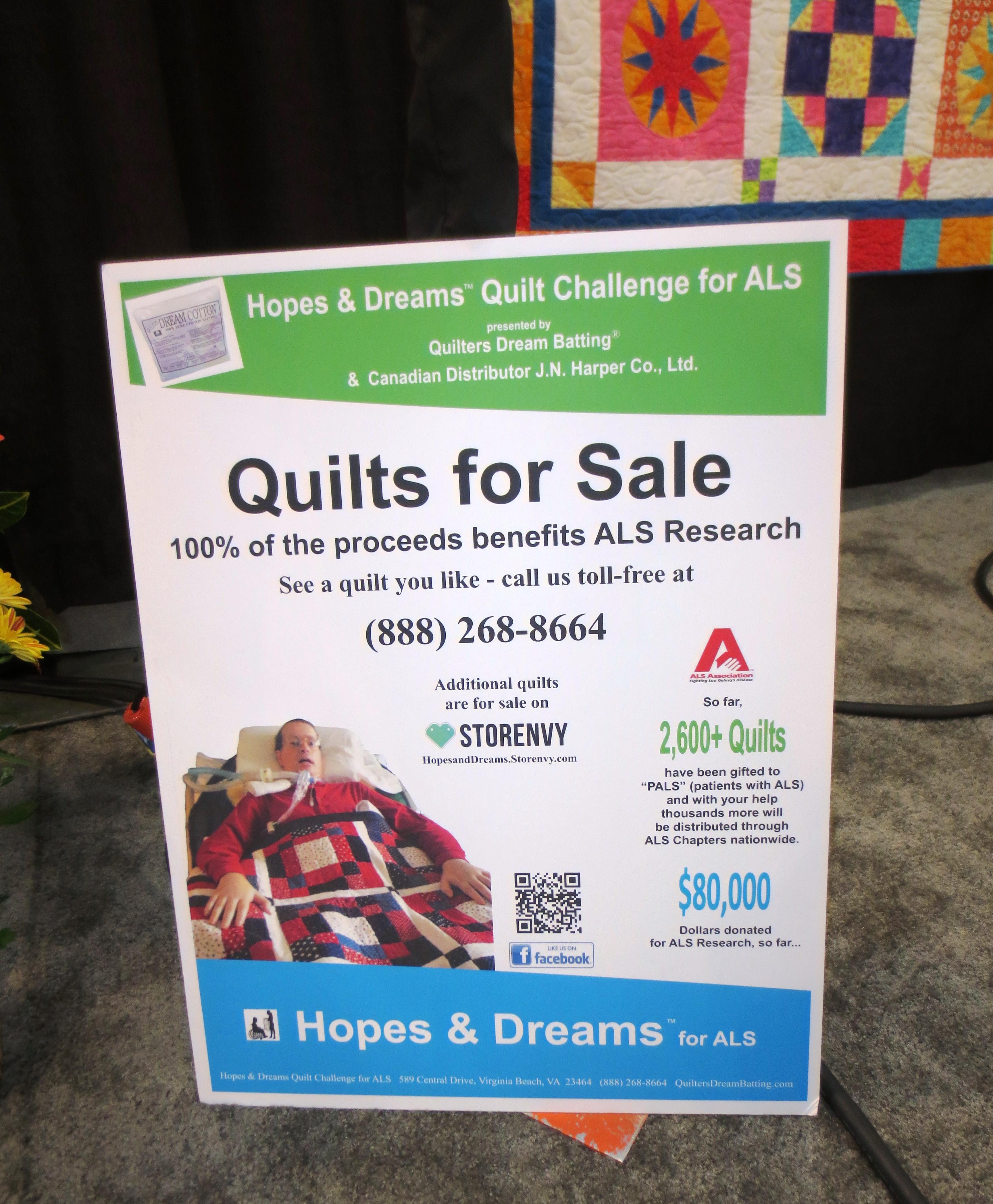
The Quilter’s Dream Batting crew had to leave to catch the plane flight before they could get a really good picture of the entire exhibit set up the way it is showing now. There are three tall café tables in front with flyers about the Hopes & Dreams Quilt Challenge for everyone to take and hopefully participate. There is also this sign – as all the quilts hanging are for sale. So far we have gifted 3,000 quilts to “PALS” – patients with ALS, and donated over $80,000 to ALS Research through sales of quilts. 100% of the proceeds of quilt sales goes to ALS Research.

THIS YEAR – they changed the Sew Creative Category. It now says:

“Fabric postcards, handbags and accessories, miniature quilts, mug rugs, paintings, placemats, tablerunners, table toppers, wall quilts, watercolors and more. These items will be sold to raise funds for ALS Research. All entries will be entered into a drawing to win a $250 Gift Card.”

Here is the url link to Hopes & Dreams:

http://www.hopesanddreams.quiltersdreambatting.com/
???????????????????????????????

You’ve Got to Love Pink!

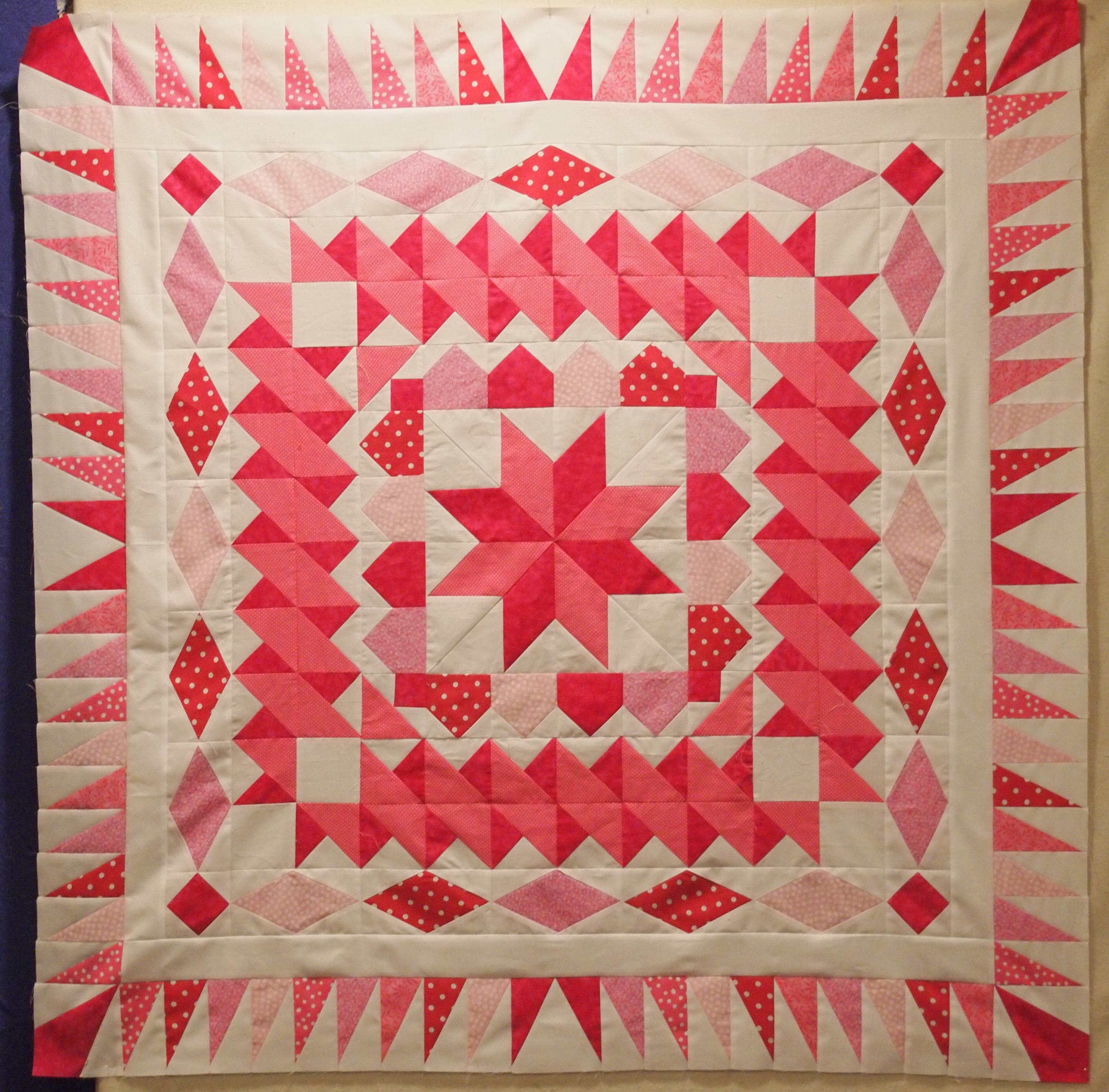
While I was at Studio 180 Design Teacher Certification, as I was just trying to keep up two other students; Phyllis Fay and Sarah Furrer were busy creating. Below is what they whipped up.
Phyllis and Sarah
What I love about this top other than great technique, is all the different tools they used to create a quilt without using a pattern. When I am giving a presentation on all the Studio 180 Design tools I always show this picture. I am crazy about the outer border. I love the way they used the Split Rects tool. It looks just like they paper pieced it but it was accomplished with a ruler!

You start in the middle of the quilt with the Lemoyne Star and work your way out with each new border. I have also listed the pre-finished sizes or trimmed sizes.

• One 12 ½” Lemoyne Star
• Four 3 ½” shaded 4-patch
• Sixteen 3 ½” little houses
• Eight 3 ½” squares of background fabric
• Fifty-six 3 1/2” combo blocks (which means you have to make 28 Half Square Triangles (HST) blocks first; remembering that they yield a double number of blocks)
• Four 3 ½ “Square/Squared blocks
• Twenty 3 ½ ” X 6″ ½ ” Diamond Rects
• 2 ½ ” border of the background fabric
• Four 4 ½ ” V Blocks
• Four 4 ½ ” Corner Beams
• Eighty 2 ½ ” x 4 ½ ” Split Rects (which means you have to make 40 by using the rights sides together method)

Studio 180 Design Tools Required:
• Rapid Fire Lemoyne Star
• Tucker Trimmer I & III
• Diamond Rects
• V-Block
• Corner Beam
• Split Rects

Studio 180 Design Technique Sheets:
• Shaded 4-Patch
• Little Houses

Thanks Phyllis & Sarah for sharing.

Southern Hospitality

Well, I got her done! What do you think? I really like this pattern. I made this using the Studio 180 Design Square/Squared and the Tucker Trimmer I. The center of the quilt is not difficult at all. Either are the migrating geese, but you must use your best skills and a true 1/4″ seam. I will be adding this to my class list.
Southern Hospitality

Quilt Block Detective

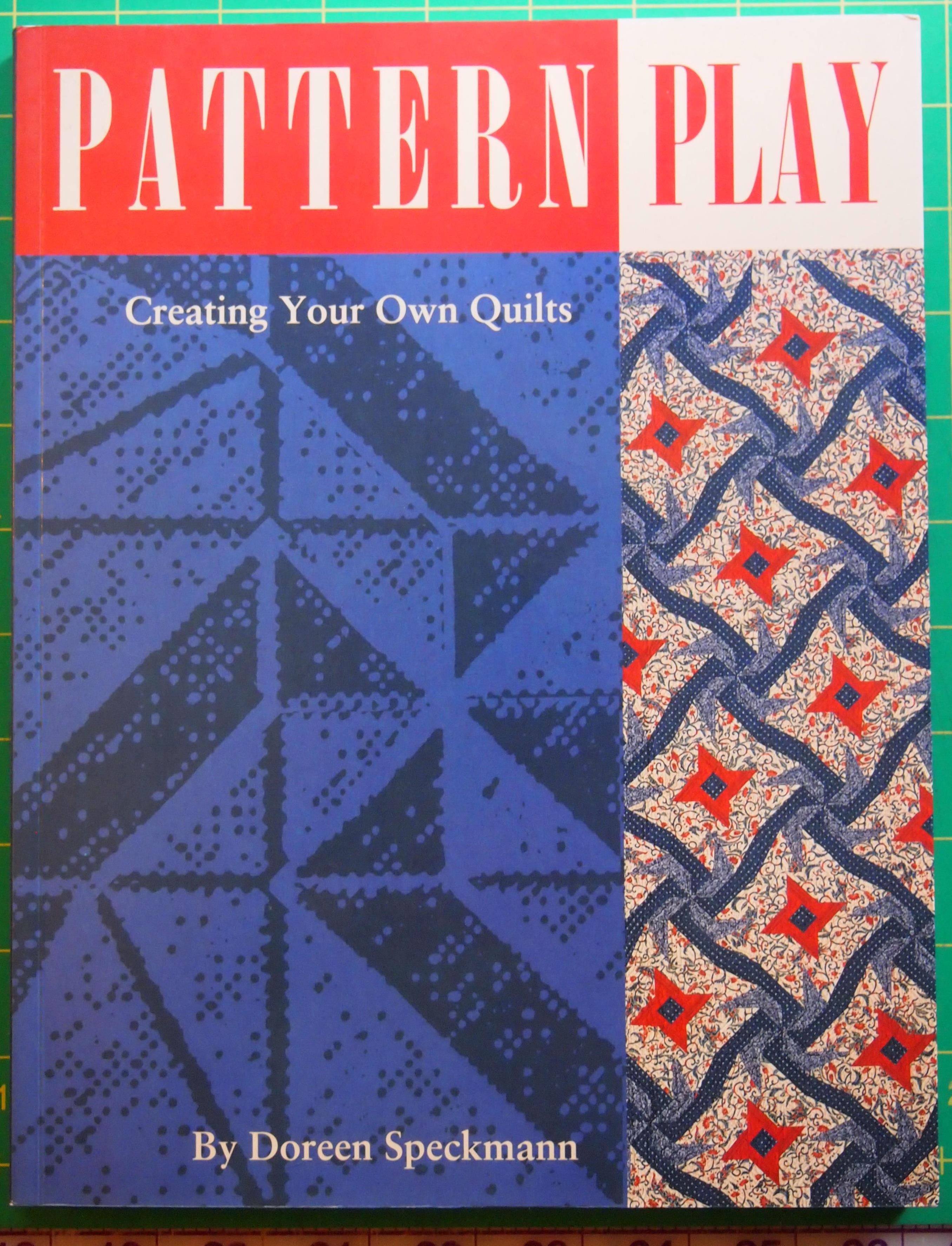
During the Studio 180 Design Teacher certification we participated in a skill building exercise, “Quilt Block Detective”. Various quilt blocks were displayed and we had to identify the units that made up the blocks. It was great fun and very educational. There are many fundamental units that are used to make a variety of quilt blocks. In the book “Pattern Play” by Doreen Speckmann, she introduces us to those basic units.
Quilt Block Detective
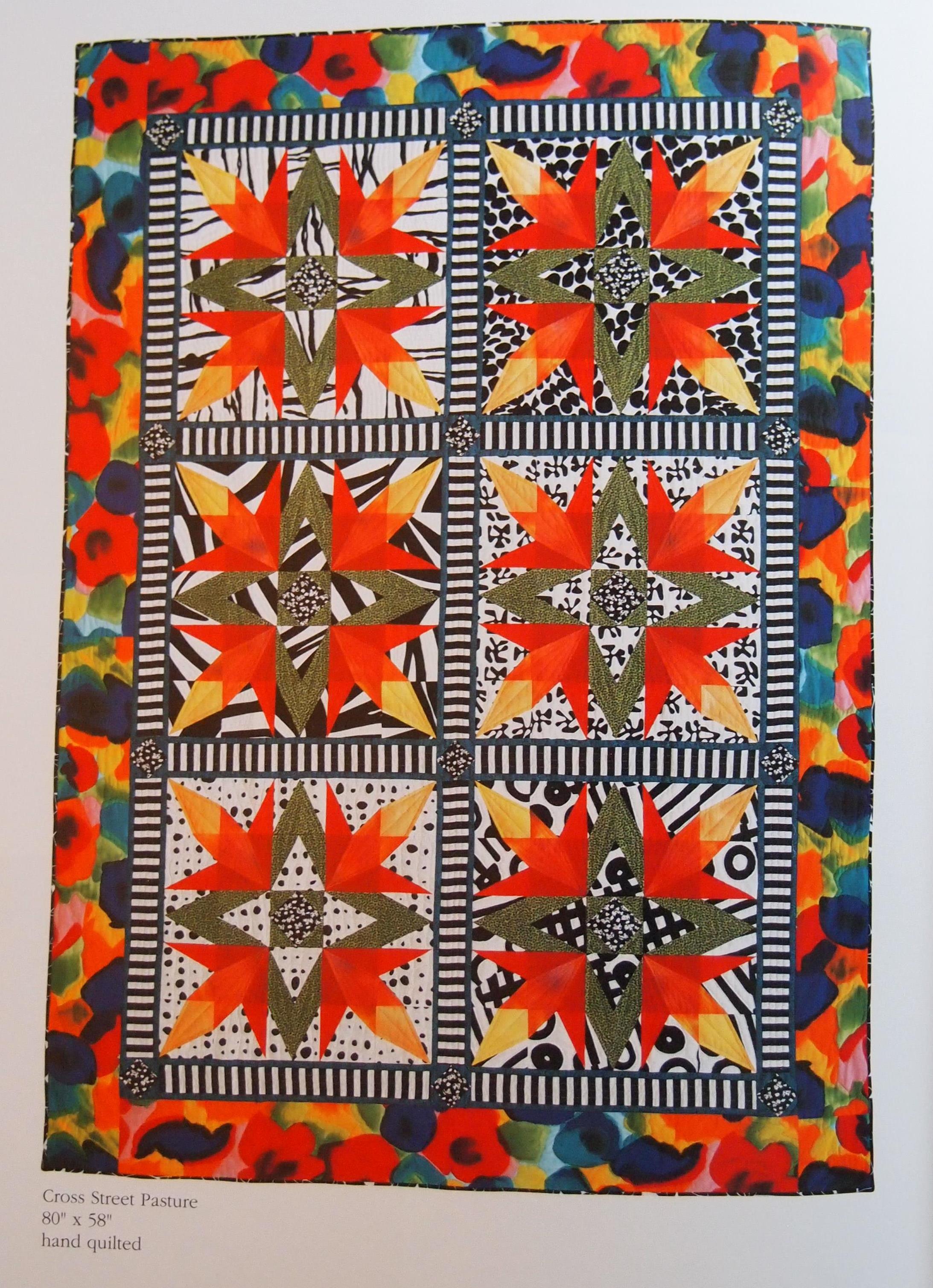
I wanted to practice, so I thumbed through the book. It contains fabulous quilts. I chose to investigate “Cross Street Pasture” below.
OLYMPUS DIGITAL CAMERA
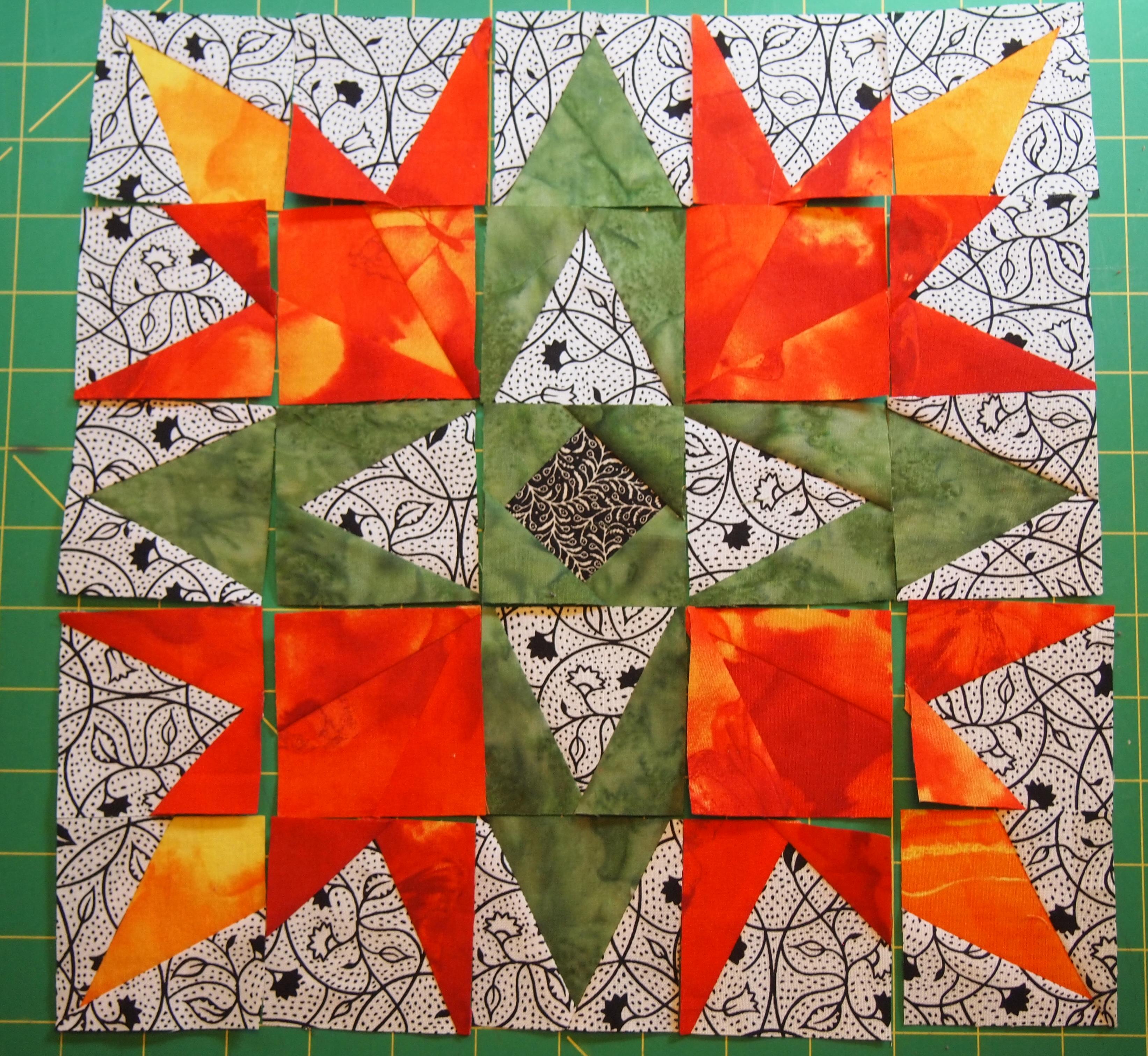
Doreen uses templates. Studio 180 Design tools can make the same units without templates. I identified Square/Squared, V Block, High/Low Left, High/Low Right, and the Corner Beam.
OLYMPUS DIGITAL CAMERA
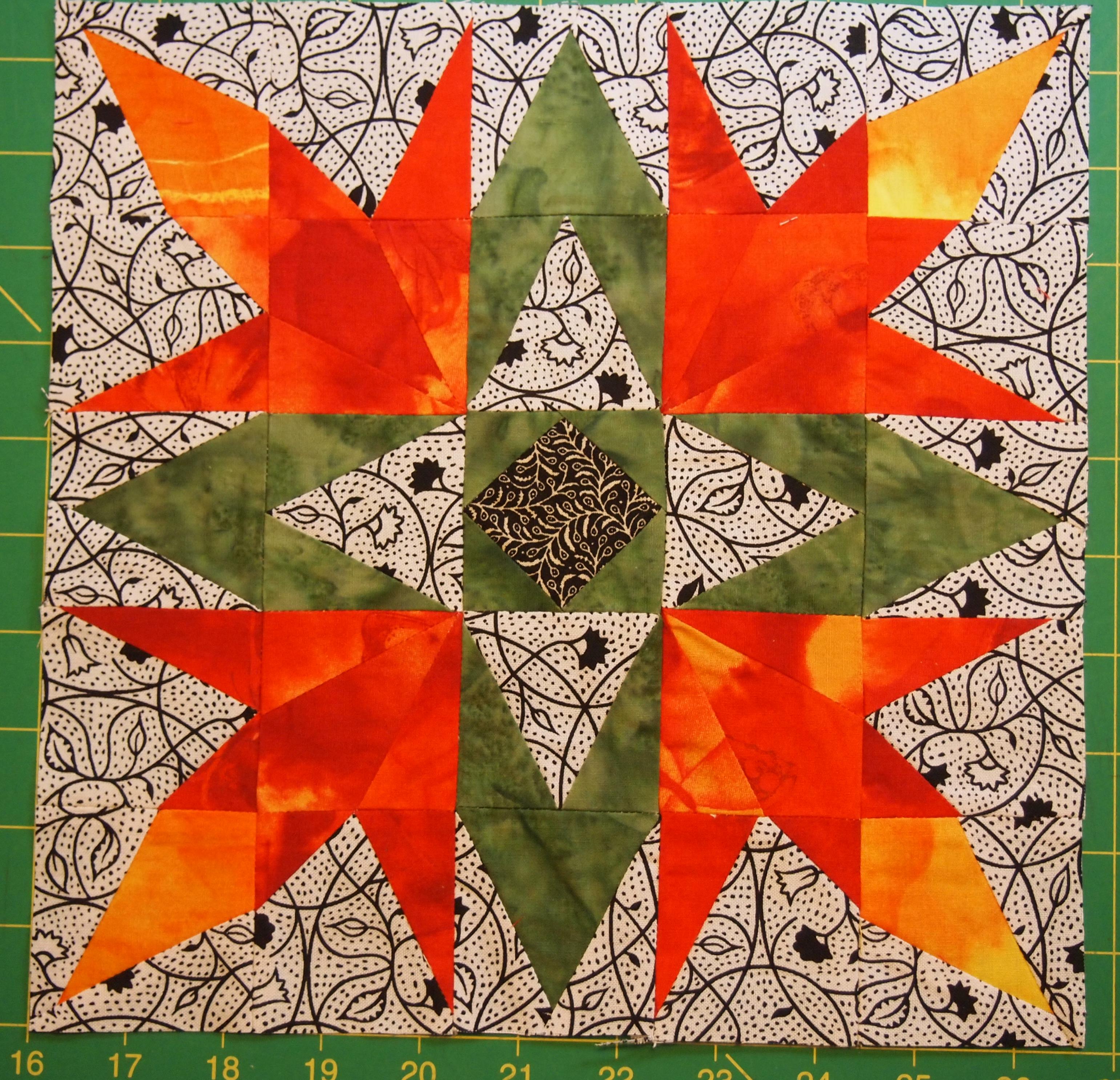
I decided to make 2″ finished units making it a 10″ finished block. This block could be made bigger by making the units bigger.
OLYMPUS DIGITAL CAMERA
I really liked this block.

A Great Way to Start the Weekend

I just got some good news. I live at the beach but I’m from Utica, NY. I belong to the Mohawk Valley Quilt Club. This weekend is their quilt show. My sister Mary McCorduck is up there now. My hexagon quilt “A Walk in Frida’s Garden” has won 1st Place, Judges Choice & Best in Show.

The blocks are made from one piece of fabric based on artist Frida Kahlo (born July 6, 1907 – died July 13, 1954 in Coyoacan, Mexico), fabric by Alexander Henry. I used the original fabric on the left side only. Printed on the fabric are two quotes made by Frida Kahlo & printed on the fabric in spanish. I machine embroidered them on the borders in english. On the top border, embroidered is “Feet, what do I need them for when I have wings to fly”. She survived a terrible bus accident where she was impaled by a steel post, but was in pain most of her life. The second quote I embroidered along the bottom border: “I Desire to Live, I have already begun to paint”. I had left over blocks, so I reduced their size and appliqued them in several place on the quilt’s edge as if they were spinning off onto the border.

Ribbon Winners

“Remember Me” has won a 1st place ribbon! This quilt consists of Rapid Fire Lemoyne Star blocks and machine embroidered blocks. There are 22 machine embroidered obituaries from my family the McCorducks, Lansings, and Fischers, the oldest is from 1900 (113 years ago).

OLYMPUS DIGITAL CAMERA