Tag Archives: Quilts

The Island Batik Box Has Arrived!

As an Island Batik Ambassador the products featured in this post were given to me by Island Batik.

My box from Island Batik has finally arrived.  I’m so excited to see and share the contents with you.

01 Tucker

My box is so special, I got a chihuahua !  No, that is my girl Tucker, she helps me with everything I’m doing whether I want help or not!

02 Surprise

First up is the wrapped bundle.  It is wrapped because it contains fabric from Island Batik’s new line to be launched at Spring Market.  I haven’t even opened it yet.

03 Batting

To help us create our projects Hobbs Batting has given us Premium Cotton Batting & Hobbs Thermore, it is a polyester batting that eliminates fiber migration.

04 Aurifil

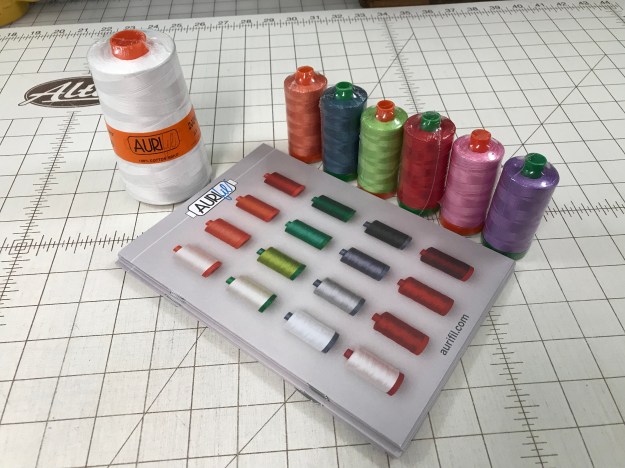
Aurifil, my absolute favorite thread.  They are so pretty lined up like little soldiers waiting for their orders.   If you haven’t tried Aurifil thread you should.  This thread is thinner, stronger & produces less lint in the bobbin case.

05 Rayon

Island Batik’s product line also includes batik rayon for apparel use.  I was given 2 yards of Pomegranate Seeds Red and a rayon scarf in a beautiful blend of greens and purple!  Should look good with my white hair!

06 Neutral

3 yards of Switzerland, I mean Neutral.  You can never have too much neutral!

07 Batik Foundations Bundle

Batik Foundations 1/2 yard Bundle!  Wowza, those colors are yummy!

08 Alpine Jungle

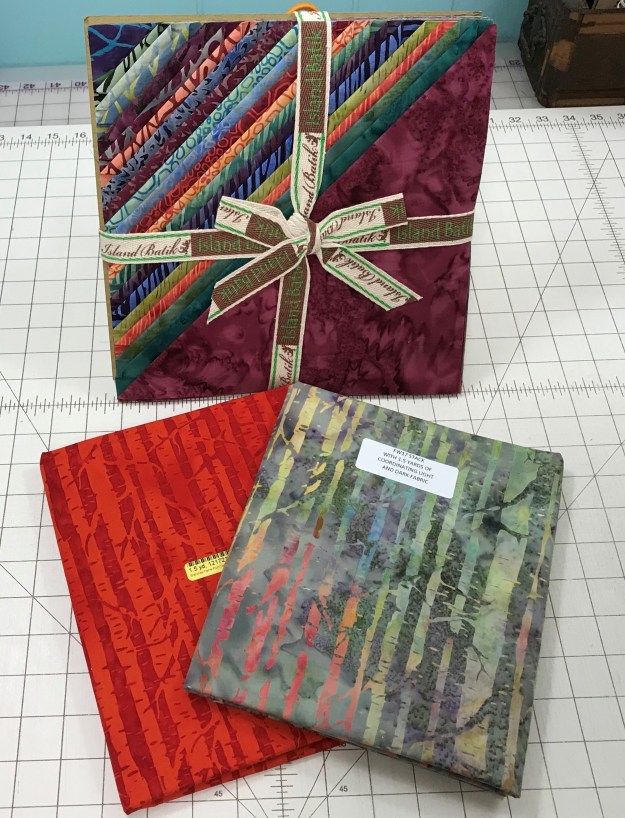
Alpine Jungle Fat Eighth Bundle with 1.5 yards of coordinating fabric.  I love this bundle.  I can’t wait to make something out it.

09 5 inch strips

These little bundles of 5 inch strips will come in handy, I’m sure of it!


This fat quarter bundle was for Galentine’s day, which is today.  But I didn’t want to be late so I made mine from Island Batik’s Drizzle Collection.

11 City Culture 2

And last but not least, this is a layer cake from the City Culture 2 line & 1.5 yards of coordinating light and dark fabric.

So join Tuck & me on this year long adventure of discovering new fabrics and fun projects!

As I finish this post, Tucker is trying to put her scent all over my Island Batik’s!

#islandbatik #islandbatikambassador

Celebrating GALentine’s Day

300px - I'm-an-Island-Batik-Ambassador - Blue-Ribbon

First things first… I am an Island Batik Ambassador!!!  I am so excited to have been accepted as apart of this talented group of quilters.  Island Batik Company has been around for over 15 years providing quality products and outstanding customer service.

Island Batik Ambassador’s are from all over the world.  As an Island Batik Ambassador, I will be sharing their fabric lines and projects to help inspire you.  Every month there will be something new to share.

I am one of those people who can’t stand to be late.  Even when I try to not to be the first person at the party, I’m always on time!  The 2017 Island Batik Ambassador’s just ended their year with the Four Season Blog Hop January 31st.  The boxes filled with Island Batik goodies for the 2018 Ambassador’s have been mailed.  Unfortunately mine will be delivered while I’m away at a quilting retreat.  I can’t stand to be late so I pulled out some Island Batik fabric from my stash to share my GALentine’s Day project with you.

If you were a Parks & Recreation’s fan you’ll remember when Leslie Knope created “Galentine”s Day” as a celebration of our best gal pal’s and lady friends!  So this February 13th (that’s right, the day before Valentines Day) let’s celebrate our fellow females who encourage and inspire us.

I heart you.

img_5696

I am also a Studio 180 Design Certified Instructor, so the way I roll is with Deb Tucker Tools!  This Mug Rug was made with Deb’s Split Rects & Corner Pop Tools.

img_5657

I started by choosing my Island Batik fabrics from the Drizzle Collection and my favorite thread from Aurifil.  I made this Mug Rug by making two  3″ x 6″ finished mirror image Split Rects units.  First thing was to check the size chart in my Split Rects instructions.  I had fat quarters of dark purple & light purple, and yardage of my background  fabric.  The tool instructions will tell you that for 3″x 6″ finished units you will need 7″ wide strips of each color.  I cut a 7″ strip from each of my purple fat quarters, and a 7″ WOF strip from my background fabric.

For Mirror Image units I placed my purple 7″ strips right sides together and trimmed off the selvages.

Right handers place strips horizontally on the cutting mat and position the tool on the strip with the broad black line against the trimmed end of the strips and the desired finished size guide line along the raw edge of the strips. Trim along the slanted edge of the tool.  You will now have mirror image elongated triangles. (See tool instructions for left handed cutting.)

Repeat the process and cut two mirror image elongated triangles from your background fabric.  Place the background triangles with purple triangles as shown above.

img_5665

Stitch the elongated triangles by placing them right sides together with the long, bias edge of the pieces aligned.  Because they are oversized there is no need to fuss, just center the two pieces with just a bit of overlap at the ends and stitch.  I press the seams open, but you can press to the dark if you are morally opposed to pressing the seams open.

First trim, for right handers, position the unit horizontally on the cutting mat (see tool instructions for left handed trimming).  Align either the “Common Diagonal” or the correct “Size Diagonal” with the seam you have sewn (this will vary depending on the slant of your unit).  The photo above has the common diagonal lined up with the sewn seam.  Check to make sure that the unit is completely contained within the trim down lines for 3″x6″ unit.  Trim up the right side and across the top.  Lift the tool and rotate the unit.  Reposition the tool over the unit.  Align the cut size measurement with the trimmed corner and the same Common Diagonal line used the first time.  Trim the two remaining edges.

For the second Split Rects unit you will use the “Size Diagonal” line (this will vary depending on the slant of your unit) positioned over the sewn seam making sure the unit is completely contained within the 3″x6″ trim down lines.  Trim up the right side and across the top.  Lift the tool, rotate the unit.  Align the cut size measurement with the trimmed corner and the same Size Diagonal line used the first time.  Trim the two remaining edges.

img_5670

You now have two perfectly trimmed mirror image Split Rects Units.  For the top of our heart I used Deb Tucker’s Corner Pop tool.

Cut two 3 1/2″ squares, one from the dark purple & one from the light purple fabric.  Cut two 2″ squares from the background fabric, and then cut them once diagonally ( the size of the replacement triangle squares varies per cut away size & is found in the chart in the tool instructions).

img_5673

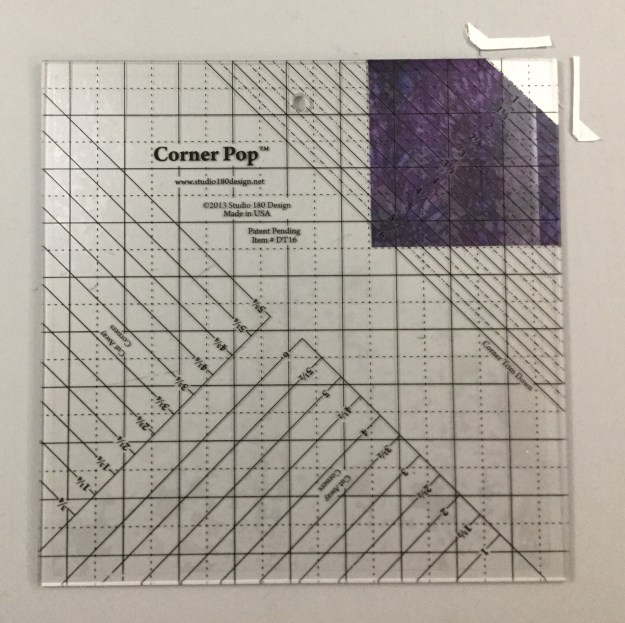
With the  Corner Poop tool you can choose from 22 size options and remove a 90 degree corner from your base unit while leaving the 1/4″ seam allowance.  For this project I popped off a 3/4″ corner from the dark purple  3 1/2″ square.  Place the 3/4″ ruler lines over the corner you wish to remove as shown above and trim.

Center the replacement triangles right sides together with the base shape and stitch.  Press toward the small triangle.
img_5679

Locate the Trim Down Section on your Corner Pop tool and find the diagonal line that corresponds to the Cut Away Size, which is 3/4″.  Trim away the excess replacement triangle fabric, returning your base square to its original size.

Repeat the process and pop off one more corner as shown above.  Center & stitch the replacement triangle, press toward the replacement triangle.

As before, locate the Trim Down Section on your Corner Pop tool and find the diagonal line that corresponds to the Cut Away Size, which is 3/4″.  Trim away the excess replacement triangle fabric.  Your unit should look like the one above.  Repeat this whole process and pop off the corners of the light purple 3 1/2″ square.

img_5685

You should end up with the four units above.

Stitch the light purple heart top to the dark purple split rects unit and Stitch the dark purple heart top to the light purple split rects unit.  Press one seam towards the split rects unit and press the other towards the heart top.  Re-Press one seam of the heart top unit that was pressed toward the split rects so the seams will nest when the unit halves are sewn together.

I pressed the center seam open to avoid bulk.

Measure your heart.  Mine measures 6 1/2″x 9 1/2″.  I cut two strips 1 1/2″x 9 1/2″ and sewed them on either side.  Measure your heart gain.  I needed 2 strips 1 1/2″ x 8 1/2″ and stitched them on the top and bottom of my heart.
img_1013

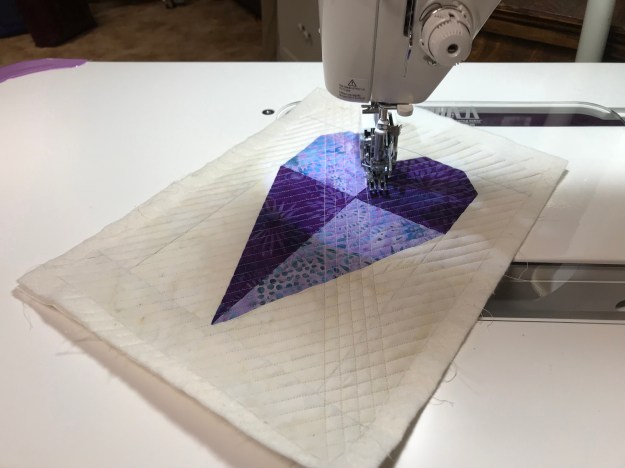
My mug rug top measures 8 1/2″ by 11 1/2″  so I cut a piece of scrap batting & backing one inch larger, 9 1/2″ by 12 1/2″.  Using my walking foot I quilted the 3 layers using a simple cross hatch design with Ivory Aurifil thread.

img_5696

I finished it with 2 1/4″ binding cut from my left over fat quarter.

Tucker tried her best to keep me from finishing my GALentine’s Day Mug Rug, but I am pleased with the finished product.

#islandbatikambassador #islandbatik #iheartislandbatik #happygalentinesday #happyvalentiesday #galentinesday #valentinesday  #thebestfrombali
BlockBuster #7 – Whimsy Turndash

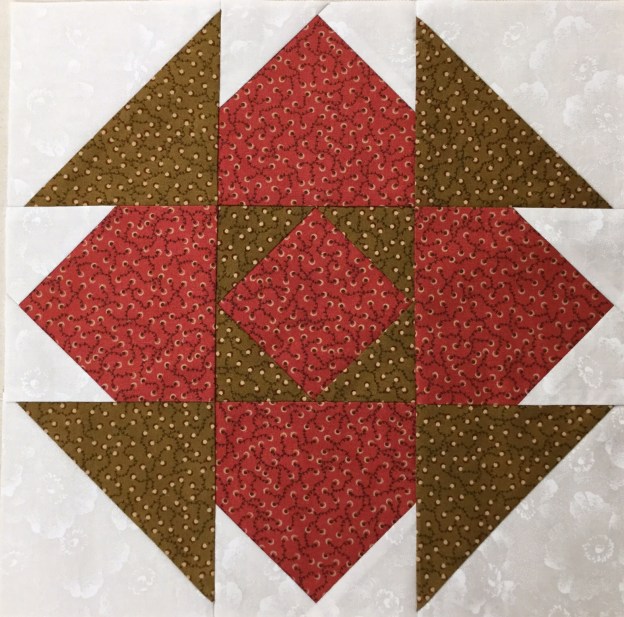
I love this block So sweet & easy.   All the instructions you will need for BlockBuster # 07 Whimsy Turndash  came with your Square/Squared & Tucker Trimmer I tools which are required to make this block.  You will also need to reference your Little Houses Technique Sheet.

Whimsy Turndash is made up of 3 different units.  Unit A is Square/Squared, one for the block center.  Unit B is Little Houses, 4 are needed.  Unit C is Half Square Triangles (HST), 4 are needed for the block corners.  I made a 12″ finished block containing 4″ finished units.

img_5592-1

The Whimsy Turndash supply list (link in the first paragraph above) offers you 3 different layouts and a black line master to play with.  I chose 2 colors and a background fabric shown above.

img_5595

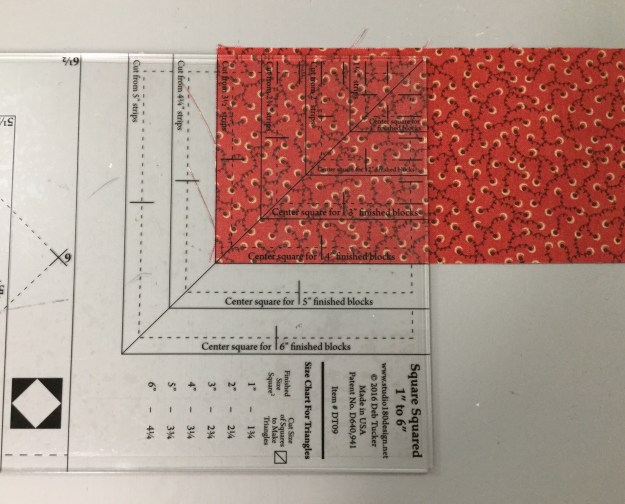
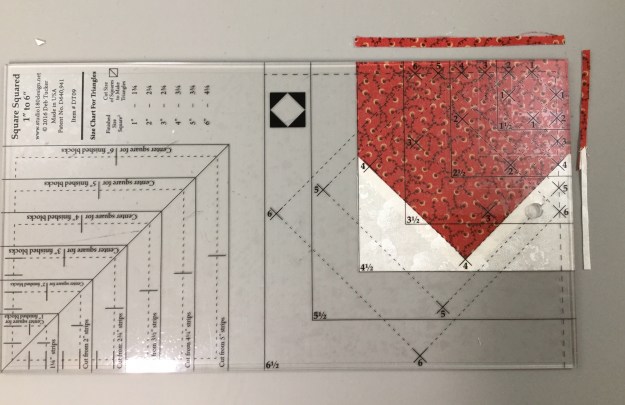
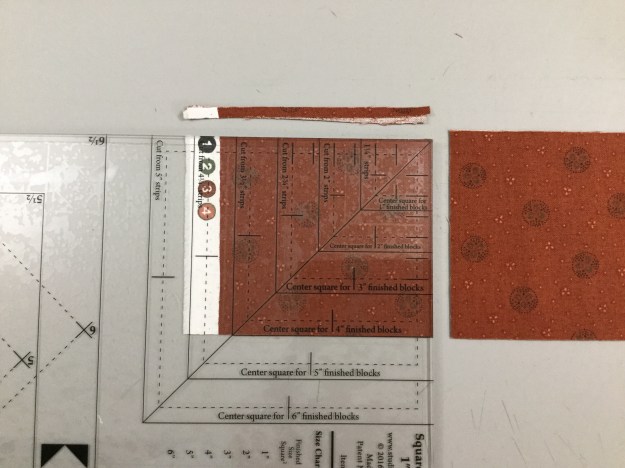
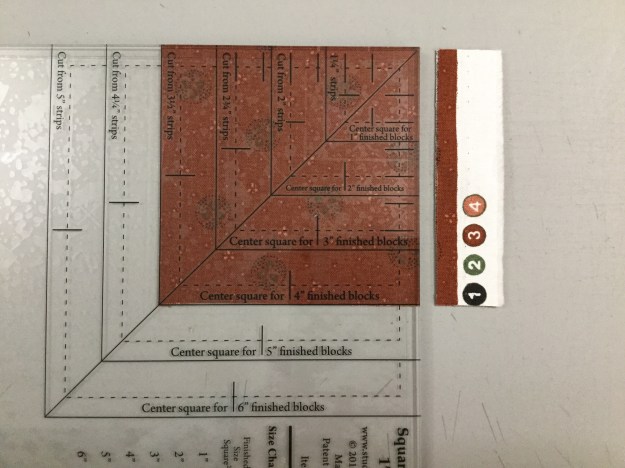
Unit A – Square/Squared:  Determine the desired finished size of your unit.  Go to the Center Square Section on your Square/Squared Tool.  Mine finished size is 4″, The Center Square Sections tells me to cut a strip 3 1/2″ wide.

img_5596

I already trimmed off the selvage of my 3 1/2″ strip.  Place the line for 4″ finished units on the bottom of the strip up against the trimmed end.  Trim up the left side and across the top.  You now have a perfect precision cut center square for your unit.

img_5597

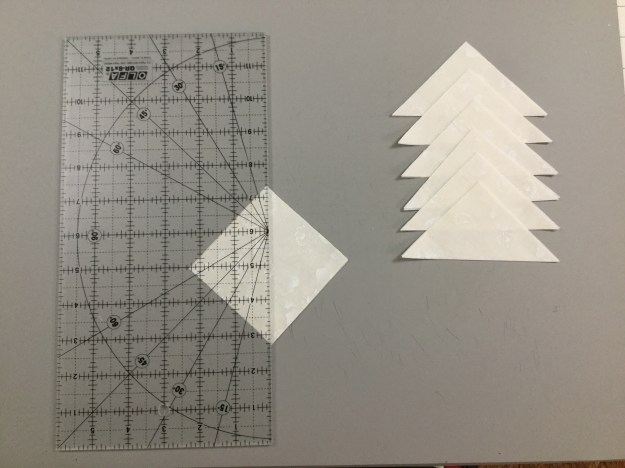
On your Square/Squared tool find the Size Chart for Triangles.  For 4″ finished units I cut two 3 1/4″ squares and cut them once diagonally.

Center a side triangle over the center square and stitch. Center another side triangle to the opposite side of the center square and stitch.  Press toward the side triangle.

Center another side triangle as before and stitch, repeat on the opposite side so all sides of the center square have a side triangle stitched to it, press toward the side triangle.

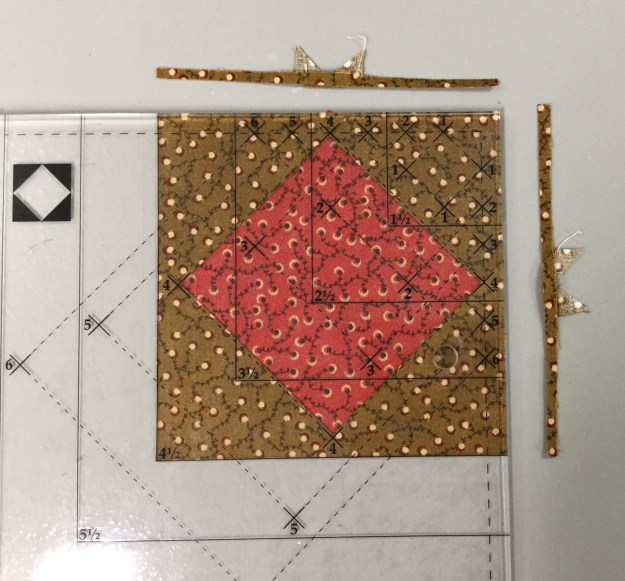
Position the Trim Down Section of your Square/Squared tool over the pieced unit.  Focus on aligning the “X’s” for your particular finished size unit.  Mine is 4″ finished, so there is a 4 at each corner of the center square.  Trim up the right side and across the top.  Check your tool instructions for Left handed cutting tool position.

img_5604

For the second cut Lift your tool & rotate your unit.  Position the tool lining up the “X’s” again and lining up the cleanup lines on the tool with edges previously trimmed.  Trim up the right side and across the top.

img_5605

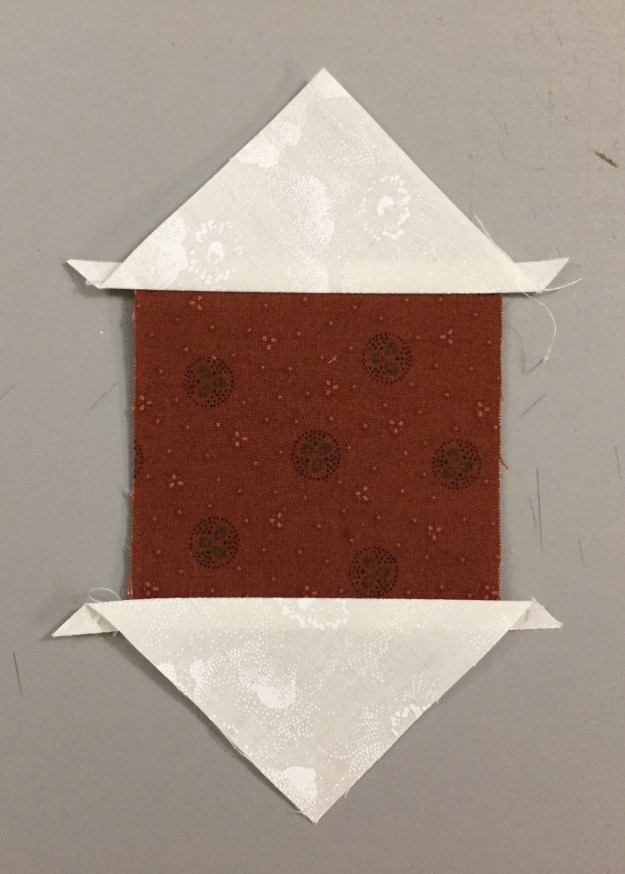
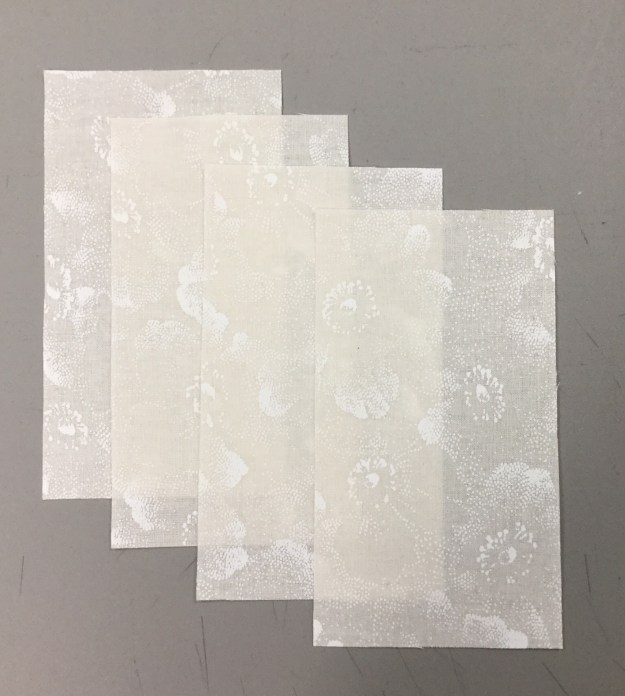
Unit B – Little House:  You will need to make 4 Little Houses.  Each little house is made up of 3 squares, one large and two small.  For a 4″ finished unit cut four 4 3/4″ squares and eight 2 3/4″ squares.

img_5606

Begin by marking a diagonal line on the back of your small squares, this will be a stitching line.

Note:  you may want to mark an additional line 1/2″ from the center diagonal line to use as a secondary stitching line for creating half square triangles out of the left over fabric.

Position one small square in one of the corners of a large square, right sides together, with the marked diagonal line going across the corner of the large square as shown above.  Stitch on both lines and trim apart.

Press toward the triangle.  Position a second small square in the corner next to corner you just stitched.  Stitch on both lines, cut apart press toward the triangle.  Press your half square triangles to the dark.  The small half square triangles are not used in this unit.  If you don’t want to make them for another project just draw the one diagonal line and once it is stitched discard the corner fabric.

img_5611

Using the Trim Down Section of your Square/Squared tool line up the peak of the House with the “X” corresponding with your finished unit size.  Align the seams with the dotted lines extending down from the “X”.  Trim up the right side and across the top.

img_5612

Rotate your Little House around, and line up the two trimmed edges with the cleanup line corresponding to your unit cut size.  This time aligning the peak with the “X” at the bottom.  Trim up the right side and across the top.

img_5614

Repeat with the other 3 large squares.

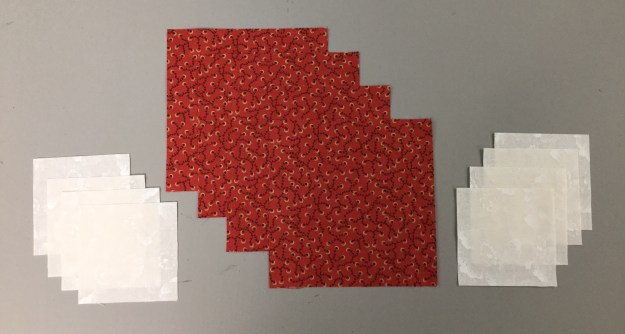
Unit C – Half Square Triangles:  We need four Half Square Triangles.  Go to the “Starting Square Size Chart” in your Tucker Trimmer instructions.  I am making 4″ finished units, so I need to cut two 5″ background squares and two 5″ squares your color of choice.

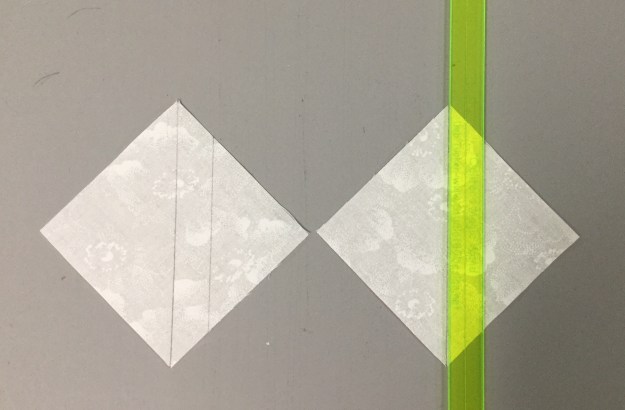
Use your Magic Wand and draw to diagonal lines on the back of your background squares as shown above.

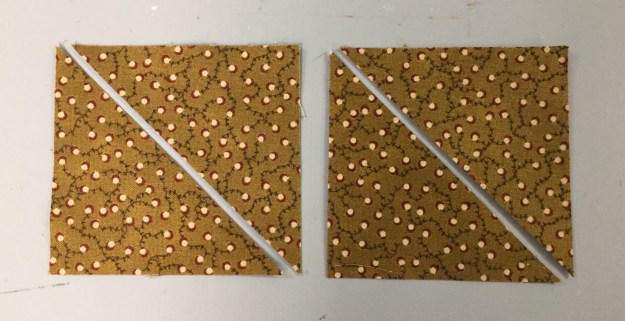
Place background squares right sides together with your color of choice squares, stitch on the lines, cut apart and press toward the dark fabric.

We always trim our units to the cut size.  My HST are 4″ finished and 4 1/2″ cut size.  therefore I look for the half circle in the corner of my tool and position the Tucker Trimmer over the unit with the half circle in the upper right hand corner, carefully aligning the solid diagonal line with the stitched seam as shown above.  Trim up the right side and across the top.  If you are left handed, you would position your tool with half circles in the lower left hand corner of the unit.  

Rotate your unit and line up the trimmed edges with the corresponding cut size of your unit, and carefully aligning the solid diagonal line with the stitched seam as shown above.  Trim up the right side and across the top.

Lay out your completed units.  Sew into rows.

This is the back of the block showing how I pressed  the seams.

img_5626

I love the completed Whimsy Turndash and I hope you will too.  This is a great block to practice these easy techniques with.


BlockBuster #6 Rolling Stone

The Rolling Stone block is fun and easy.  You will need the 06 Rolling Stone Supply List and your Studio 180 Design Square/Squared tool.  All the instructions you need to make Square/Squared Units required for this block came with your Square/Squared tool.

img_5521

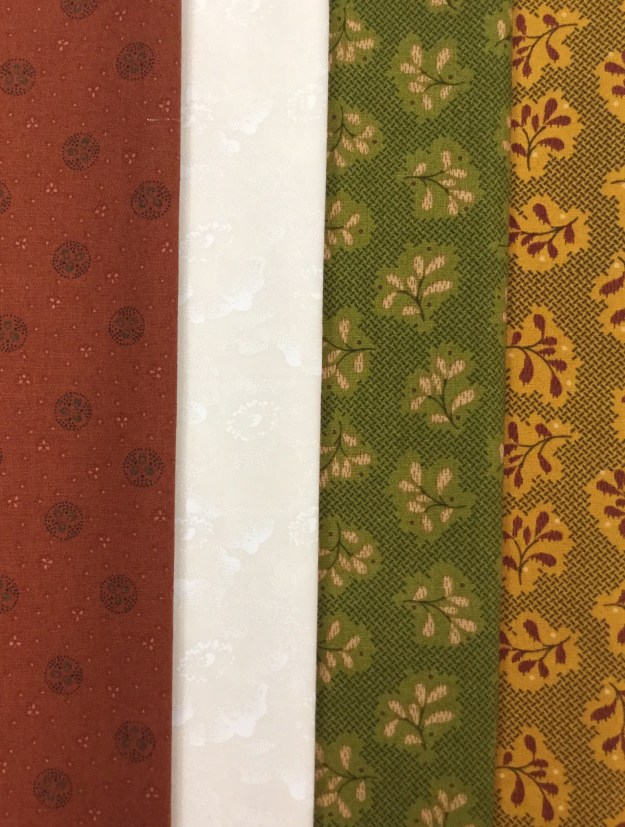
The Rolling Stone supply list gives you 3 different color layouts, a black line master & 3 block size choices, I decided to make a 12″ block.  Above are the 3 colors and a background fabric I chose.

Square┬▓ Ruler

Your Square/Squared tool has three different sections:  1. Size Chart for Triangles, 2.  Center Square Trim Down Section & 3. Unit Trim Down Section.

img_5524

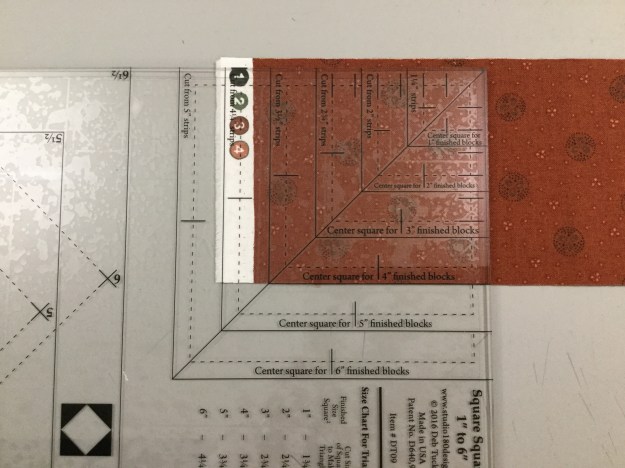
Unit A:  I am making 4″ finished units, so I checked my tool (The newer Square/Squared tools has Center Square strip width requirements based on the finished size of your chosen unit). I cut one strip 3 1/2″ wide ( this is slightly wider than needed).  I’m right handed so I laid my strip horizontally on the cutting mat with the selvages to the left.  Find the correct size square in the Center Square Section.  Lay the tool on the fabric so the bottom line for a 4″ finished unit is even with the bottom edge of the strip.

img_5525

Make two cuts, once up the right side, them across the top.

img_5526

Rotate your square so it is aligned with the 4″ finished clean up lines on the tool and make one more cut up the right side as shown above. Cut four precision center squares.

img_5523

Find the Size Chart for Triangles on your tool.  For a 4″ finished unit I cut a strip 3 1/4″ wide. Cut 2 – 3 1/3″ squares for each Square/Squared unit, then cut them each once diagonally as shown above.


Position two triangles on opposite sides of the center square.  No need to fuss with matching the middles as the triangles are larger than they need to be.  Just lay the triangle down right side up and then center the center square over it eyeballing it to see if it is even on both sides.

img_5535

Stitch & press toward the triangles.

Position the two remaining triangles on the two remaining sides of the center square as shown above.  Press triangles away from the center square.

Position the Trim Down Section of your tool over the pieced unit.  Focus on aligning the “X’s” for your particular size unit over the sewn seams.  Trim two sides, then lift the tool and rotate the unit on the cutting mat.  For the second cut, position the tool on top of the unit lining up the “X’s” and also lining up the cleanup lines on the tool with the edges previously trimmed.  Repeat the steps to make 3 more Square Squared units.

Unit B:  These are basically 2 1/2″ squares sewn together.  I cut two 2 1/2″ strips of fabric and sewed them together along the length of the strips.  For this block we need four 2 patch units and one 4 patch unit. Trim the selvage off and cut 2 1/2″ wide units.  We need 6 units.

Take two units, and with right sides together, nest the seams and stitch. Swirls the center seams and press to make your 4 patch unit.

img_5522

Unit C:  For a 12″ clock cut a 2 1/2″ strip of fabric.  Then sub-cut into four 2 1/2″ x 4 1/2″ rectangles.

img_5544

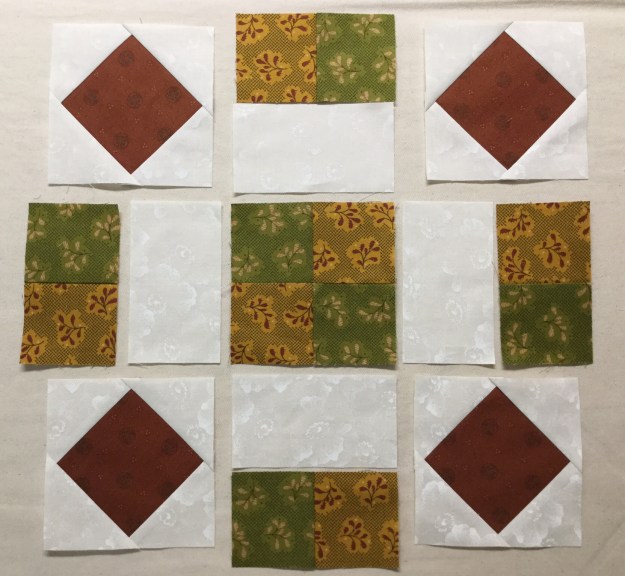
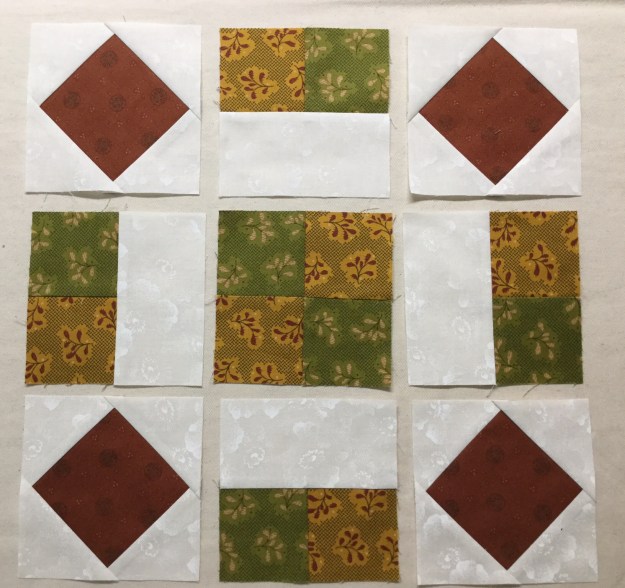
Lay out your block units.

img_5545

Sew the Unit B – 2 Patches together with the Unit C – rectangles, press toward the rectangle.  Now all your units are 4 1/2″.

img_5546

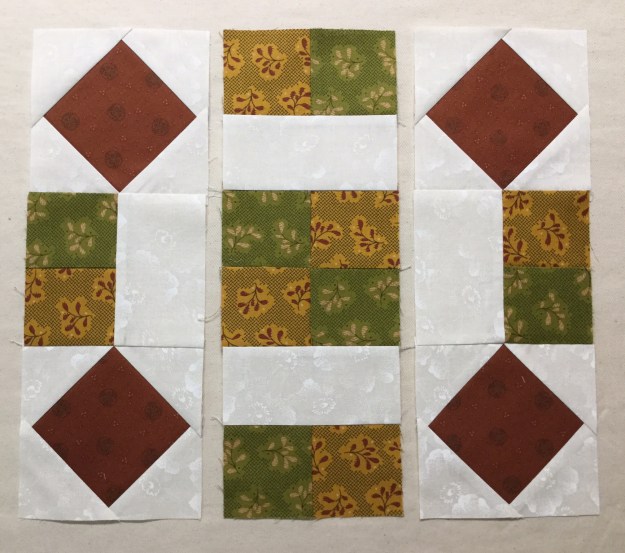
Sew your Square/Squared units to your 2 Patch/Rectangle units and your 2 Patch/Rectangle units to your center 4 patch unit as shown above.

img_5549

The back of the block shows I pressed the square/squared units toward the 2 patch units, and when I joined the rows i pressed the center out towards the sides of the block.

img_5548

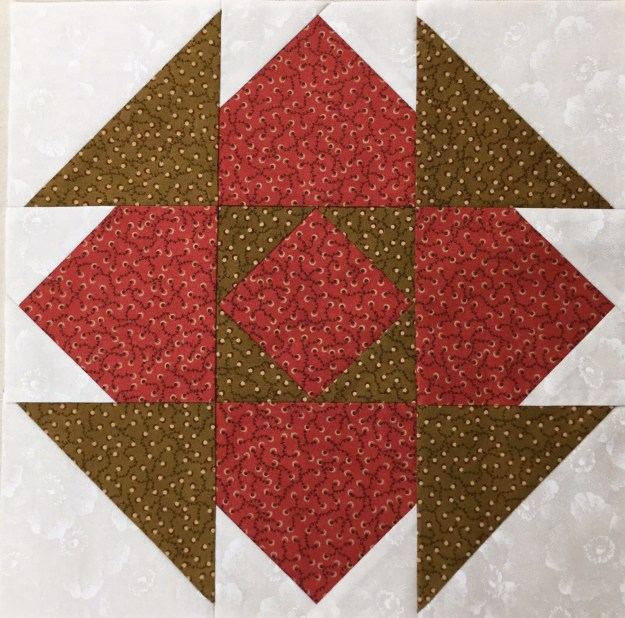
BlockBuster #6 – Rolling Stone.  Nice block!

Follow my blog with Bloglovin

Royal Treasures is here at last!

After three long years of labor, Deb Tucker’s newest book, Hunter’s Star Royal Treasures, has finally arrived!

img_5514

Royal Treasures is a follow up to Deb Tucker’s Hunter’s Star Hidden Treasures book.  After publishing Hidden Treasures, which focused exclusively on throw sized Hunter Star quilts, Deb began getting requests and questions about bigger, bed-sized projects.  Hunter’s Star Royal Treasures has over 40 brand new quilt designs, all made exclusively with Studio 180 Design’s Large Hunter’s Star Tool.

img_5515

The quilts in Royal Treasures were created by Deb Tucker and dozens of Certified Instructors, including ME!  With that many different creators there is something for everybody in this book.

Waves of Joy

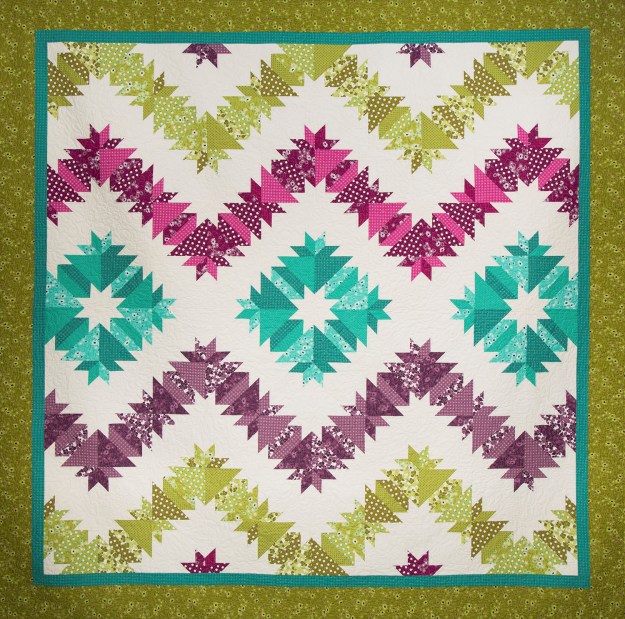
I am over the moon proud to have my quilt “Waves of Joy” included in Royal Treasures!  Waves of Joy is a King Size quilt made with fabric from V and Co., Simply Colorful II by Moda.  I chose 4 basic colors with varying prints in each color.  But you could choose to use a simple two color format of lights and darks.

Using Deb Tucker’s Rapid Fire Hunter Star process, you will increase your productivity and decrease your stress.  Each Hunter Star block consists of 2 triangles. 2 trapezoids, plus 4 star points.  It’s all about the color play.

I offer Hunter Star workshops where you will make a “Basic Recipe Wall Quilt” using the Hunter Star tool. When you are done you will understand and have the skills to make any Hunter Star quilt.  Contact me for workshop information or find a Studio 180 Design Certified Instructor near you.

Sneak Peek – Whirling Dervish

Coming soon to a quilt shop near you Deb Tucker’s newest pattern “Whirling Dervish”!

img_5511

I love this pattern. It was so much fun, and it was easy!  It is a companion pattern for the Tucker Trimmer 3. Can you believe I made this great block from strip piecing?  The pattern can be made in Lap, Twin, Queen or King sizes!  If you haven’t already, sign up for Deb Tucker’s Newsletter at  Studio 180 Design  so you will know when Whirling Dervish is released, or follow Deb Tucker on Facebook at “Deb Tucker’s Studio 180 Design”.

Let’s go quilt something!

I Love New York OBW #62

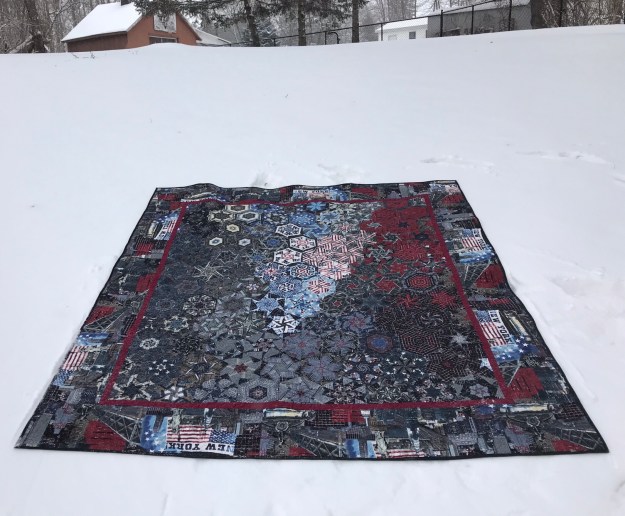
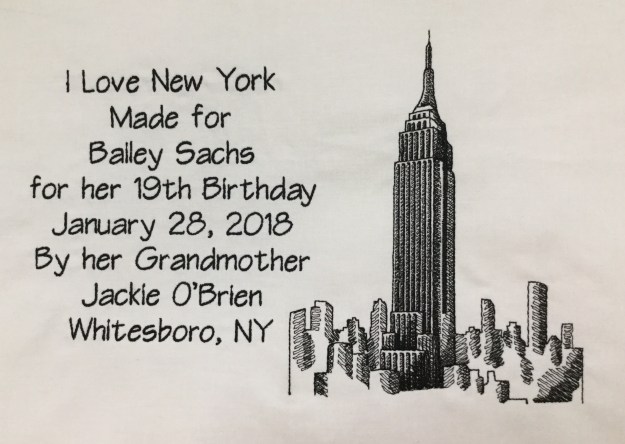
I had a really busy Fall teaching schedule this year.  I am so looking forward to 2018.  I got a jump start by making a quilt for Granddaughter Bailey’s 19th birthday.  She absolutely loves New York City.  We have visited there several times and walked from one end of the city to the other.  I had this fabric from Timeless Treasures for several years.  It just occurred to me that I must have been saving it for Bailey.

img_0983

It is about 9 degrees in Central NY today.  This is my 62nd One Block Wonder.

img_5491

The back also has a New York City themed fabric.  Happy Birthday Bailey!

I Love NY

Deb Tucker had a busy year also, Studio 180 has many new patterns out.  I’m working on one now called Whirling Dervish that is so fun.  I will be posting about it soon.  There are also new Studio 180 Design Technique Sheets to expand our skills.

Stacked Squares

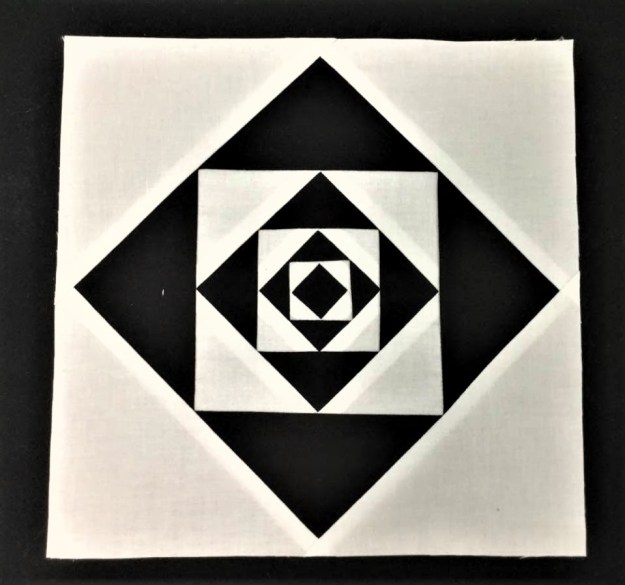
“Stacked Squares” is a technique that will allow you to make the “Economy” block perfectly every time without using paper foundation piecing. Like all Studio 180 Design processes, you’ll be constructing oversized units and then trimming them down.  Above I made a block using the “Stacked Squares” technique sheet and the required Large Square/Squared Tool to make a square in a square, in a square in a square, in a square in a square, in a square in a square, in a square in a square, in a square in a square, in a square! Whew!

img_5349

You have heard of the “Shaded Four Patch”, well here is a sample of what you can do with the “Shaded Nine Patch” units.  The Shaded Nine Patch is an amazing unit that has endless possibilities all by itself or it can be combined with other fundamental units to create even more designs. With the Shaded Nine Patch Technique Sheet you can make this unit in 7 sizes.

img_5352

I made this block using  the Bird of Paradise Technique Sheet.  This techniques requires the Large Square/Squared tool, it is so very cool.  You can make this unit in 6 sizes from 1″x 2″ to 6″ x 12″.

img_5353

I love this new “Eight at Once” technique sheet!  With the Tucker Trimmer I you can make Half Square Triangles (HST) 2 at a time.  With this technique you can make 8 HST’s at a time in 11 different sizes! Wowza!

Deb also gave us a new tool, the Four Patch Square Up.  Four Patches are basic units that seem so simple to make. Just stitch 4 squares together and you’re good to go.  But anyone who attempted these units knows they are notoriously difficult to make.  The Four Patch Square Up tool is the solution.  The tool’s perfectly engineered lines are designed to quickly locate and align with the unit center and sewn seams, allowing for easy trimming on all four sides.  You will be able to make Four Patch Units in 12 sizes!

img_5384

I played with the Four Patch Square up using Deb Tucker’s BlockBuster #24 Compounding Four block pattern. I love the design it makes when you put 4 blocks together.

I wish you all a Happy & Healthy New Year!  Let’s go quilt something!

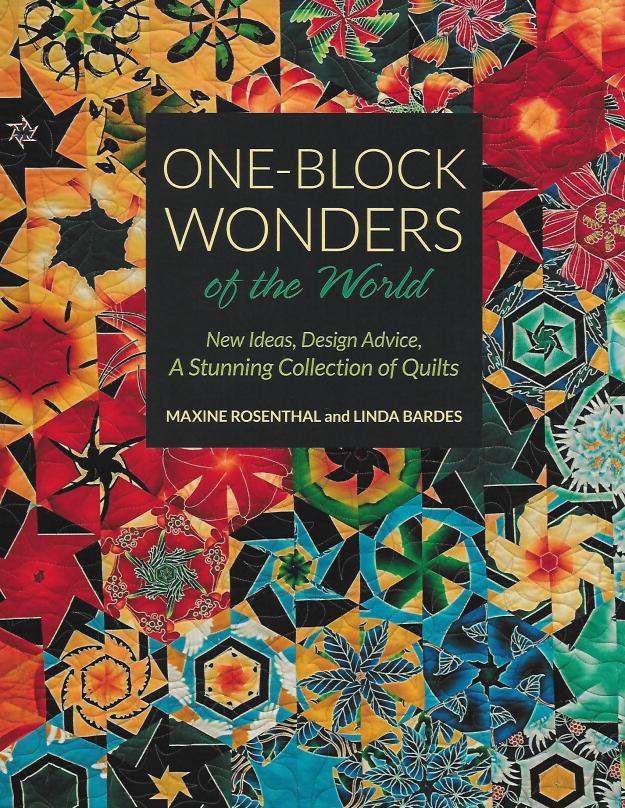
One Block Wonders of the World

Early in 2006 I was looking through the Hancock’s of Paducah catalog I had received that day.  I poured over every page not wanting to miss a thing.  I got to section where the new books were being offered…and there it was “One Block Wonders, One Fabric, One Shape, One-Of-A-Kind Quilts”!  I was intrigued and ordered it right away.  I couldn’t  wait for it to arrive.  When I got it I immediately went shopping for fabric.  I attacked the online fabric sources and ordered several fabrics.  I read the instructions over & over.  I must admit I struggled with section on “Aligning the Fabrics”.  But I didn’t give up until I figured it out.  When I designed the first block I literally jumped for joy!  I will admit, I was so excited I sewed three hexagon’s together and then sewed the other three hexagon’s together, and the proceeded to sew the halves together.  I learn everything the hard way!  A little “un-sewing” and I was on my way.  When I got all my hexies on my design wall I almost hyperventilated.  I was so excited I took pictures and emailed them to every quilter I knew (this was before Facebook).

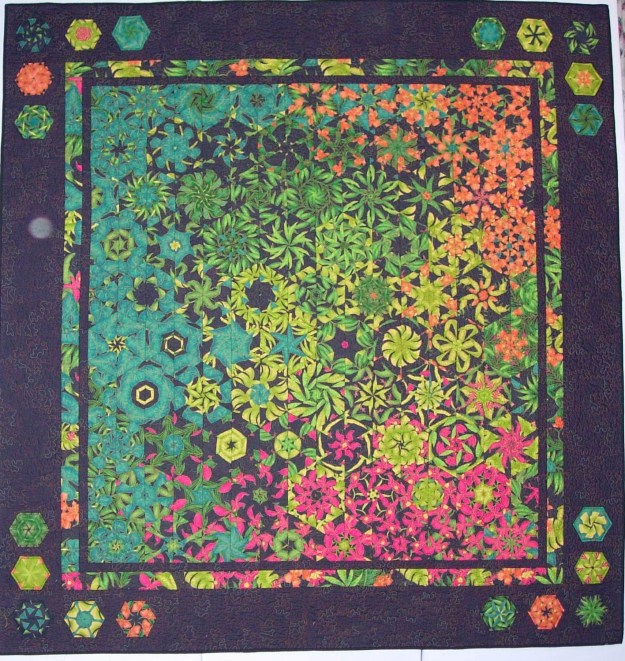
2006 Schwarzys Garden

This was my first One Block Wonder (OBW), “Schwarzy”s Garden made April 2006.  I cut my first strip set the wrong size.  But I didn’t let that deter me.  I cut the next five strips sets correctly and used the first strip to make small hexies for the border.   I entered 2 OBW’s in my local quilt show and have been teaching how to make them for 11 years now!

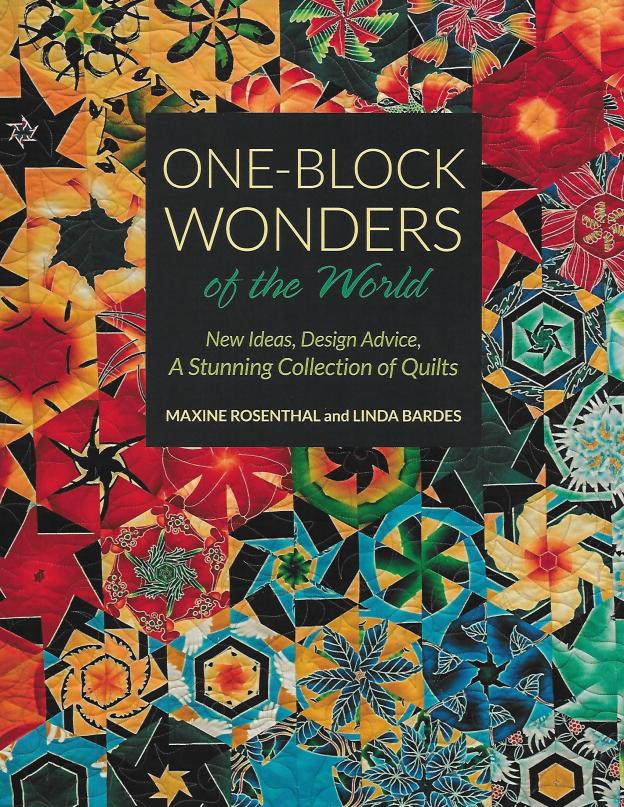
I have had a love affair with this process ever since.  Sixty-two One Block Wonders later and I have the privilege and great honor to have two of my OBW’s included in Maxine Rosenthal’s & Linda Bardes newly released book  “One Block Wonders of the World”!

One Block Wonders of the World

I am so proud to be included in this collection of outstanding OBW’S!  This book is awsome!  In case you dont know, there is a group on Facebook called “One Block Wonder Quilt Forum”.  We are fast approaching 10,000 members.  Linda Bardes is one of the group’s organizer’s with a great deal of help from Kathy Gannon.  The people in this group are off the chain creative.  I am always amazed with what they come up with.

If you have not picked up your copy of One Block Wonders of the World, dont delay!  It is available on Amazon at CT Publishing and your local quilt shops.

If you don’t have Mazine’s other books, you need them!


The first book introduces you to the process. The second still covers the process but introduces you to cubes.  The third, gives you the best recipes for cubes.  All 3 book give fabulous design ideas.

I have 3 OBW’s cut out and another 19 waiting to be born!


Studio 180 Academy 2017

I just got home from teaching at Studio 180 Academy 2017 at the White Eagle Conference Center in Hamilton, NY!  Wow did we have a great time!  I am posting some pictures, but there are more at the Studio 180 Academy Facebook Page.  Next Year, Studio 180 Academy 180 will be held in Zion, Illinois, September 19 – 22, 2018, so mark your calendars!

Apply Center

I made so many friends.  It was absolutely fabulous!

Deb Annette Jackie Sue

Deb Tucker was there. Her keynote speech was wonderful!

This slideshow requires JavaScript.

Sue Graf & I taught Sea Glass.

This slideshow requires JavaScript.

Sue & I taught Northern Neighbours by Deb Tucker

Jenns Journey

Lynn Wheatley & Jackie Mowday taught Jenn’s Journey (a pattern by Michelle Hiatt)

This slideshow requires JavaScript.

Sue & I taught Diamonds in the Sky (a pattern by Michelle Hiatt)

Purveyor of Paper Plates

Jackie O’Brien the Purveyor of Paper Plates!

BlockBuster 5 – Whirligig

This is a very cool block, but be sure to use your best pressing, measuring and cutting skills as this is a 3 out of 4 stars for difficulty.  All the instructions to make this block can be found in the instructions that came with your Wing Clipper I, Tucker Trimmer I and on the Pickets & Quickets technique sheet.

This is a tricky block; you will need to pay attention to your fabric placement and the orientation of your quicket and picket units.  To help you out here is link to the Whirligig Black Line Layout you can print this sheet and use your colored pencils to help choose your fabrics and placement.

01 Fabric Choices

I chose five colors and a background fabric to make 4 different color units, each containing 2 flying geese, a Picket, a Quicket and a half square triangle.

The 05 Whirligig block can be made in 3 sizes:  6″, 9″ and 12″.   I chose the 12″ block.  Check the Cutting Chart, and choose the size block you want to make.  We will start with the Flying Geese Unit.  The cutting chart gives you the finished and the cut sizes of the units.  Check your Wing Clipper instructions to see what size starter squares you need to cut.  As you know when using the Wing Clipper you start with one large square and 4 small squares.

02 Mark for FG

Following the instructions use your Magic Wand and draw two diagonal lines on the back of your small squares.

03 Position

Position 2 of the small squares right sides together in diagonally opposite corners of the large square, nudging them in toward the center by just a few threads

Stitch on both drawn lines, them trim between the lines on the center diagonal.

06 Press

Press the seams toward the smaller triangles.  One of these units will make 2 flying geese, the other will be saved to make a left slanted Quicket.

Position one of the smaller squares in the corner of the previously pieced unit.  Nudge the square in like you did before.  Stitch on the drawn lines and trim between the lines as before.

09 Press

Press the seams toward the smaller triangles.

10 Trim 1

Position your oversized unit horizontally on your cutting mat with the goose pointing toward you.  Align the diagonal guide lines of the Wing Clipper with the sewn seams of the flying geese unit. Trim up the right side and across the top.  (See the Wing Clipper Instructions for left hand cutting.)

11 Trim 2

Lift your Wing Clipper and rotate your flying geese unit 180 degrees.  Reposition your Wing Clipper to align cleanup guidelines with the previously trimmed raw edges and the “X” at the top with the intersection of the seams.  Trim up the right side and across the top.

12 Picket Position

Remember we only used one of the heart shaped units for the flying geese.  We will use the other to make our left slanted Quicket.  Lay the unit on your cutting mat as shown above.  Position your Wing Clipper tool over the unit, the “X” on the tool should align with diagonal seam.  I am making a Quicket with a cut size of 4 1/2″ by 2 1/2″, so I positioned my tool to ensure I can trim all four sides.

13 Picket Trim1

Trim up the right side then across the top.

14 Picket Trim 2

Lift your Wing Clipper tool and rotate your unit 180 degrees.  Align the trim down lines with the just trimmed raw edges and aligning the long diagonal line on the tool with the single diagonal seam.  Trim up the right side and across the top.

15 Quicket

The cut size of my right slanted Picket is 2 1/2″ by 4 1/2″.  Following the instructions on my Pickets & Quickets Technique Sheet, I bump up the size by  1/4″.  My rectangle is 4 3/4″ by 2 3/4″.  My small square is 2 3/4″.  Draw a diagonal line from corner to corner on the small square.

Position the small square right sides together with the rectangle and align the raw edges.  Stitch on the line and trim the excess.  Press toward the small triangle.

17 Quicket

Position your Wing Clipper tool over the unit, the “X” on the tool should align with diagonal seam.  Trim up the right side  and across the top.

18 Quicket

Lift your Wing Clipper tool and rotate your unit 180 degrees.  Align the trim down lines with the just trimmed raw edges and aligning the long diagonal line on the tool with the single diagonal seam.  Trim up the right side and across the top.

Follow the instructions that came with your Tucker Trimmer I for making Half Square Triangles (HST) in the size you chose.  Using your Magic Wand draw two diagonal lines on the back of one of your starter squares.  Place your starter squares right sides together. Stitch on lines and trim down the center.  I pressed toward the dark fabric.

21 HST Trim 1

Trim the oversized HST to the desired cut size.  Mine are 2 1/2″.  (See the Tucker Trimmer Instructions for left hand cutting.)

22 HST Trim 2

Lift your Tucker Trimmer and rotate the HST 180 degrees position the diagonal line and the outline of the square to the measurement desired and trim up the right side and across the top.

23 Unir Layout

We are now ready to sew this unit together.  Layout the  2 flying geese, 1 left slanted Quicket, 1 right slanted Picket and 1 half square triangle as shown above..

First stitch the 2 flying geese together, press in the direct the geese are flying. Then stitch the geese to the right slanted Picket.  Press toward the Picket.

Stitch the HST to the left slanted Quicket, pressing toward the Quicket.

25 Stitch 2 together

Stitch the two sections together.

26 Block Layout

Repeat the process for each of the other 3 sections.  If all of your geese are the same color you can make all your flying geese in sets of four, then make the Pickets & Quickets using the method in the technique sheet.  When I stitched the four sections togehter I pressed the seams open to avoid bulk.

27 Block

As I said in the beginning, “very cool block”!