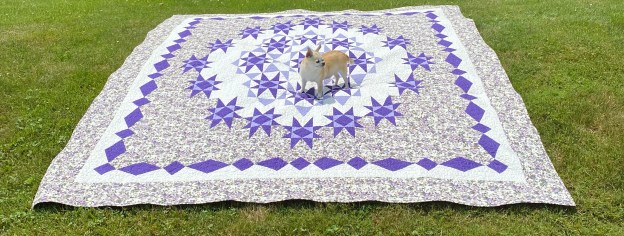
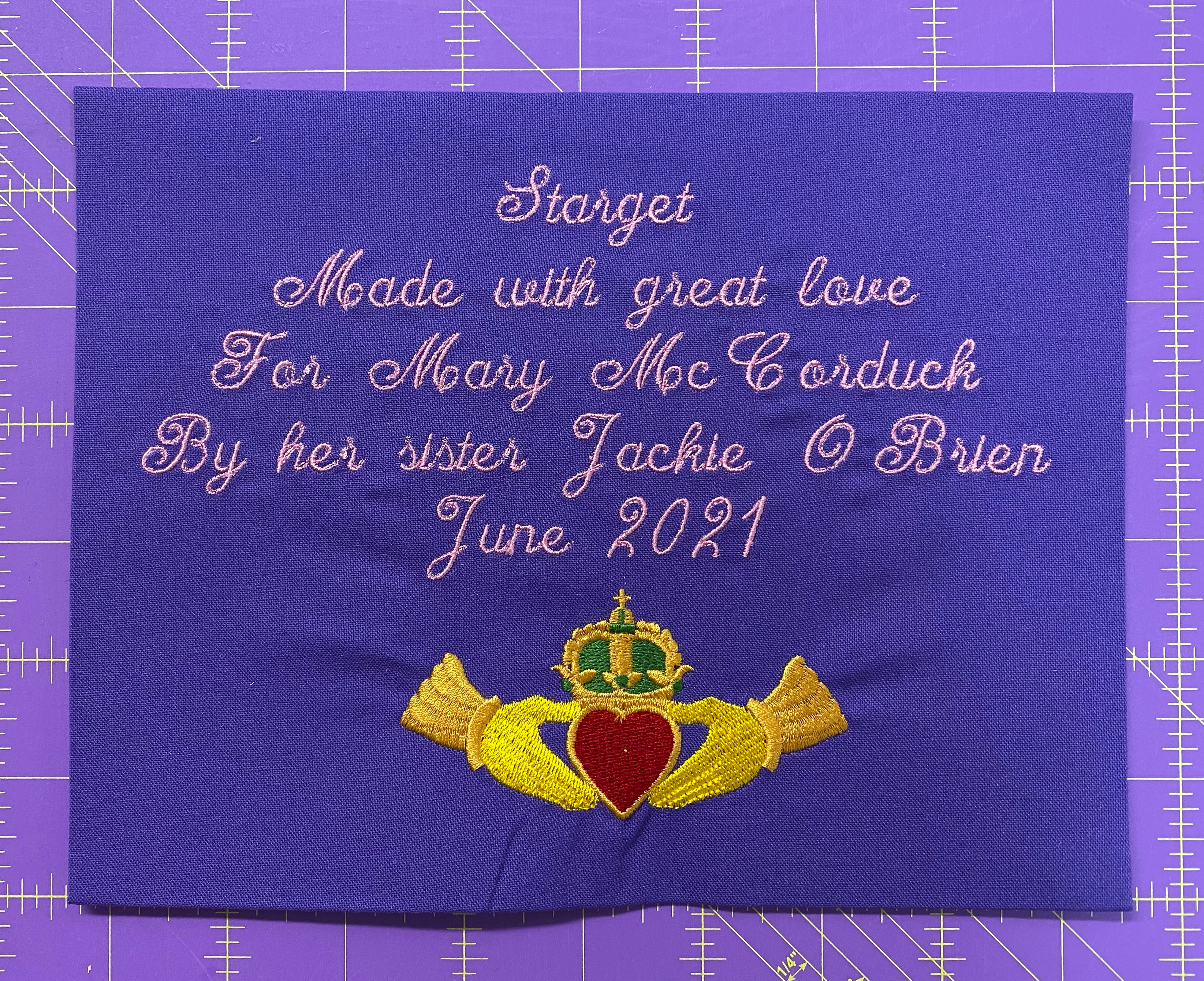
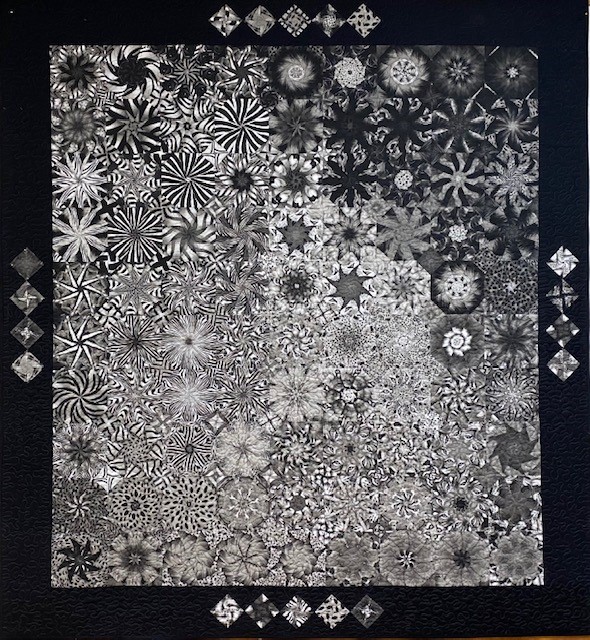
I made this quilt for my sister Mary. She came with me to every doctors appointment and every cancer treatment for nine months. Mary had to wait in the car during these (winter) appointments because of COVID restrictions. She loves this pattern and I was so happy to make it for her.
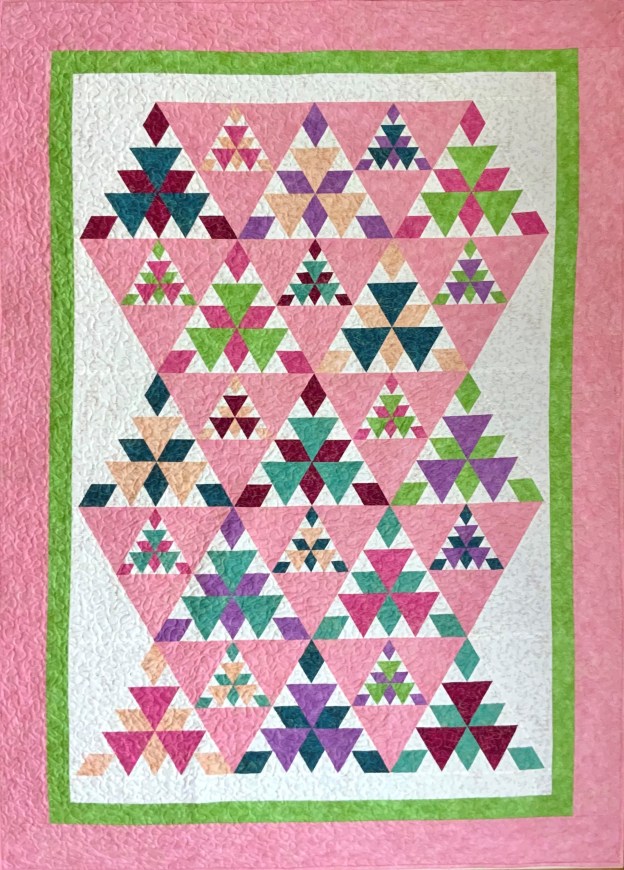
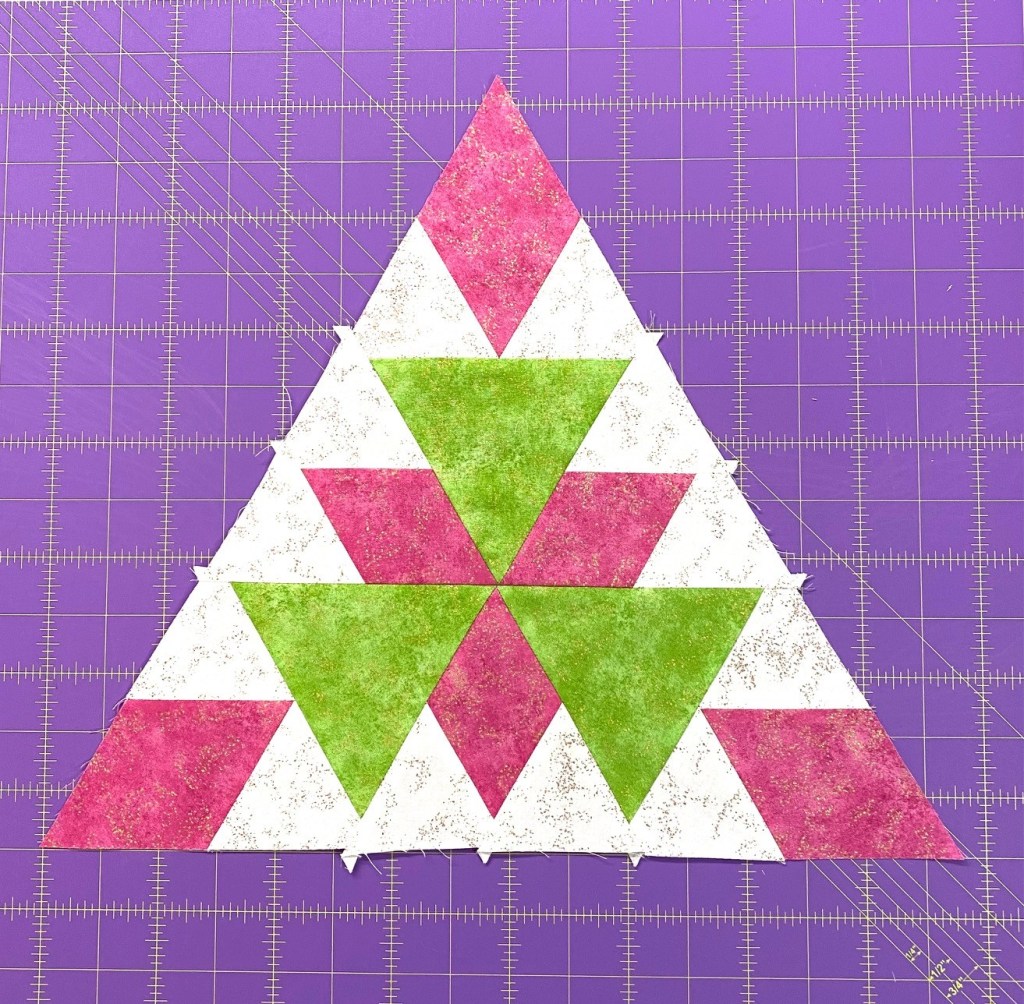
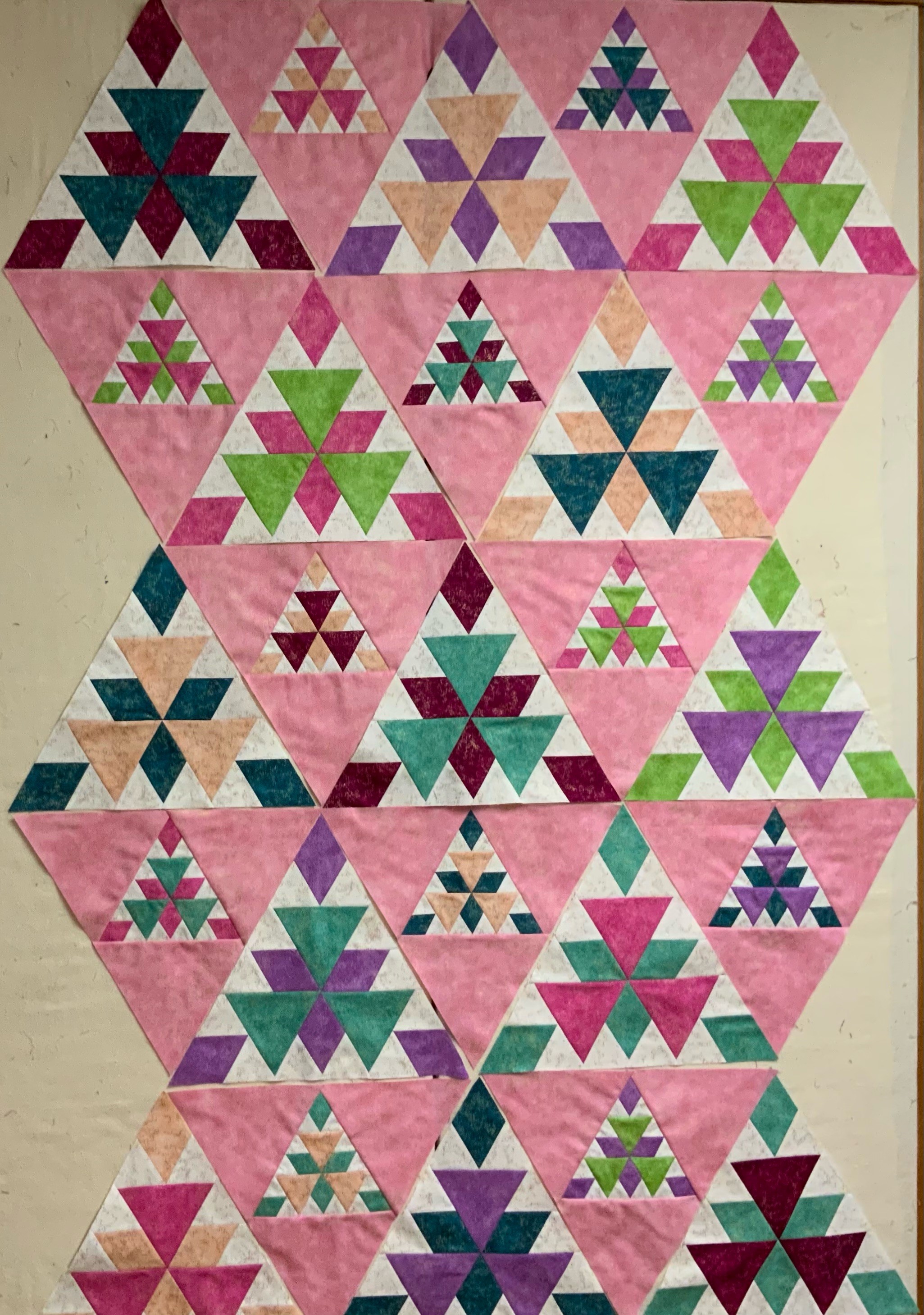
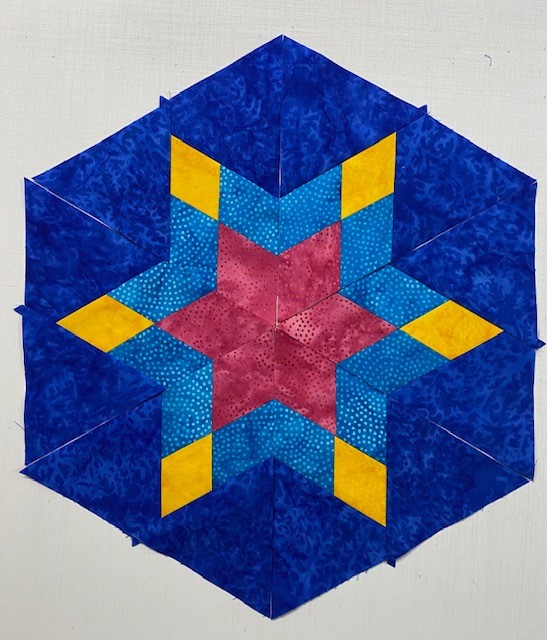
I obviously can’t get enough of 60 degree triangles. I decided to take a break from One Block Wonders to play with my Star 60 Tool and make Radioactive by Deb Tucker.
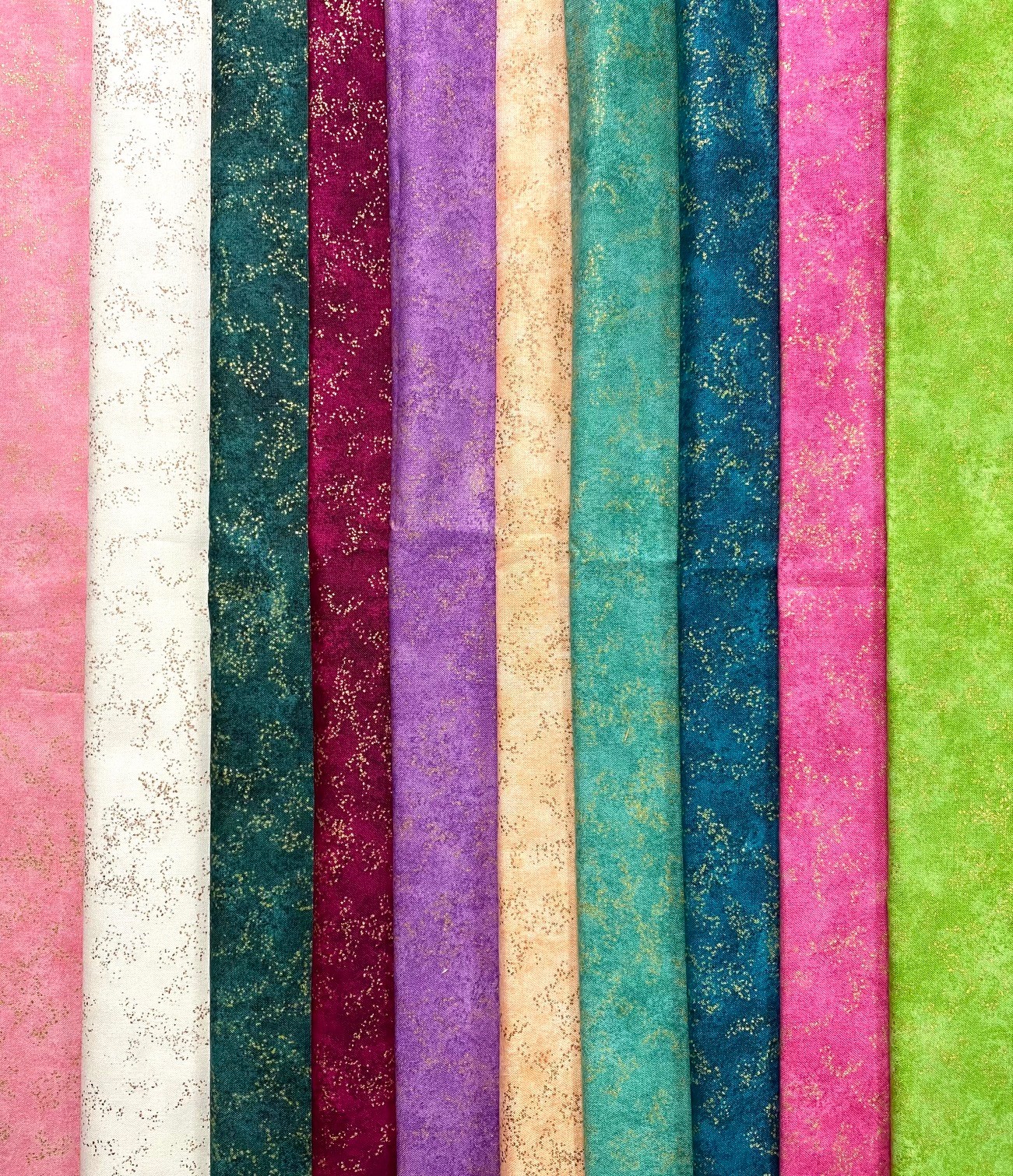
Northcott Fabrics provided me with Shimmer Radiance by Deborah Edwards. These fabrics are so beautiful with a soft luscious hand and saturated colors.
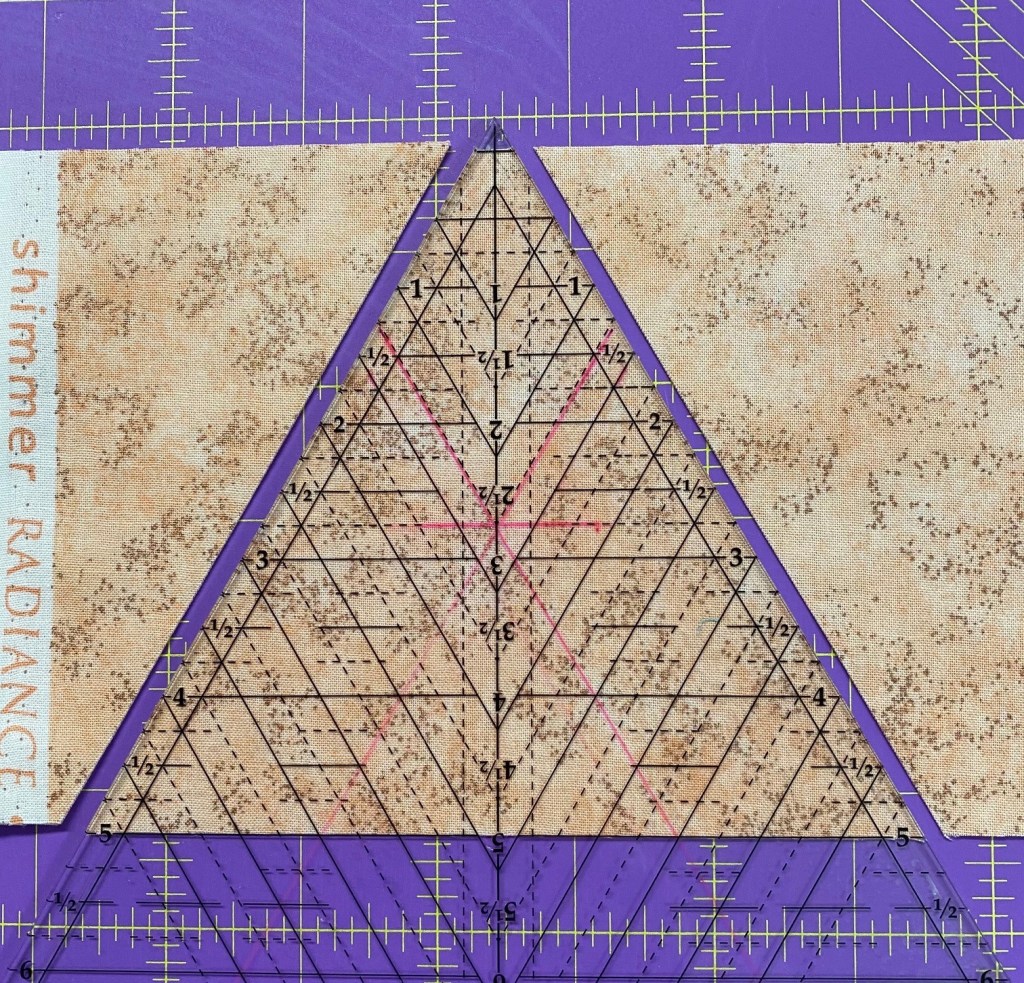
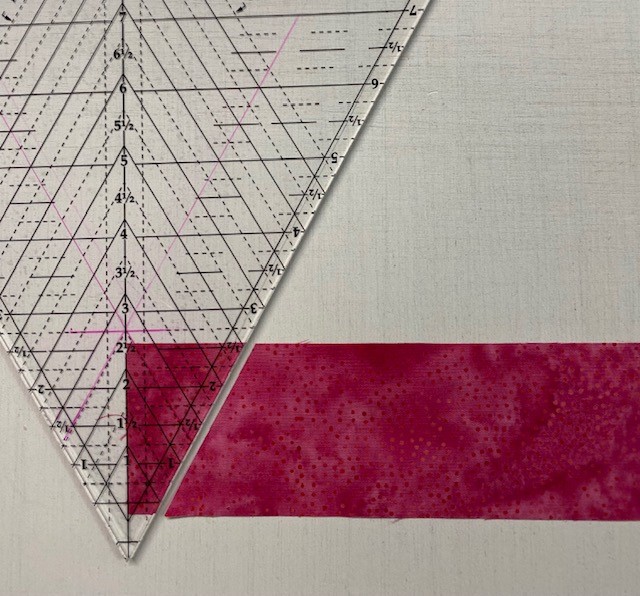
Radioactive uses Star 60 units for 12″ and 6″ triangle blocks. First I cut my side triangles for my 12″ Star 60 units, then the 6″ units.
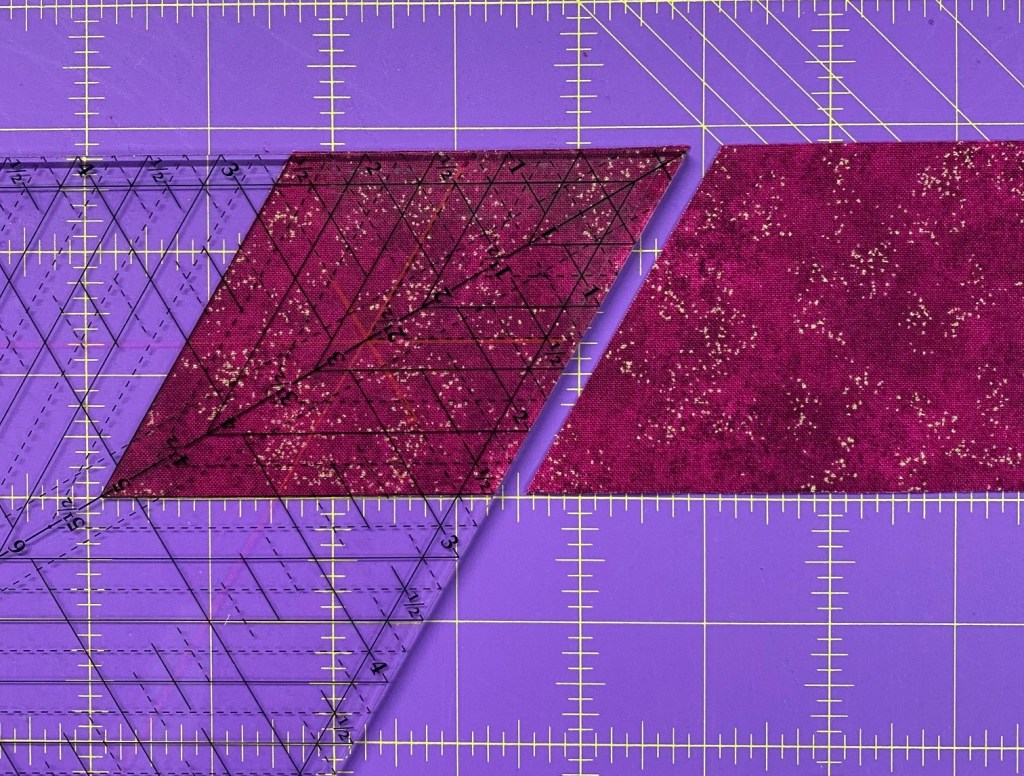
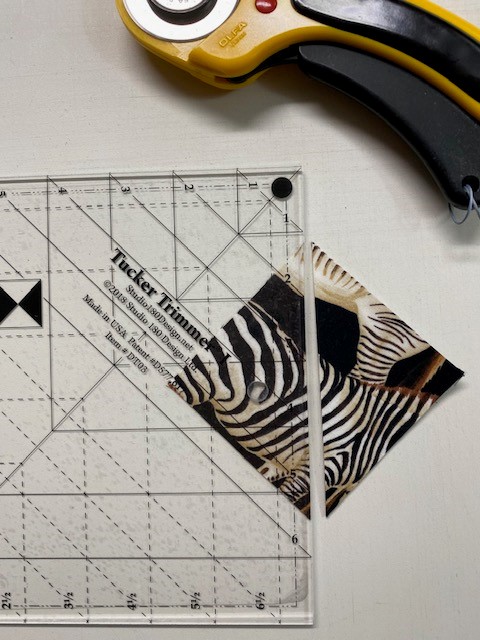
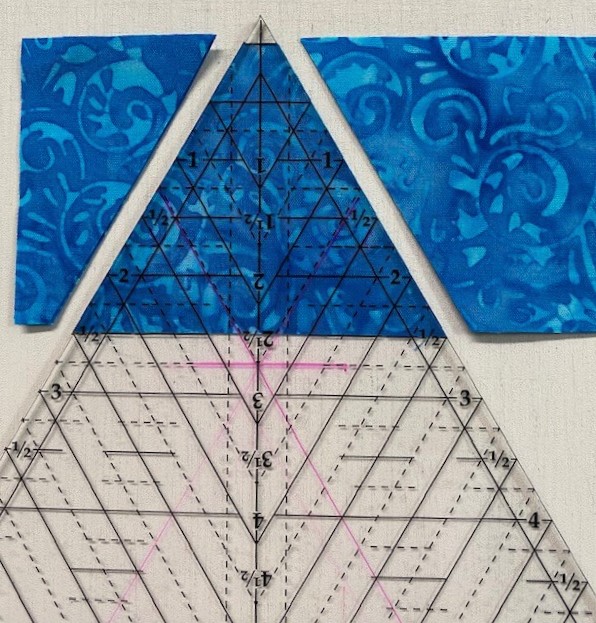
Then I cut my Diamonds using my Star 60 tool.
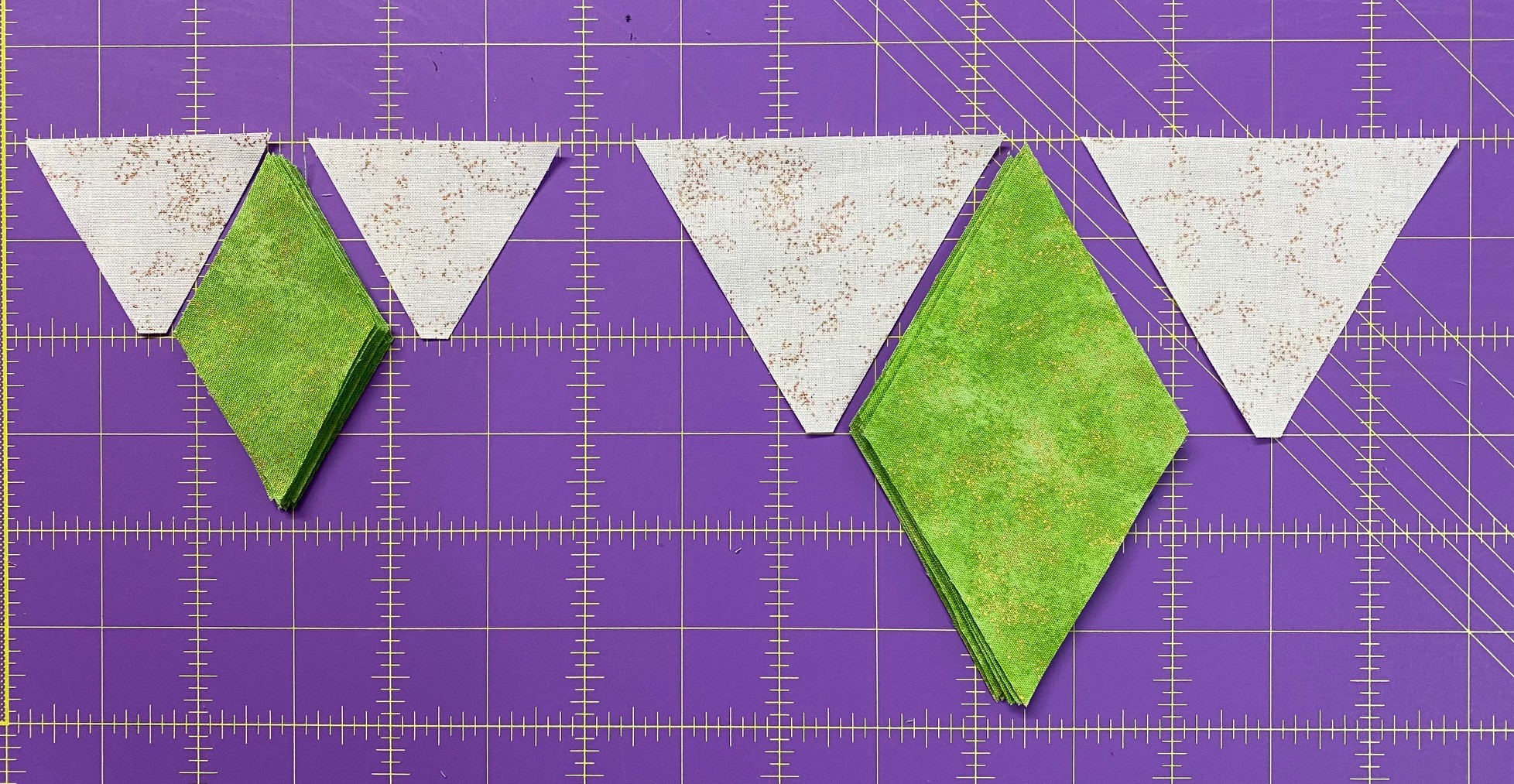
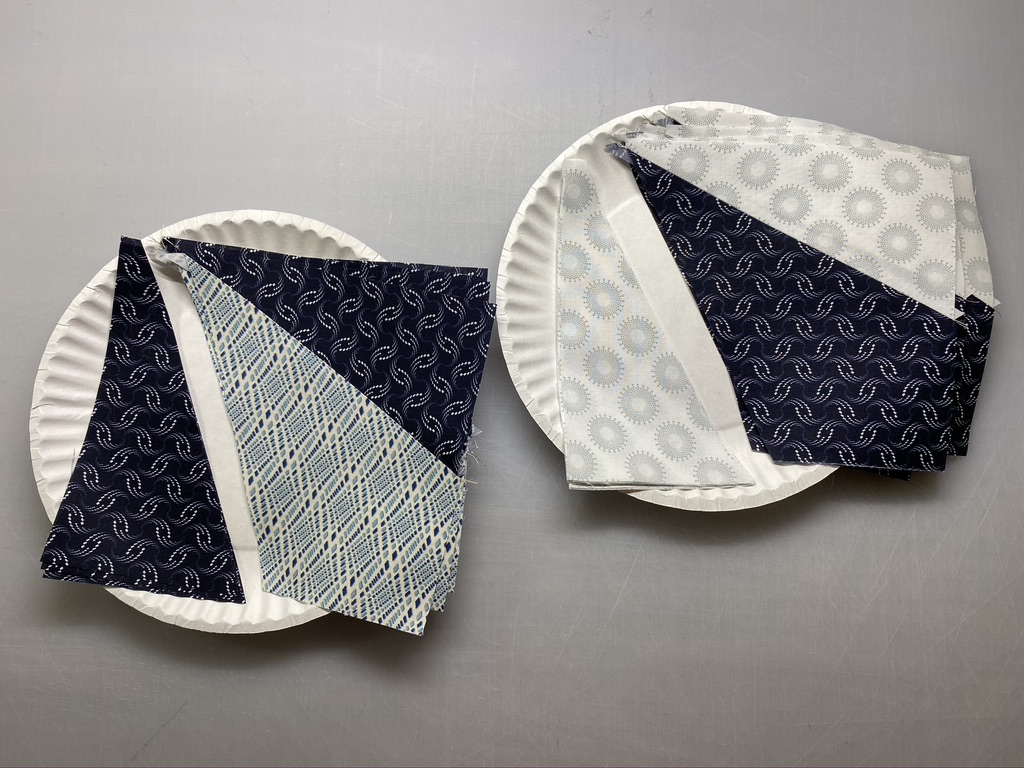
6′ & 12″ Star Units
Once I have cut my units for both my star 60 units it is time to construct my units.
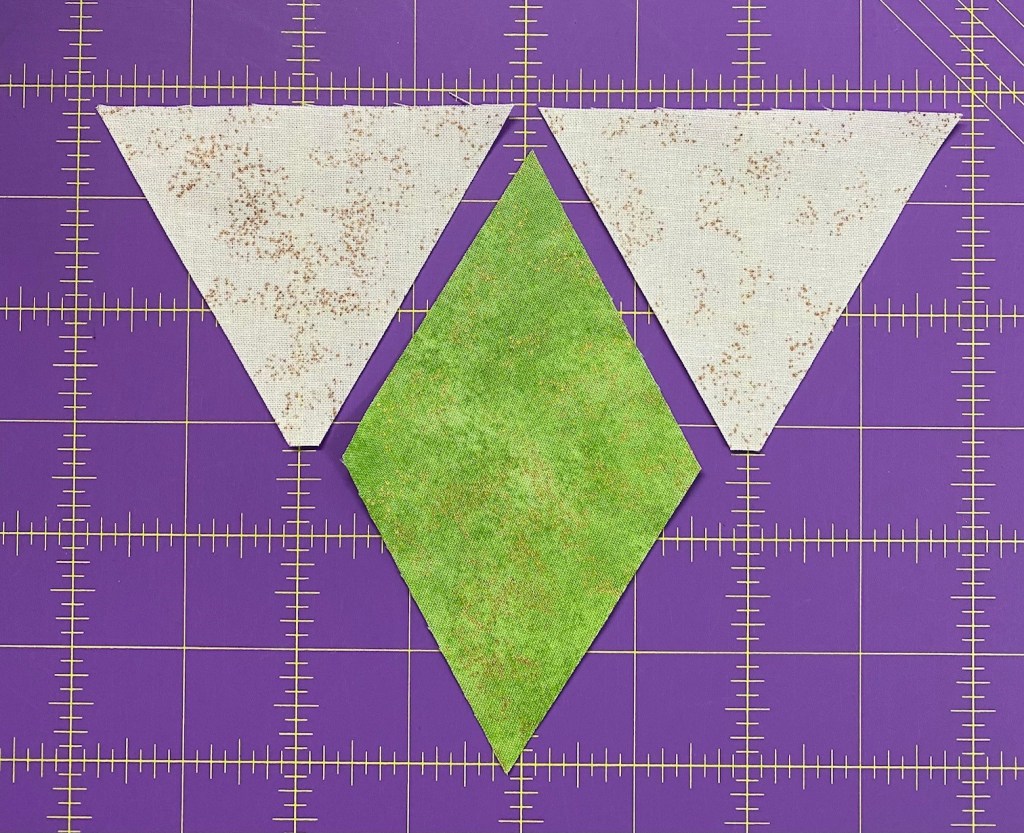
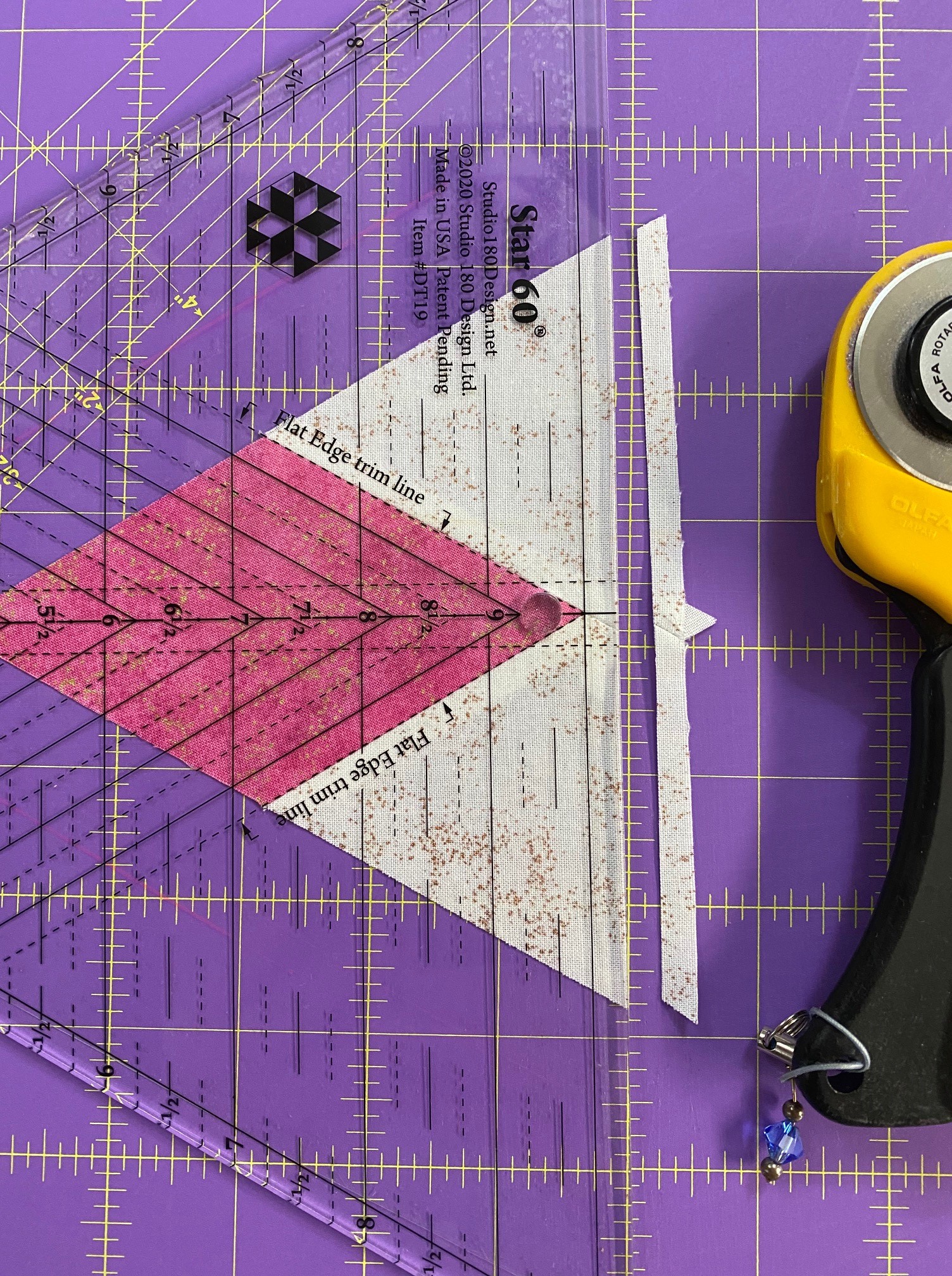
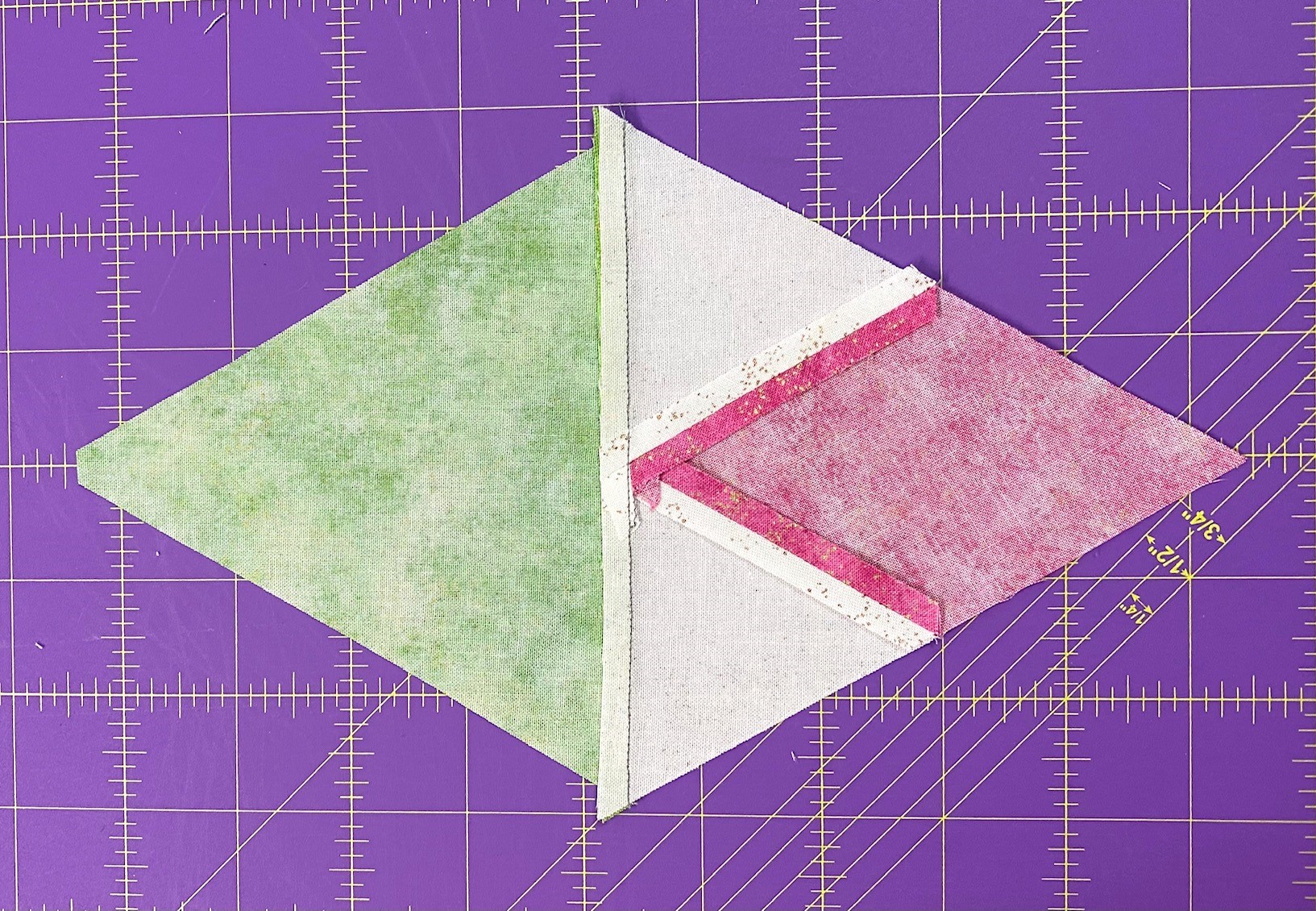
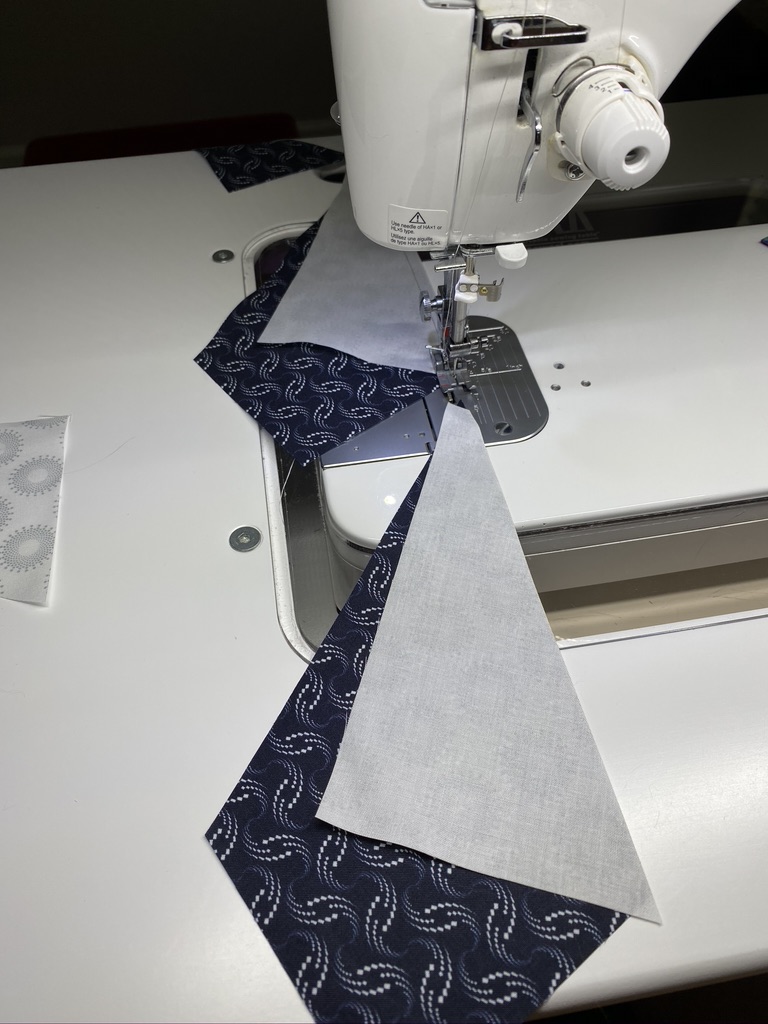
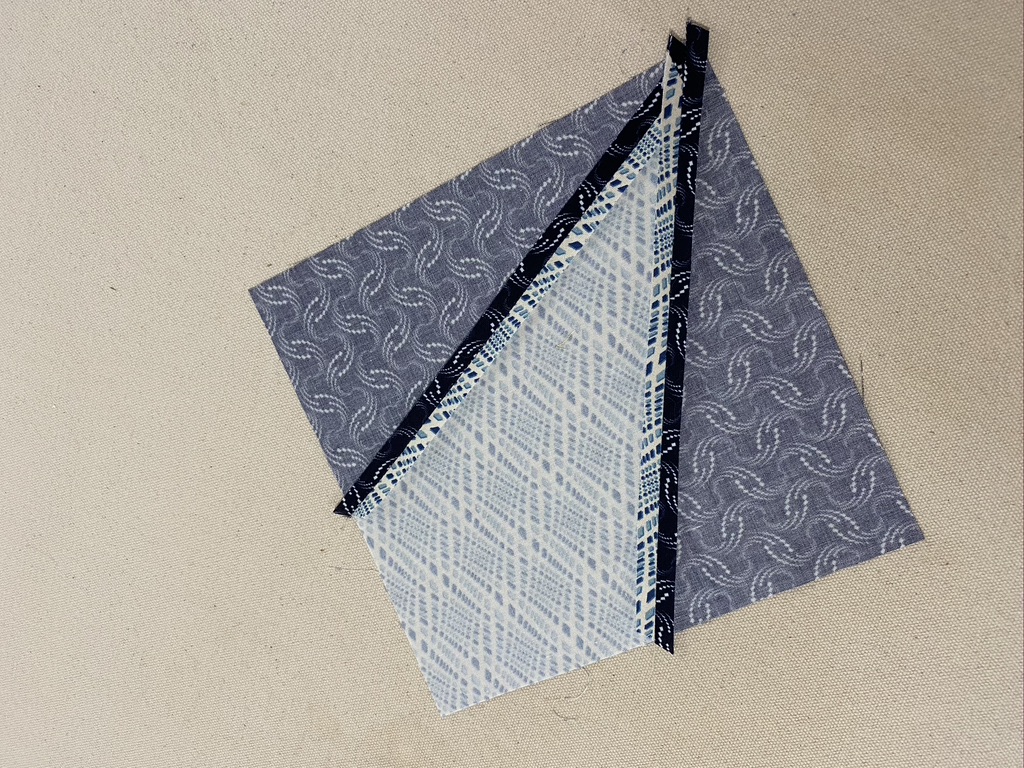
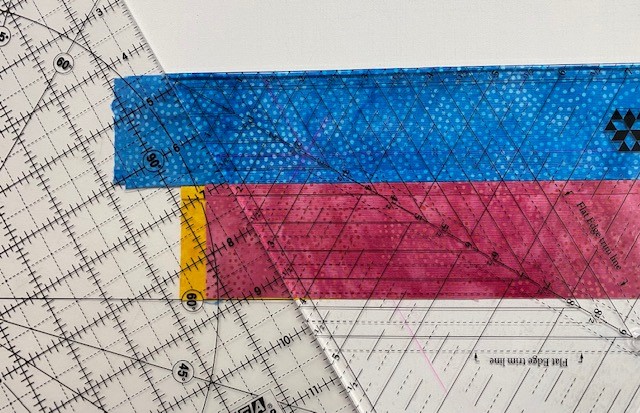
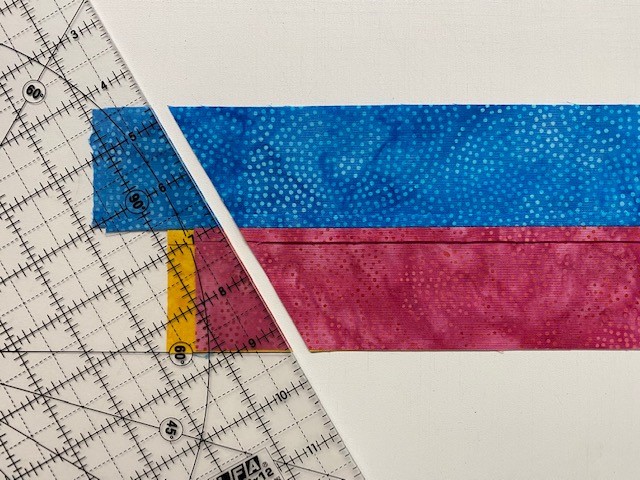
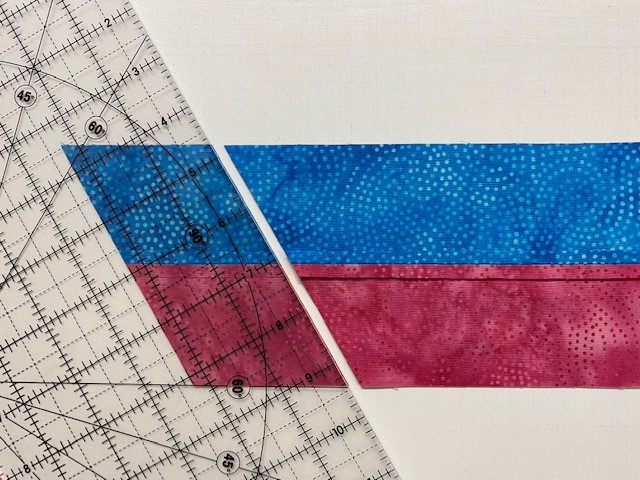
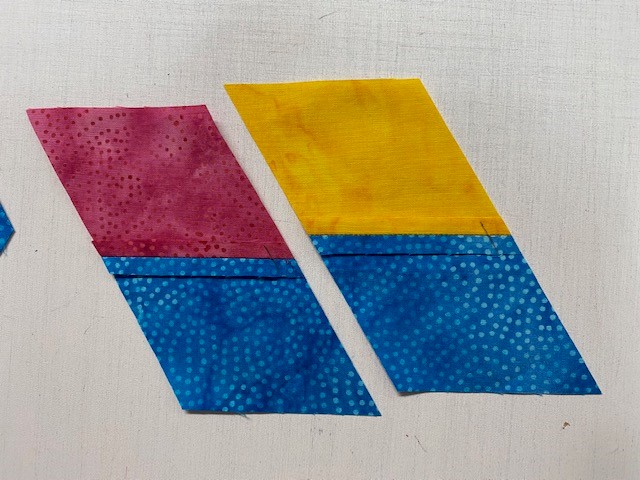
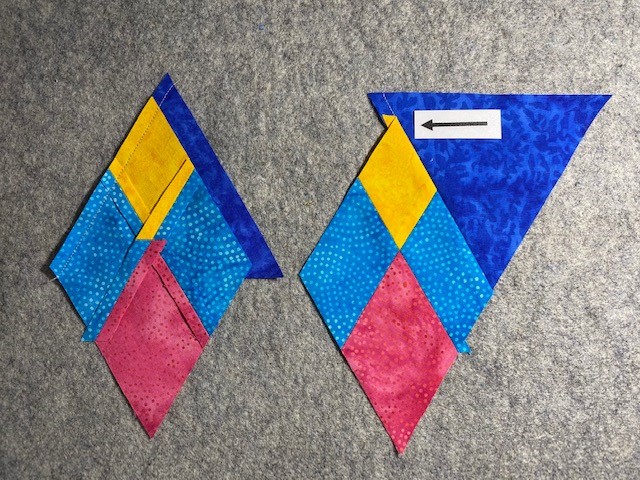
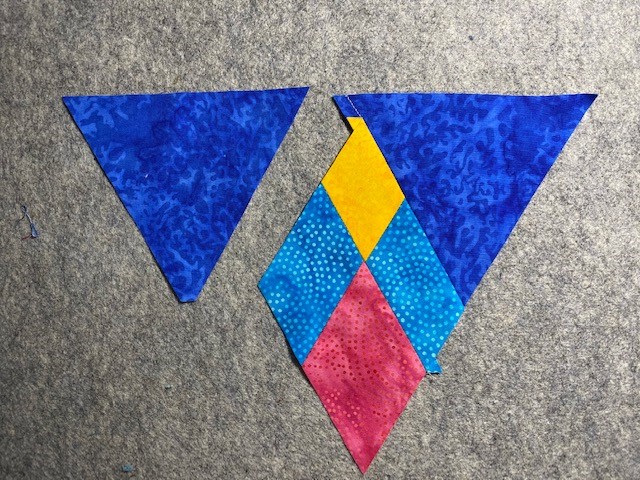
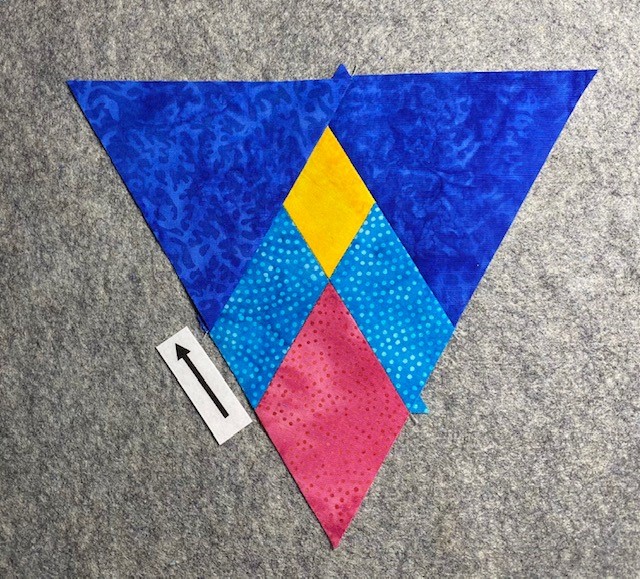
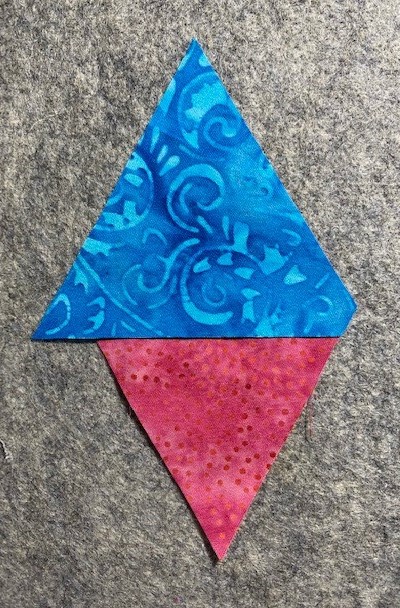
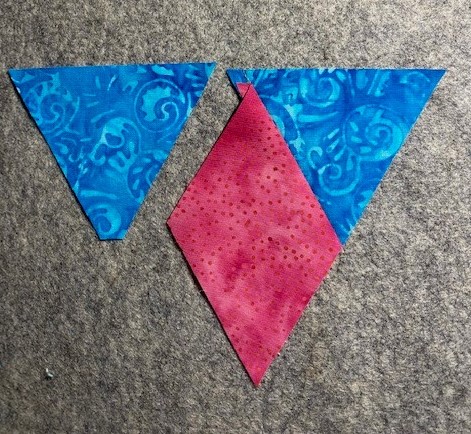
Lay out the bright Diamonds and the background side triangles as shown above. Take a triangle from the right hand side and position it on top of the diamond. Match the flat corner of the triangle with the edge of the diamond as shown; align the raw edges.
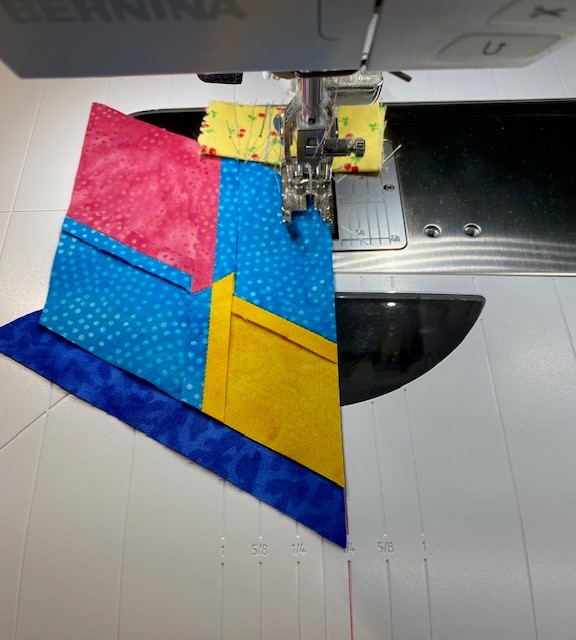
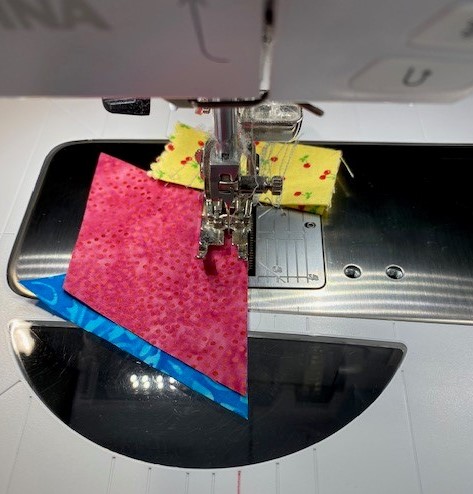
With the diamond on top, stitch along the matched edges. Press seams open.
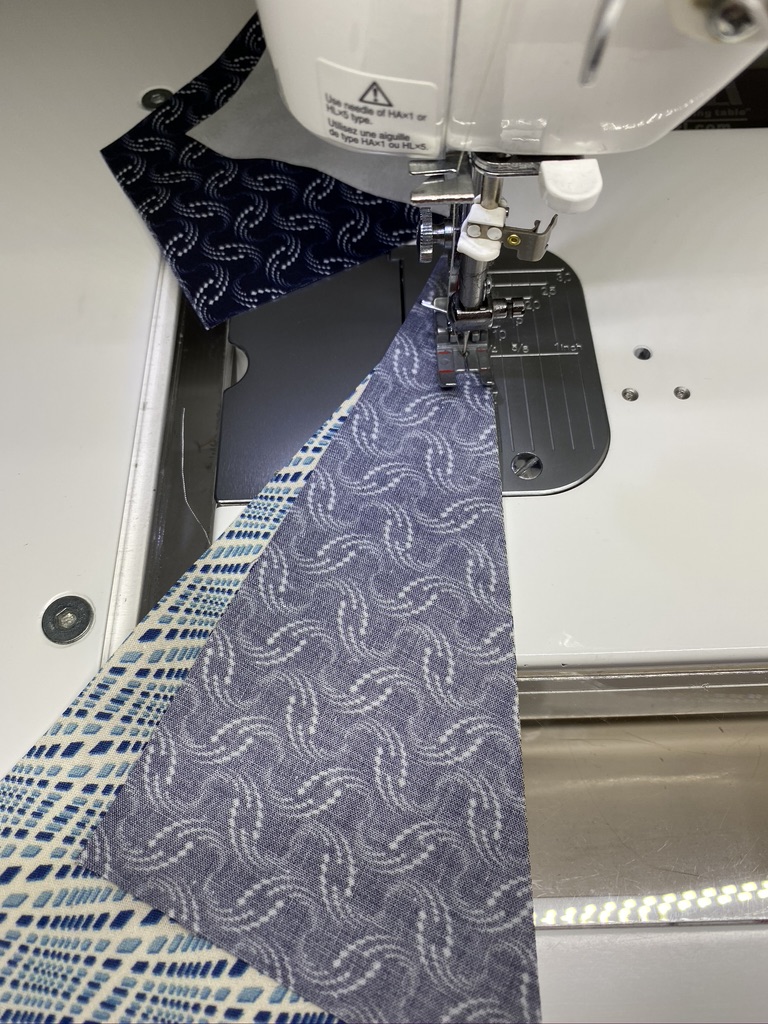
Position a remaining triangle on the other side of the diamond point. Align the flat corner of the triangle with the edge of the diamond. Align the raw edges. With the diamond on top; stitch.
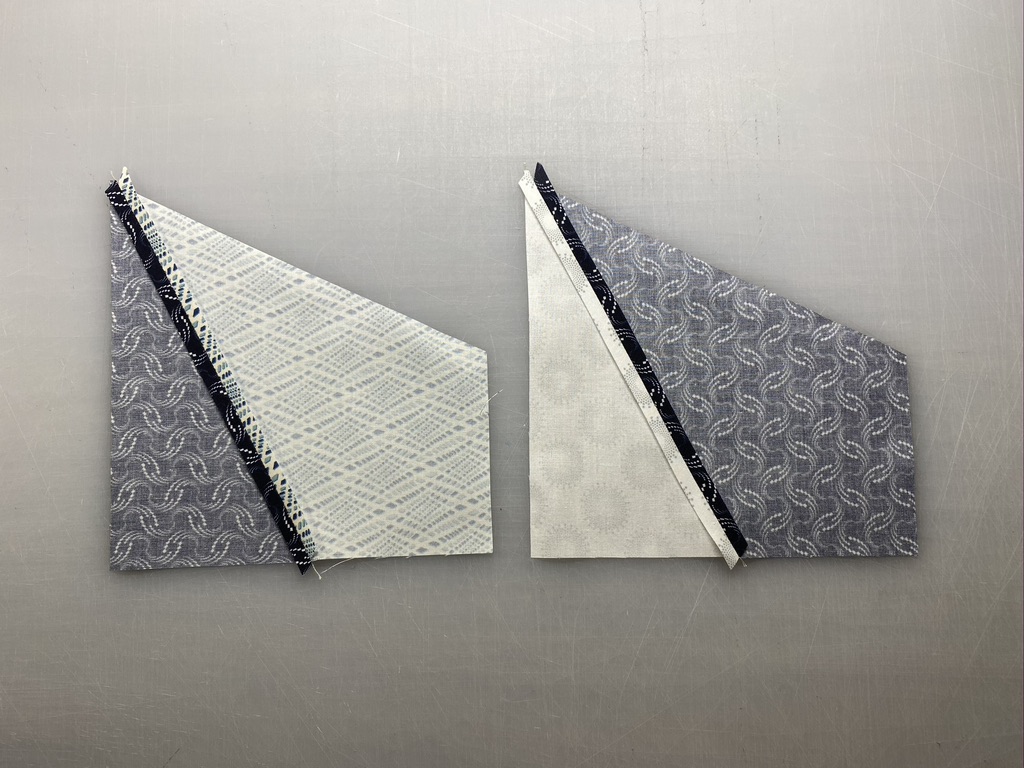
Press seams open. Both the 6″ and the 12″ Star 60 units are constructed the same way.
Block Construction
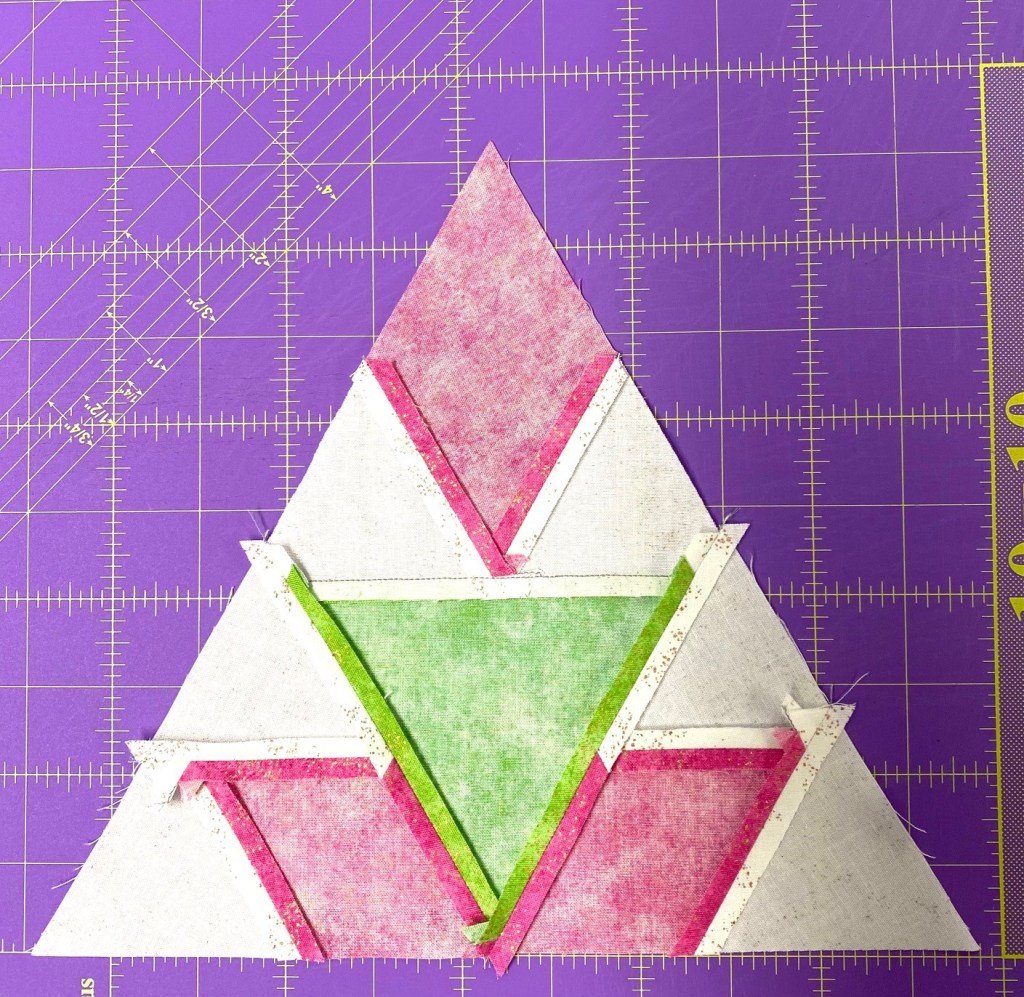
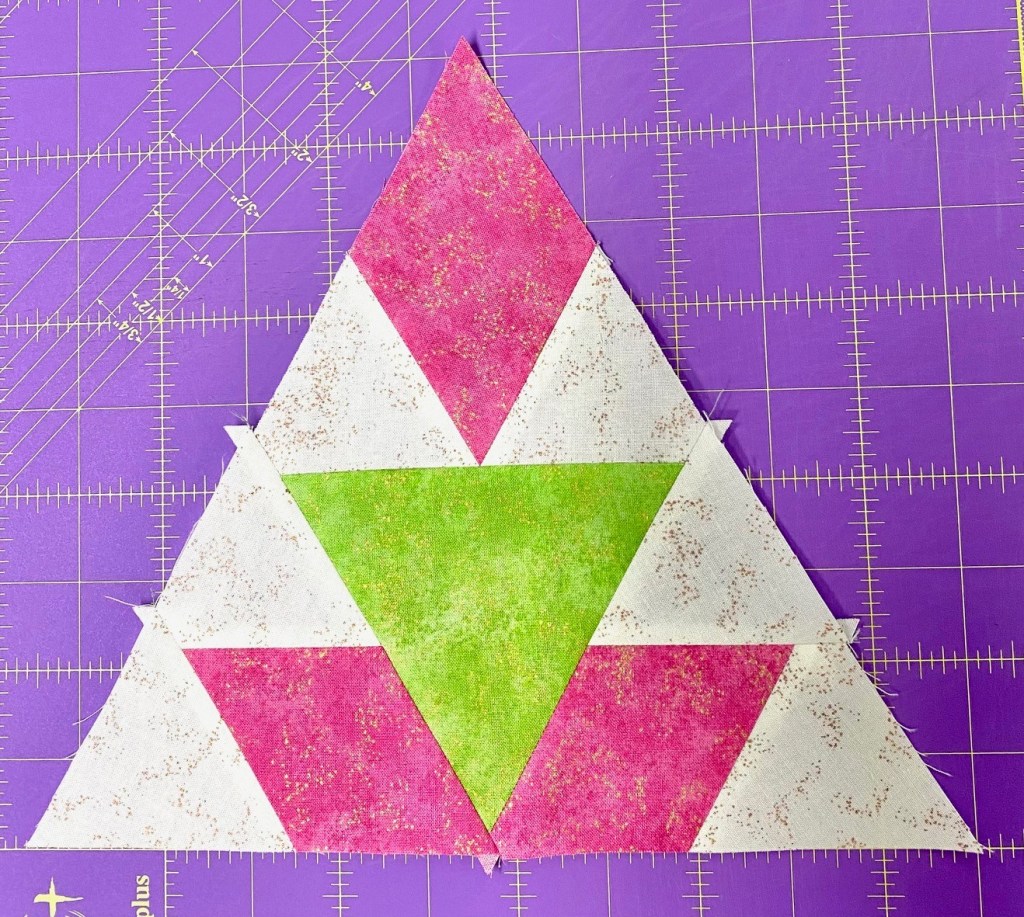
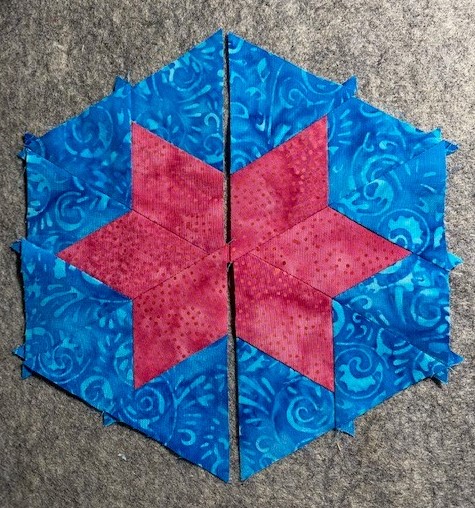
Choose 6 Star 60 units and 3 companion triangles and layout as shown above.
Note: 3 Star 60 units have the diamonds pointing inward and 3 are pointing outward.
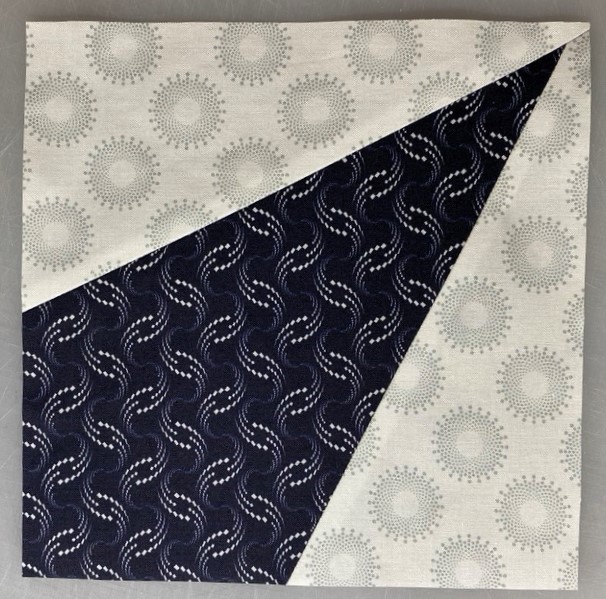
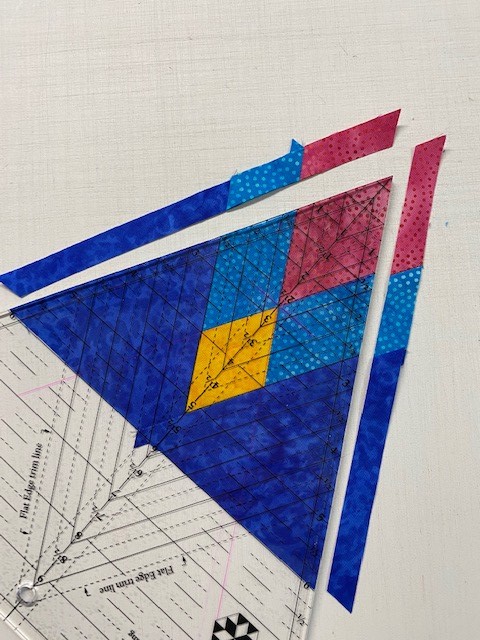
Take the 3 Star 60 units that are pointing outward and position them so the raw edge with both side triangles is either by your right hand if you are right handed or left hand if you are left handed. Locate and align the Flat Edge trim lines on the tool with the seams of the diamond and trim.
Position and stitch each of the 3 trimmed Star 60 units with a Companion Triangle. Stitch with the Star 60 unit on top.
Press the seam toward the Companion Triangle or open.
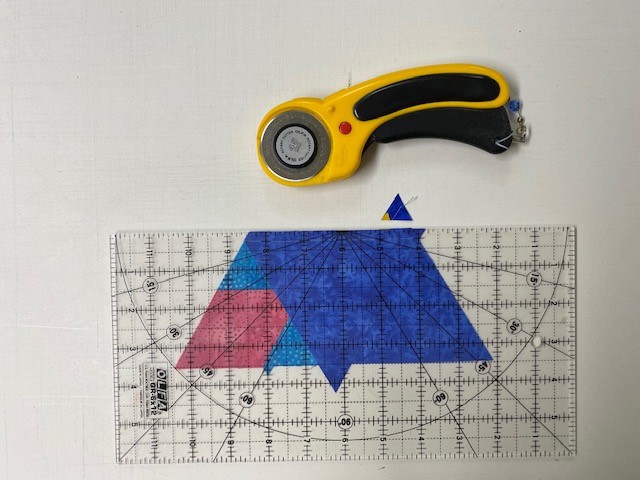
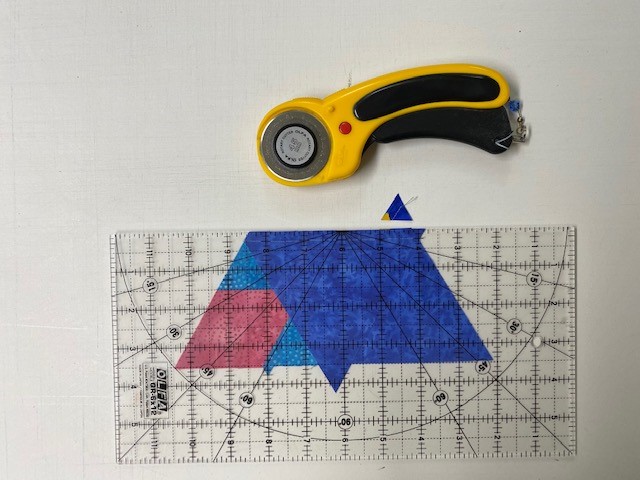
Trim the Companion Triangle. Position the unit on the cutting mat so that for right handers the Companion Triangle is in the 2 o’clock position or 10 o’clock for left handers. Align the point of point of the 4″ Diamond Point Guidelines with the point of the diamond in the Star 60 unit and the 4 1/4″ horizontal guideline on the seam. Trim the triangle.
Trim the 3 remaining Star 60 units (they are pointing inward in the layout). Position the pieced unit right side up on the cutting mat. Align the 4″ Diamond Point Guidelines with the sewn seams. Trim along both sides of the tool.
Sew the top 3 units as shown. Press all seams open.
Stitch the remaining 3 units as shown above.
Sew the top and bottom sections together. Match the center intersection and the raw edges. Press seams open.
Trim 1
Trim the 12” blocks. Position the block on the cutting mat so that one point is away from you and a flat side near you. Align the 4” Diamond Point Guidelines with the seams of the Star 60 unit at the top of the block and the 8” Diamond Point Guidelines with the seam of the Companion Triangle. The 4¼”, 6¼”, and 8¼” horizontal guidelines will align with seams as well. Trim on both sides of the tool. Because the tool is smaller than the block, trim to about the halfway point on each side of the tool.
Trim 2
Trim 3
Rotate the block so that the next untrimmed point is pointing up, realign the same guidelines and trim again. Then rotate the block to trim the final point. Realign the guidelines and clean up the last point.
Follow the pattern instructions for trimming the 6″ blocks.
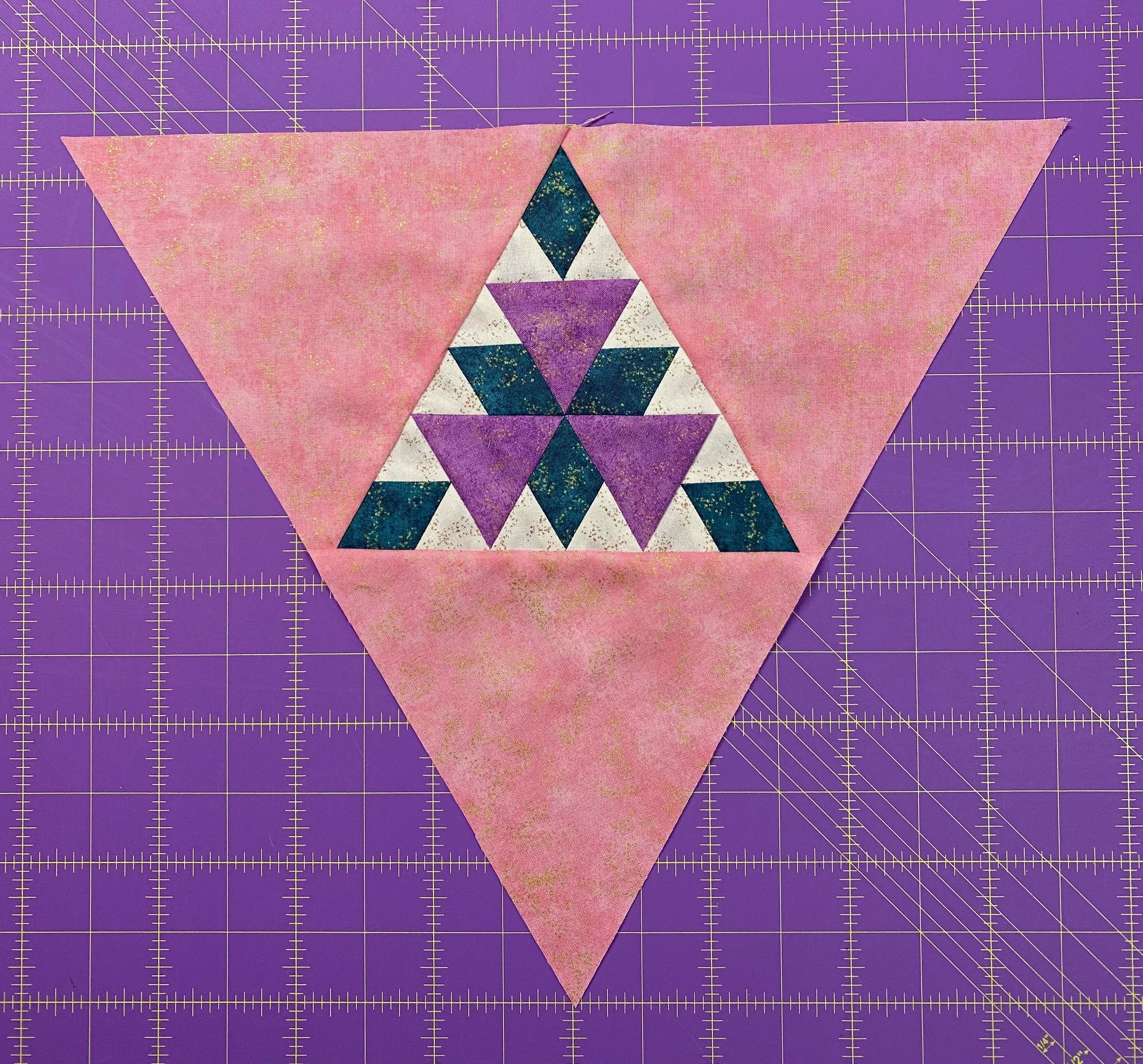
Align and center each accent Companion Triangle with the 6” pieced block. Stitch with an accurate ¼” seam. Press all seams toward the Companion Triangles.
Layout your triangle blocks.
Stitch triangles into rows, then add the setting triangles on both ends.
Radioactive
I made the lap size Radioactive, measuring 55″ X 75″. Thank you Northcott Fabrics for these beautiful fabrics. Finished with Quilter’s Dream Batting.
Welcome to Stitchin Heaven‘s Journeys BOM Month 9. You all have worked so hard. This month you will learn to use your Corner Beam tool. Sue Tucker & Naz are my helpers for Month 9.
Print 1
Print 4
Print 11
You will be working with Print 1, 4 and 11 this month.
Cutting the Center Beams
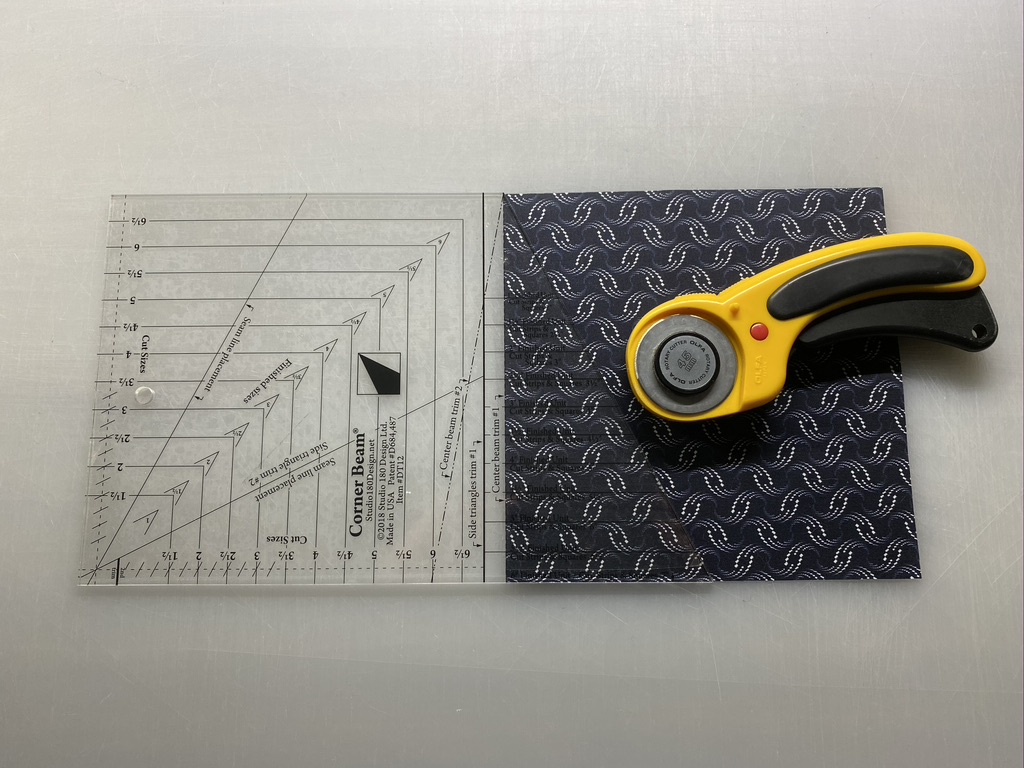
Step 1 – Stack the 7” center beam squares up to 4 layers deep. Align the Center Beam Trim #1 line on your Corner Beam® tool and the 6” finished unit line (bottom edge of tool) with the raw edges of your stack of squares. Cut along the angled edge.
Step 1
Step 1
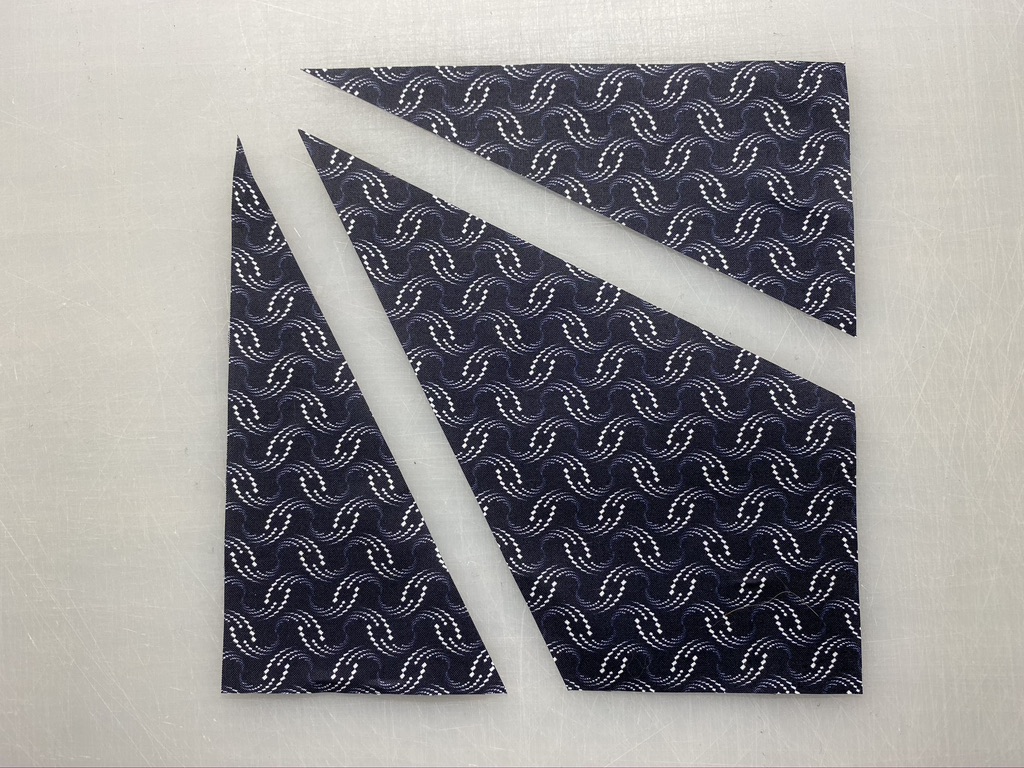
Step 2 – Rotate and cut again. Lift and reposition the Corner Beam® tool, aligning the dashed line labeled Center Beam Trim #2 with the previously trimmed angled edge. Cut again. Do this for all your center beam squares.
Step 2
Step 2
Cutting the Side Triangles
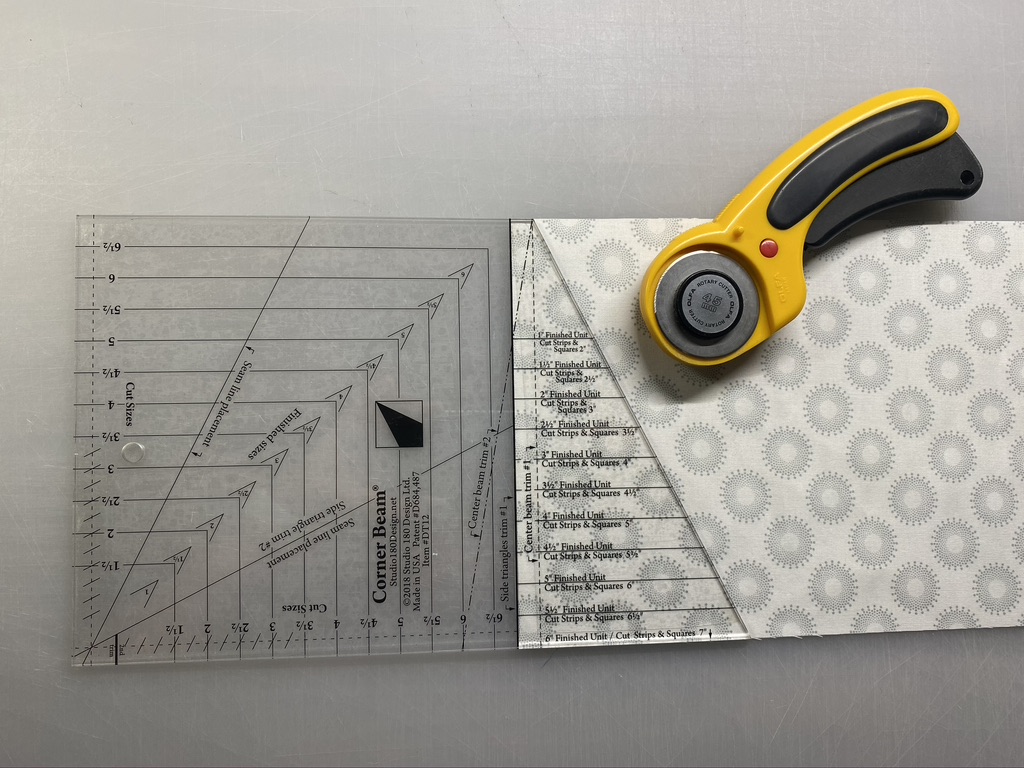
Step 3 – Fold the side triangle strip right or wrong sides together in order to yield mirror images. Trim the selvages and position the Side Triangles Trim #1 line on your strips, lining up the 6” finished unit line (bottom of the tool) with the bottom raw edge of the strip. Cut along the angled edge.
Step 3
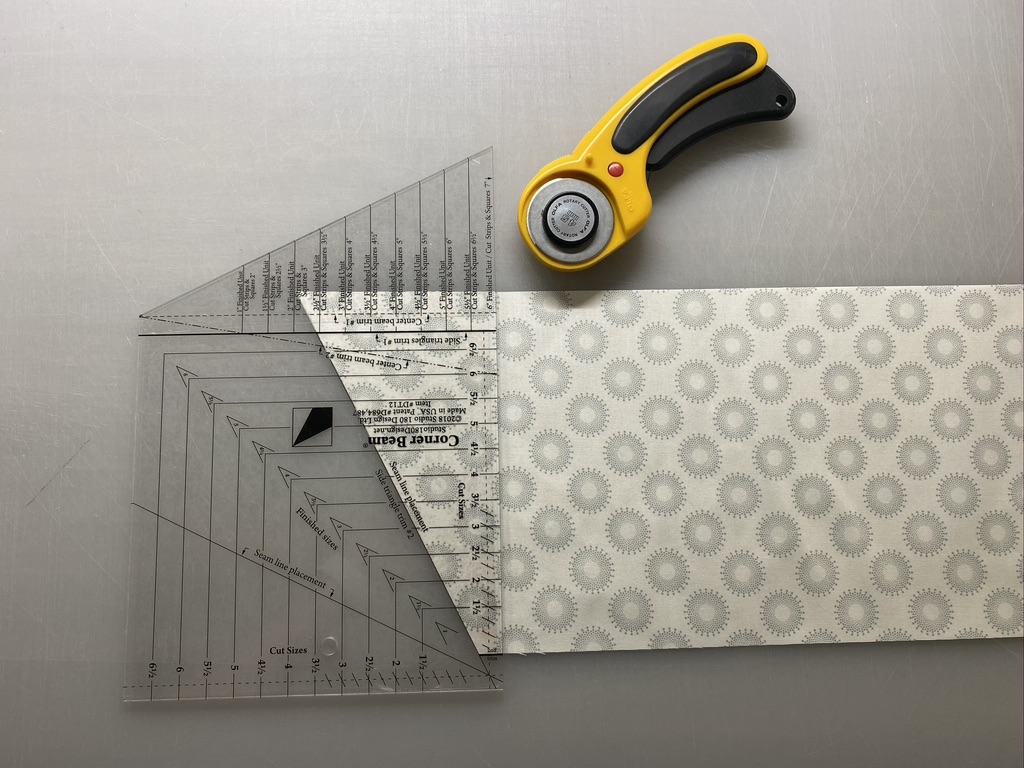
Step 4 – Rotatethe Corner Beam® tool and position the Side Triangles Trim #2 line on the edge of the strip you just cut, making sure the bottom of your strip is lined up along the second trim line. Cut along the edge. Continue cutting until you have 8 pairs of side triangles from Print 11 and 4 pairs of side triangles from Print 1.
Step 4
Step 5 – Lay out and organize your pieces into the correct positions as shown to ensure you sew the proper sides together.
Step 6 – Stitch the first side triangle to each center beam, making sure you sew the correct triangle edge to the center beam. Press the seams open.
Press seams open
Step 7 – Stitch the second side triangle to the other side of each center beam. Press each seam open
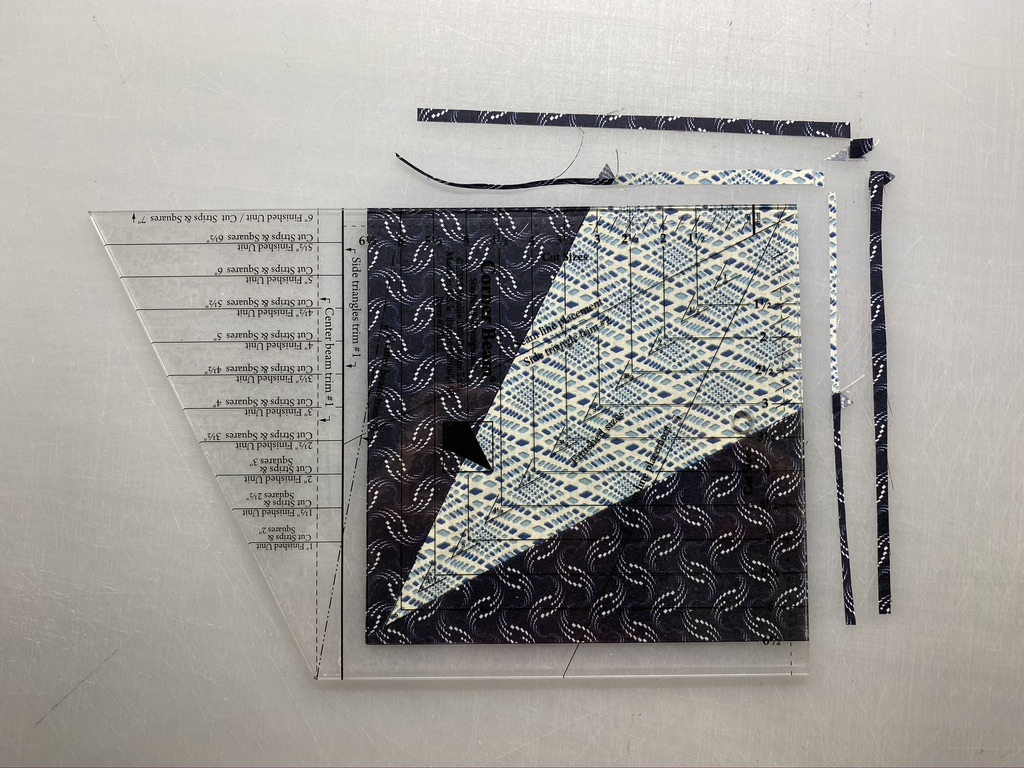
Step 8 – Position the trim down area of your Corner Beam® tool on your unit. Carefully line up the diagonal seam guidelines on the Corner Beam® tool with the diagonal seams of your unit. Trim.
Step 8
Step 9 – Rotate your unit. Align the cleanup lines for the 6½” cut size with the cut edges, the V shaped guideline with the seam intersection, and the tick marks with the seams at the wide end of the beam. Trim. Repeat for all units. Label as indicated in the Unit Summary.
Step 9
Assemble 4 Middle Edge Sections
It is time to assemble the four Middle Edge Sections of your quilt. To do this you will need the following:
8 Units A from Month 18 Units B from Month 28 Units D from Month 216 Units H from Month 516 Units L from Month 88 Units M from Month 9
Step 10 – Lay out the units as shown to create the Middle Edge Section.
Step 11 – Stitch the units together into rows. Press the seams open between the units.
Step 12 – Stitch the rows together into the Middle Edge Section. Press the seams open between rows.
Step 13 – Repeat steps 10-12 to make a total of 4 Middle Edge Sections.
Steps 10 – 12
Naz carefully supervised Journey’s Month 9
Make 4 Middle Edge Sections. Congratulations on work well done!
I’ve discovered a whole new way to jazz up my One Block Wonders (OBW)!
I pin my orphan blocks to the drop ceiling in my quilt studio. As I was looking up at them I realized that a Cyclone block could be added to a Octagon OBW! You only need the Cyclone Technique Sheet and a Tucker Trimmer I.
You can make this block in 9 sizes from 4″ to 12″. This block is fun and easy. You don’t have to match up seams!
My original Fabric, Lotus Leaves
I made my octagons 6″ finished, so I will follow the instructions for 6″ finished Cyclones. I chose 3 colors from my original fabric and cut my strip sizes according to the technique sheet.
sew strips together
Press seams open
Step 1 – Piece your strips together in the order shown on the technique sheet. Pressing the seams open gives you a flatter block in the end. Your strip set should measure the “Unfinished Strip Set Width” in the chart.
Step 2 – Sub-cut your strips sets into squares using the “Unfinished Set Width” from the chart. For 6″ finished block I cut my squares 4″.
Step 3 – Cut. Position your square so that Fabric 1 runs from north east to south west. Cut the square north to south. You will get two opposite triangles, separate them into two piles. Use extreme care when making these diagonal cuts. It will effect the spin of your block.
Step 4
Step 4 – Trim. Working with one one group at a time, position the triangle as above with the longest strip at the top of the triangle. Line up the edge of your Tucker Trimmer with the right side of the triangle, the the lower point of your triangle positioned at the number corresponding to your sub-cut size, for a 6″ finished block it is 4″. The lower left edge of the triangle should align with the sizing diagonal.
Step 4 cont.
Cut across the top of the tool.
Layout trimmed triangles
Step 5 – Lay out 8 of the kite shaped pieces that you just trimmed. Make sure that all of your pieces have the same fabric in the outer position.
Stitch pairs
Step 6 – Stitch two kite pieces together so that you create quadrants. Press seams open.
Trim
Step 7 – Trim. True the 90 degree corner using your Tucker Trimmer. Align the common diagonal with the seam and trim. You will only be trimming the dog ears and probably a few “whiskers” of fabric, just enough to ensure a true 90 degree.
Step 8 – Stitch together four like quadrants to create an oversized octagon. Press all seams open.
Pieced octagons
The cyclones are now the same size as my octagons made from the Lotus Leaves fabric, and you have two different cyclones from the same strip set. This is where we stop following the Cyclone Technique Sheet instructions. We will trim the cyclones when we trim the octagons.
Start to create your design layout, then add the corners to the octagons & cyclones.
You trim the cyclone block the same as the octagons but ONLY trimming the edges that will have corner stitched to them as with the octagon blocks.
Trimmed units
Cyclones Amongst the Lotus Leaves, measures 67″ x 73″.
Cyclone Wall Hanging
Click here for the supply list to make the wall hanging shown above.
Welcome to Stitchin Heaven’s Journeys Block of the Month 8 – Uneven Chains 2. I know you all worked so hard last month on your Liberty Stars. You learned how to make Uneven Chains in month 1, so this month should be a breeze. We will again be using the Four Patch Square Up tool.
Print 6
Print 10
Print 11
This month we will be using prints 6, 10 & 11
Piecing Instructions
Step 1 – Stitch your strips together into Strip Set A, Strip Set B, and Strip Sets C. Position two strips right sides together and align the long edges. Stitch with your best ¼” seam.
Step 2 – Press your strip sets. In all strip sets, press toward Print 6. A helpful pressing tip: whatever you are pressing toward goes on top.
Strip Set AStrip Set A make 1 – 2 1/4″ sub-cuts, 16 sub-cuts required.Strip Set BStrip Set B make 1 – 2 1/4″ sub-cuts, 16 sub-cuts required.Strip Set C (stitch strips together)Strip Set C make 2 – 3 1/2″ sub-cuts, 16 sub-cuts required.
Step 3 – Sub-cut the strip sets using the information in the diagrams above. Make sure to use the correct sub-cut size for the strip set you are working with and cut the correct number of pieces needed.
Step 4 – Lay out the pieces from Strip Set A, Strip Set B, and Strip Sets C as shown. Stitch an A piece to one side of the C piece and Stitch a B piece to the other side. Make sure you sew the correct piece on each side so that it looks like the diagram.
Step 4 – Lay out and stitch
Step 5 – Press the unit so that the seams spin. To spin the seam, lay the last sewn seam east to west on the mat, remove the two or three threads in the center on both sides that run north to south, and press so all the seams go in the same direction.
Step 6 – Trim the unit to size. Position the unit as shown on your cutting mat and locate the circle for the 3” finished size on your Four Patch Square up® tool. The finished sizes are located above the words Finished Size Four Patches – Center. Position the circle over the seam intersection between the small and large square as shown. Make sure that the dashed lines radiating from the circle align with your seams.
Trim the first two sides of the unit.
Step 7 – Rotate the unit 180 degrees. Align the 3” finished size circle over the other intersection of the small square and the large square as shown. Make sure that the dashed lines align with your seams and that the 6½” cut size clean up lines align with the outside trimmed edges. Trim the remaining two sides. Once all 16 units are made, label them Unit L.
Congratulations, you’ve completed month 8 and I’ll bet you are even more comfortable using the Four Patch Square Up tool.
Remember, you can go back and search for any of the Journey’s posts, they are never deleted and I’m always available for questions.
Continuing my journey to create interesting embellishments for my hexagon and octagon One Block Wonders (OBW’s). I created fabulous stars using Studio 180 Design’s Diamond Four Patch Wedge Technique Sheet and the Wedge Star Tool.
Flowers of the Sun by South Sea Imports
Once again I went to my OBW stash, I’ve had this beautiful large large print for at least 10 years. When I showed it to my friend Sue Tucker she immediately suggested Aqua stars be added.
Groovy Seam Rippers are my favorite
I went to my Joen Wolfrom Color Wheel. To find a complimentary color look directly opposite. For Orange/Red it is Aqua/Blue. Groovy Seam Rippers are my favorite.
I could have chosen several values of aqua, but I decided to use two.
I was lucky to find Kona Cotton Paprika for my star side triangles. The Diamond Four Patch Wedge Technique Sheet gives you instructions for making this block in 22 sizes from 6″ to 48″ finished blocks. I decided that I wanted several size stars in my OBW. My octagons are 6″ finished blocks. Therefore, I would choose size variations in multiples of 6″. I made a 24″, 18″ 12″ and three 6″ finished blocks.
Step 1 – Make strip sets. I chose to make my Inner Diamond & Outer Diamonds the same color. See the Diamond Four Patch Technique Sheet for making strip sets A & B.
Step 2 – Layer the strips sets one on top of the other. Make sure both sets are right sides down. Use the Wedge Star tool to get the 45 degree angle.
Make the first cut.
From the first cut, cut angled sections the same width as the cut size of the diamond strip.
You’ll need 8 angles “A” & 8 angles “B” sections for each star.
Pair a section “A” with a section “B”Mark seam intersection
Step 3 – Pair each “A” section with a “B” section. Make sure that the inner and outer points are oriented correctly. On the edges you will be stitching together, mark the 1/4″ seam allowance across the seams.
Position the pieces so that the intersections of the marked lines and the seams match. Pin and stitch.
StitchPress your seams open.
Step 4 – Trim the outer points using the Wedge Star tool. Consult the chart for the line needed, and position the line on the seam of the outer point only, trim each side.
Step 5 – Add the small wedges to the out points that you just trimmed. See the Wedge Star tool instructions, page 3 for “Cutting the Small Wedges”.
Layout the small wedges and the Diamond Four Patches.
Stitch the right wedges first. For complete instruction on “Piecing the Diamond Wedges” see the Wedge Star tool instructions, page 4.
Diamond Four Patch Wedge18″ Diamond Star Wedge
Step 6 – Trim the pieced wedges using the Wedge Star tool. For finished stars up to 24″, align the desired finished block size line with the outer point.
Step 7 – Assemble and trim the block according to steps 1.12 through 1.18 in the Wedge Star tool Instructions.
As before, I marked the 1/4″ seam allowance across the seams and pinned before stitching. Stitch 2 Diamond Four Patch Wedge together. Remove the dog ears and sliver trim the Wedge pair by placing on the mat Righties orient the pair so the 90 degree corner is in the upper right, lefties position it so the 90 degree corner is in the upper left. Align the common diagonal on your Tucker Trimmer with the seam to trim the dog ears and true up the 90 degree angle.
Welcome to Stitchin Heaven’s Journey BOM – Month 7 Liberty Star. This month, you will be using the 12” markings on the Rapid Fire® Lemoyne Star tool, but you will be working with them as quarters that will be trimmed to 6½” using your Tucker Trimmer 1 before you sew them into the quilt.
Note: Some of your strip sizes are in sixteenths of an inch. These are necessary in order to equally divide the diamond into three sections. To cut the sixteenth of an inch you will see that after the sixteenth measurement there is a 1¼”+ listed. This means that you should locate the 1¼” mark on your ruler then move up just a bit to get to a 1⁵/16” measurement. You want to be as close to the half way point between the ¼” mark and the ⅜” mark as possible.
Piecing Instructions
You will be using the standard Rapid Fire® Lemoyne Star strip piecing for the “B” sections and fussy cut piecing for the “A” sections.
Step 1 – Lay out the Print 1, Print 2, and Print 8 strips as shown in the diagram.
Stitch together Print 2, Print 8 & Print 1, making four strip sets.
Step 2 – Stitch the strips into 4 strip sets, two will be used to create your “A” sections and two will be used to create your “B” sections.
Step 3 – Press all the seams toward Print 2, the widest strip.
Tip: To keep strip sets straight while pressing – it helps to draw a line on your ironing board with a sharpie and ruler. If the strip set wants to curve just keep re-adjusting it along the straight line.
Tip: After stitching your strips together measure the strip set to be sure it measures 3 1/4″ wide.
“B” Section Construction
Step 4 – Sew a strip set from step 3 on page 19 to a background strip to make a “B” section strip. Stagger your pieced strip 4¾” down the background strip. Be sure to sew the Print 1 to the Print 11 background strip. Press the seam toward your colored strip set. Make two.
Step 5 – Cut the “B” sections by placing the strip set right side up on the cutting mat. Make your first diagonal cut to clean up the end and set your angle. Then sub-cut the strip set into 3¼” sections. You will need a total of 16 sub-cuts.
Note: When cutting the Section B segments, place your 45 degree line on a seam to help establish the correct angle. Section B sections are cut 3 1/4″ wide. Cut almost to the end of the ruler and move the ruler up re-aligning the ruler on the 3 1/4″ line.
Step 6 – Cut Again. Make a vertical “second cut” to each sub-cut section. Make sure to leave a small gap between the tip of the diamond and the start of your vertical cut. One quarter of an inch will suffice.
Step 7 – Lay out, stitch, and press your pieced “B” sections toward the small side triangles you just stitched.
Remember, “whatever you are pressing toward goes on top”, so lay your pieced units on the ironing board with the small triangles on top and press.
“A” Section Construction
Step 8 – Cut the 4¾” x 4¾” Print 11 squares in half diagonally. Make the diagonal cut ¼” from the true diagonal to create small and large half square triangles.
Tip: You can use your regular ruler or your Rapid Fire Lemoyne Star tool to make the diagonal cuts as shown below.
Each square yields one large and one small triangle.
Step 9 – Cut the remaining two colored strip sets into individual diamonds. Place a strip right side up on the cutting mat as shown, align the 3¼” window template on the back end of the Rapid Fire® Lemoyne Star tool over the strip set and cut up the side. Rotate the first diamond and again align the 3¼” lines with the edges of the diamond and trim off the excess fabric. Continue repositioning the tool and cutting using the 3¼” window template until you have 16 diamonds.
Step 10 – Lay out, stitch, and press. Lay out the fussy cut diamonds, the large and small half square triangles right sides up as shown. Be sure Print 1 (Dark Blue) is positioned by the small triangle.
Be sure Print 1 (Dark Blue) is positioned by the small triangle.
Stitch the large triangles in place first and press the seam toward the background fabric.
Press the seam toward the background fabric.
Stitch the small triangles next and press these seams toward the diamond section. Make 16 “A” star points.
Press these seams toward the diamond section
Step 11 – Trim all “A” and “B” triangle sections using the 12” line on the Rapid Fire® Lemoyne Star tool. See diagram. Pay Attention here! It’s easy to forget this step.
Step 12 – Assemble quarters. Arrange the sewn and trimmed “A” and “B” sections into quarter blocks. Stitch the sections together and press the seams open to best distribute bulk. You should have 16 quarters total.
Step 13 – Trim the quarters to 6½” x 6½”. Clean up the dog ears and true up the first corner as shown. You should only be trimming off the dog ears and an additional thread or two in this trim. Then rotate the unit to trim the opposite corner. Align the common diagonal with the seam and the 6½” clean up lines with the trimmed edges to trim the remaining two sides. Repeat for all 16 quarters.
First TrimSecond Trim
Step 14 – Assemble the quarters into the center block. Lay out the quarters as shown and sew them together into rows. Press the seams open.
Step 15 – Stitch the rows together and press the seams open. Label this Section K.
Welcome to Stitchin Heaven’s Journeys Month 6 – Corner Section. My helper for Month 6 is Sue Tucker, of Studio 180 Design. This month you are going to learn to make the Square/Squared unit using the Square/Squared tool. You will be using Prints 1, 2 & 5. Label your fabrics and use your best cutting skills when cutting your starter squares.
Prints 1, 2 & 5
Piecing Instructions
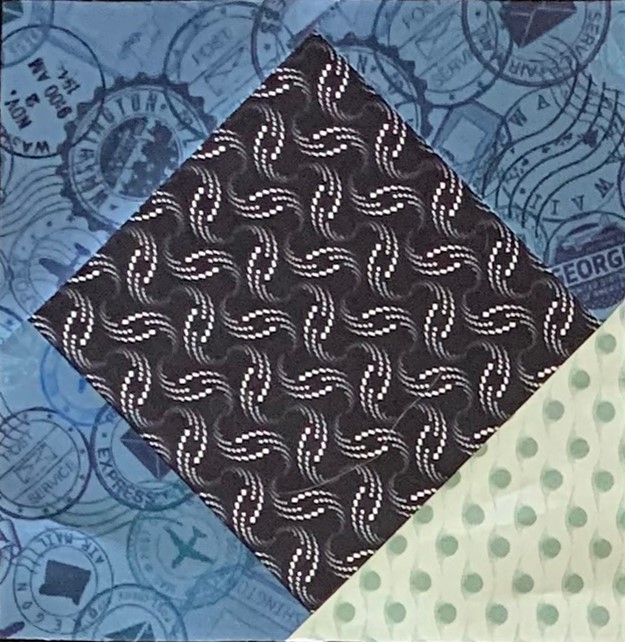
Diamond Squares
Step 1 – Lay your Print 1 strip on the mat and clean up the short edge. Locate the Center Square window template for a 6” finished unit. Place the solid lines of the window template on the raw edges of the strip end. Cut up the side and across the top to trim each square to a precision size. Cut 4 center squares.
Step 2 – Stitch two Print 2 side triangles to opposite sides of the center square. Stitch with the center square on top. Press the seams toward the side triangles.
Step 3 – Stitch one Print 2 side triangle to one remaining side of the center square and a Print 5 triangle to the other side. Press the seams toward the side triangles.
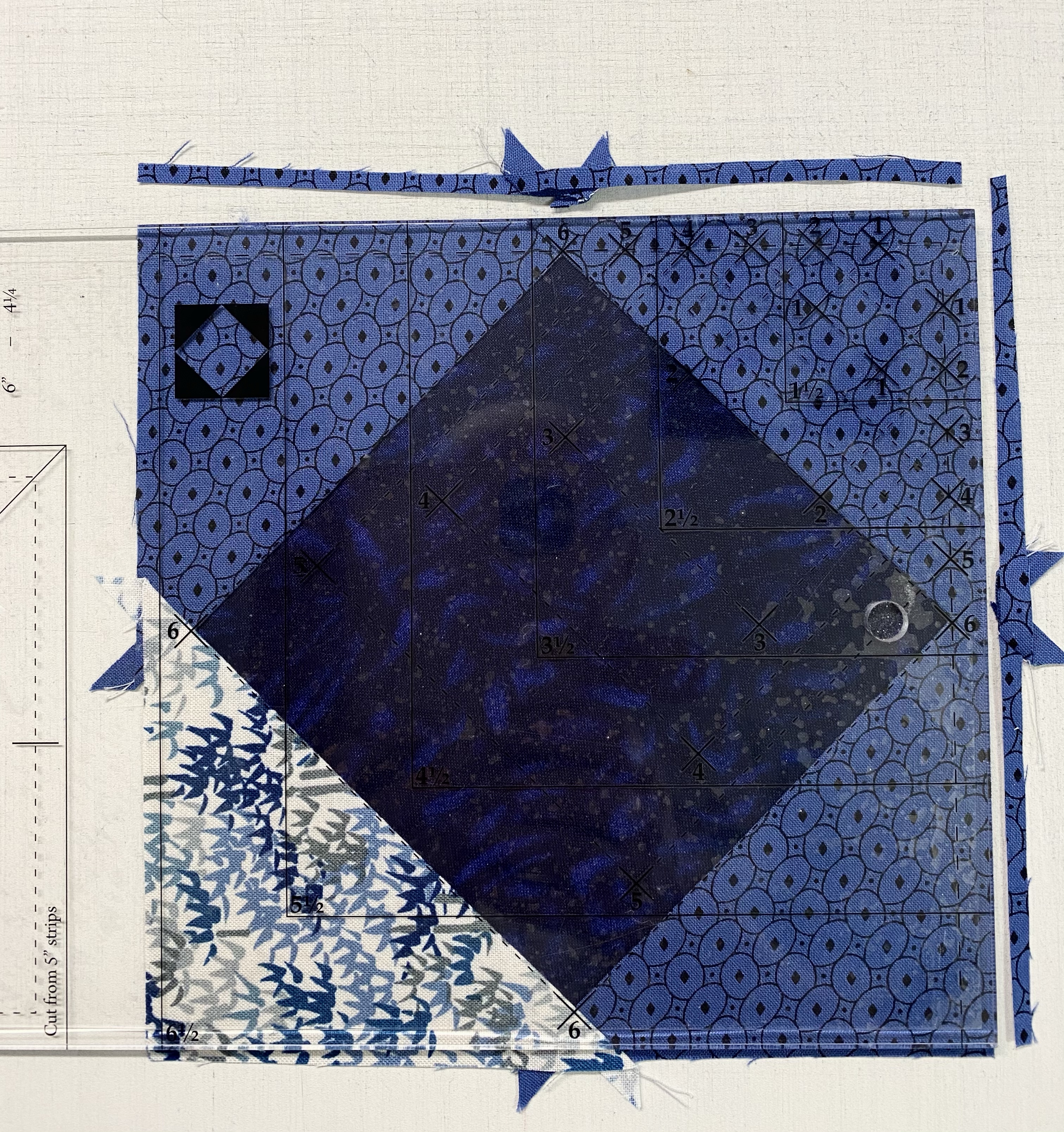
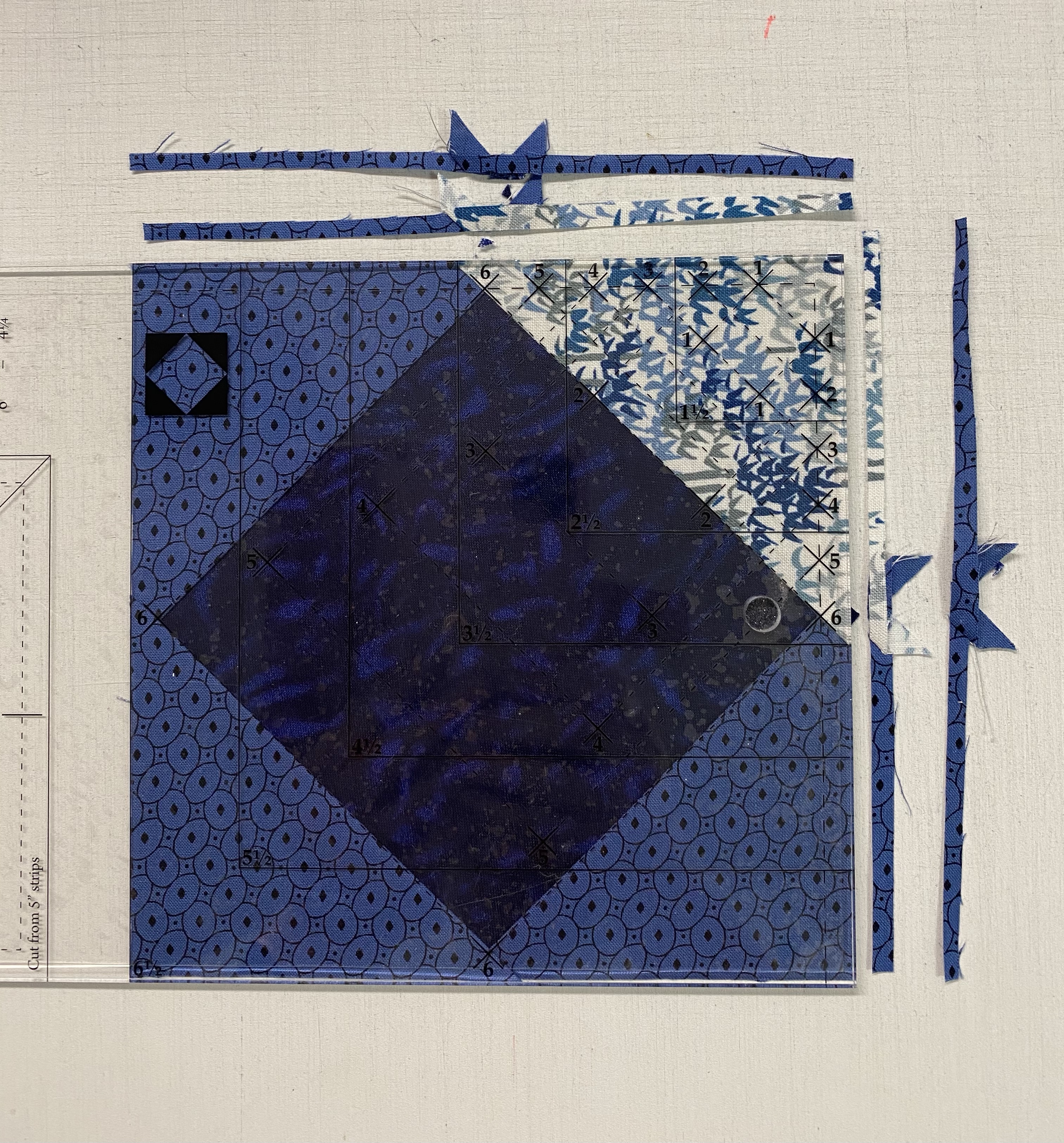
Step 4 – Trim to 6½” with your Square Squared® tool. Align the X’s labeled 6 with the seam intersections and the dashed lines with the seams. Trim. Rotate the unit 180o and align the seam intersections with the X’s labeled 6. Also align the cut edges with the 6½” clean up lines. Trim again. Repeat steps 1-4 to make a total of 4 Diamond Square units. Label the finished Units J.
Below is a correction. The original photo for the second trim showed the Left Hand Trim for Trim 2. I do not have the original fabric so I remade the Square/Squared unit from stash fabric.
Trim 1Trim 2Make 4 Unit J
Assemble Four Corner Sections
It is time to assemble the four corner sections of your quilt. To do this you will need the following:
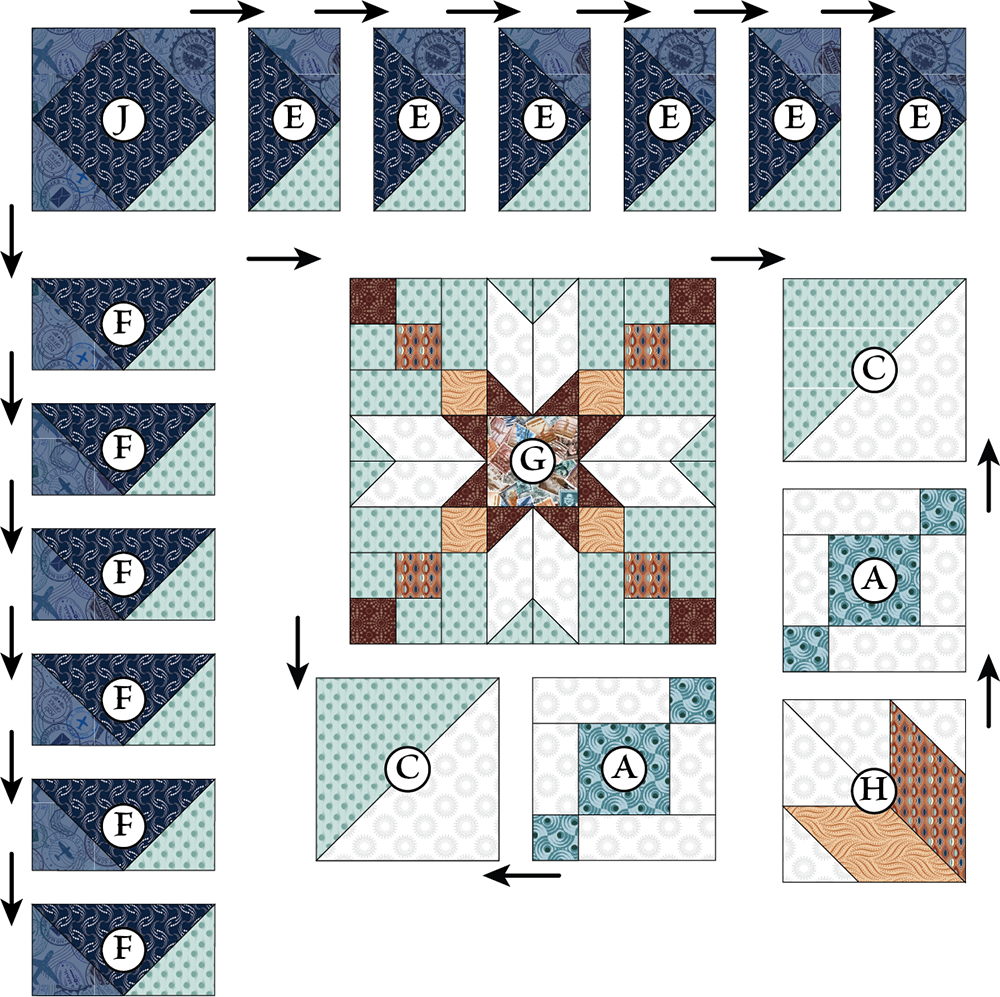
8 Unit A’s from Month 1. 8 Unit C’s from Month 2. 24 Unit E’s and 24 Unit F’s from Month 3. 4 – G Blocks from Month 4. 4 Unit H’s from Month 5. 4 Unit J’s from Month 6.
Step 5 – Lay out the gathered units as shown to create one corner section.
Step 6 – Stitch the Unit F Flying Geese together to create the rows of geese. Press the seam away from the point of the goose. Attach Unit J to the end of the Unit E Geese as shown in the diagram.
Step 7 – Sew together Unit C, Unit A, and unit H as shown to create two sections and press as indicated.
Step 8 – Sew Block G, together with the two sections you just created as shown and press as indicated.
Step 9 – Sew the Flying Geese rows to the block and press as shown.
Step 10 – Repeat steps 5-9 to make a total of 4 Corner Sections.
Congratulations! You have learned to use the Square/Squared tool, not mention you are half way through your Journeys Quilt.
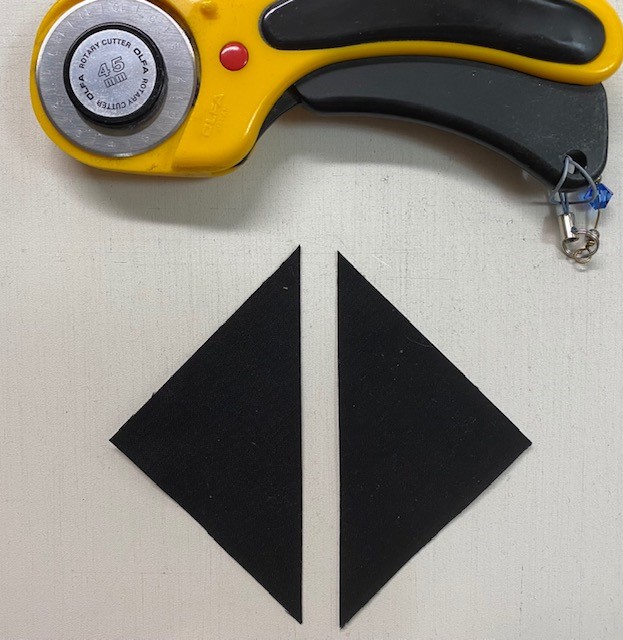
I just finished quilting “Lion Eyes” Octagonal One Block Wonder. I had 18 Sensational Squares sets left over.
Remember, Sensational Squares are the triangles that fill the space between the octagons.
I wanted to add the left over Sensational Squares to the borders of the quilt.
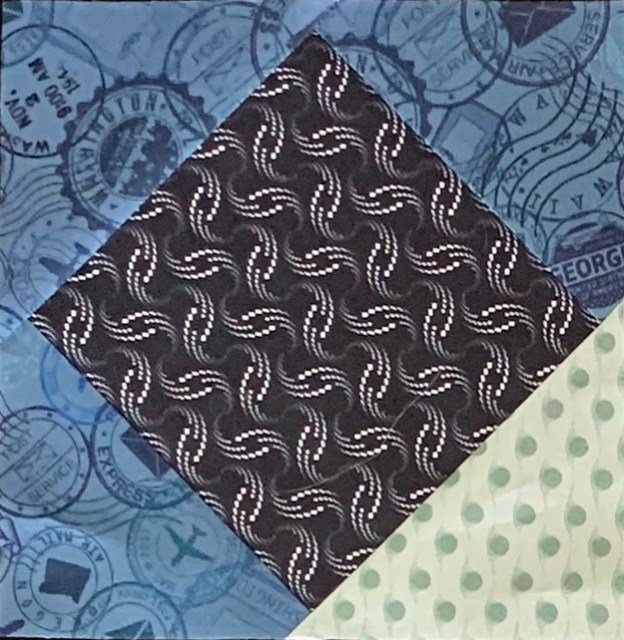
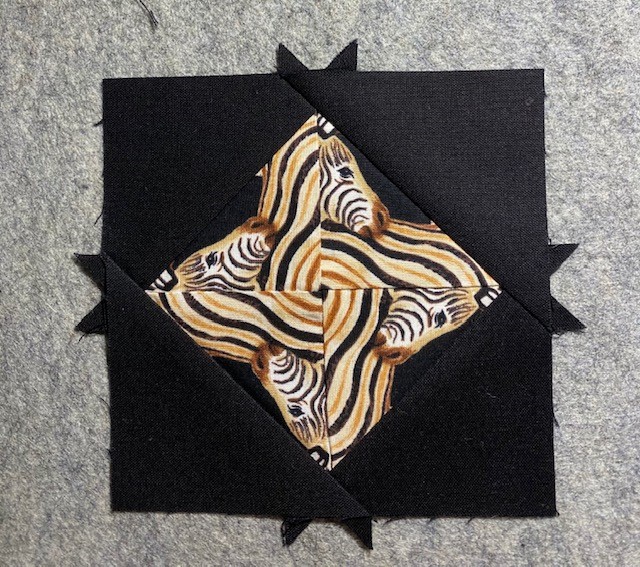
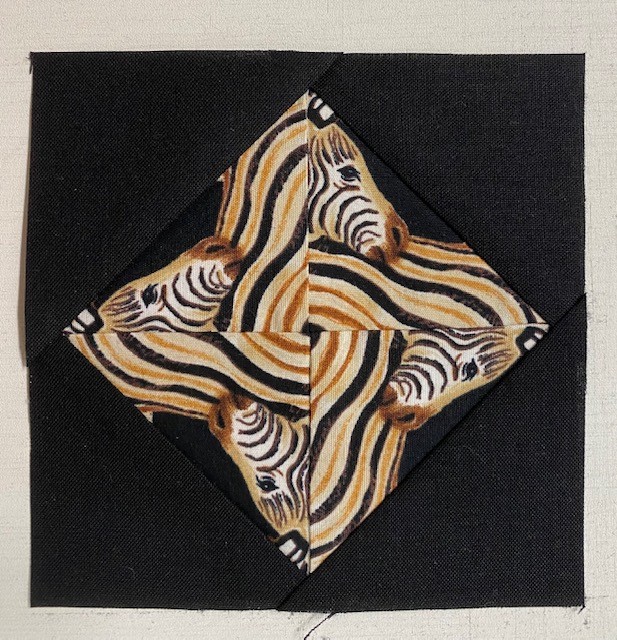
I made my Sensational Squares into Square/Squared units using my Studio 180 Design Square/Squared tool.
There are 3 parts to this tool.
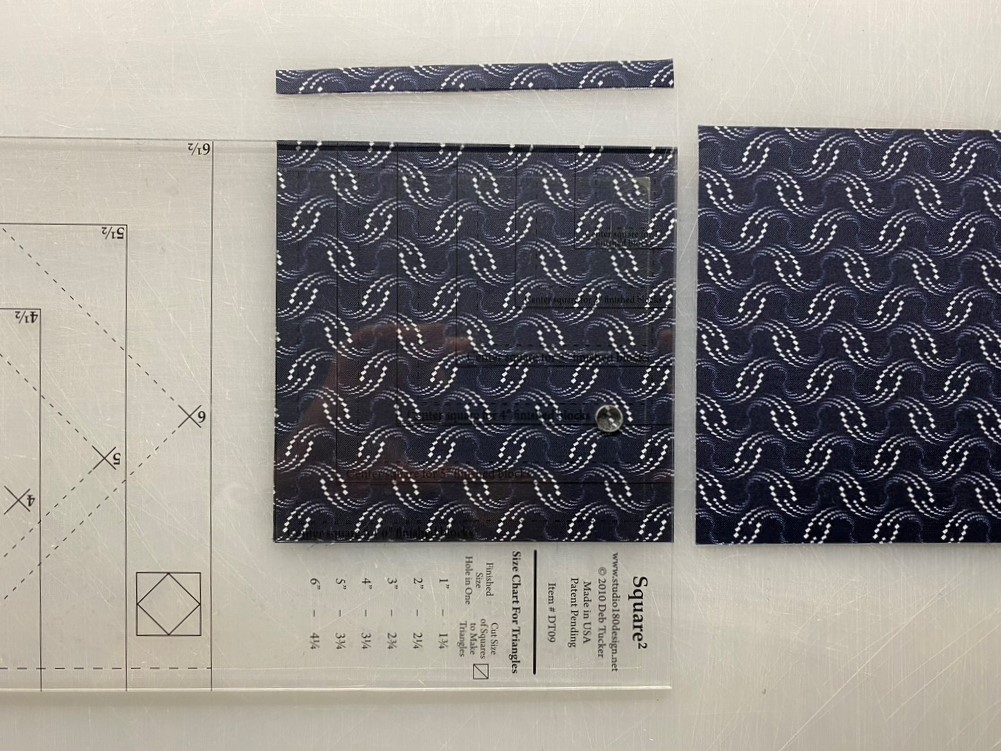
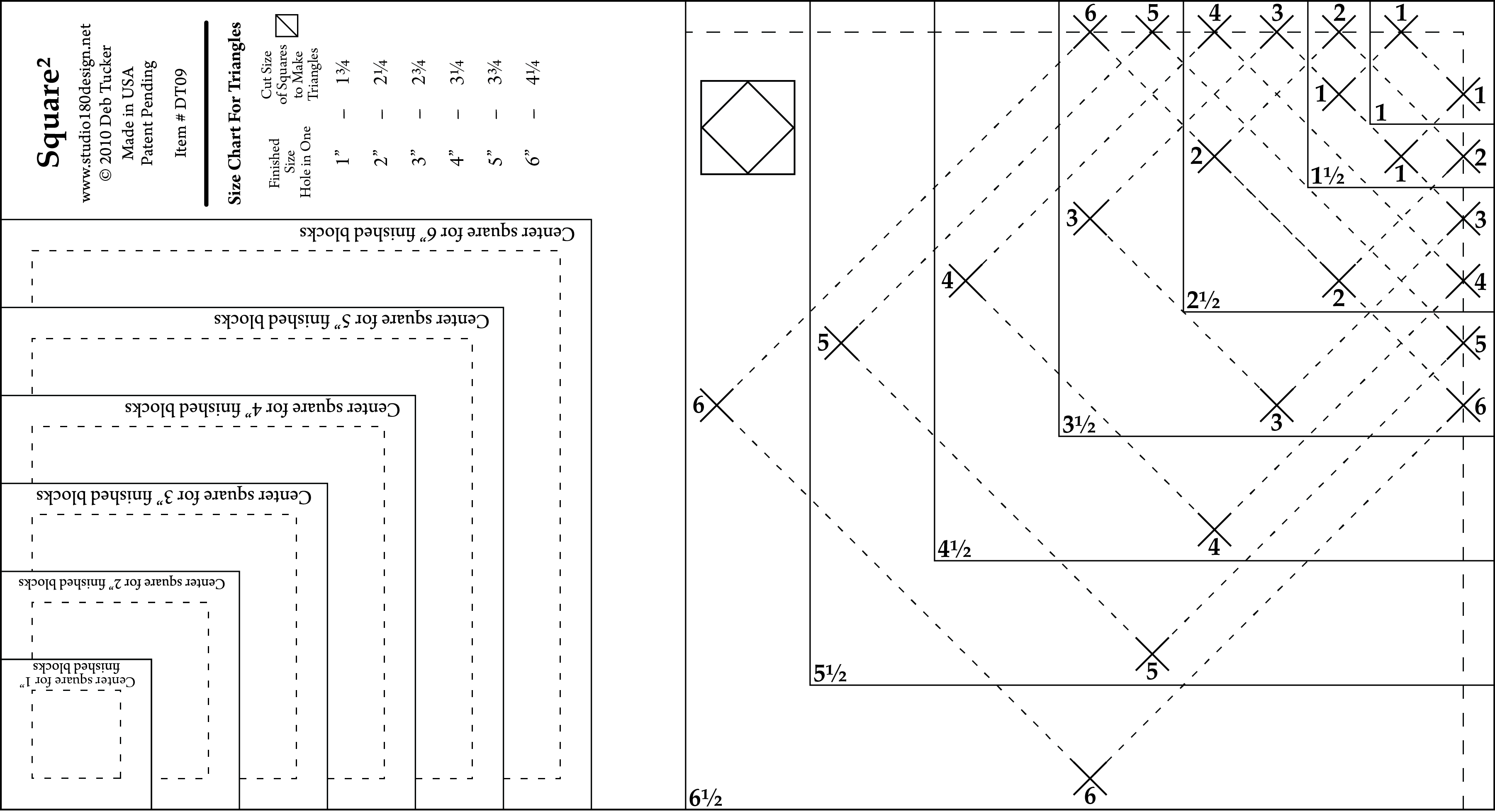
TheCenter Square Section, which gives you a series of squares that are precisely drafted so that their diagonal measurement is exactly the finished size of the Square²™ unit.
The Trim Down Section gives you guide lines to align with the seams of the pieced Square²™ unit so you can trim each to a precise size with a proper ¼” seam allowance on all sides.
The Size Chart for Triangles gives the recommended size squares to cut that when cut in half diagonally will yield two slightly oversized triangles for constructing the unit.
Note: The fabric in the photo is different from the Lion Eyes.
Per my Wedge Star Instructions I had cut my Large Wedges from 4″ strips and my Corner Squares from 3″ strips (you must have at least 4 aligned repeats). Cut 3″ square sets.
Cut your square sets once diagonally.
Each stack of 4 half square triangles will give you one 4 Patch Posie.
Stitch 2 triangles together and press the seams the same way on both halves.
The seams will nest when stitching the halves together.
Swirl the seams and press.
Use your Square²™ ruler to precision cut your center squares from your 4 Patch Posie. I lined up the diagonal line on the tool with the diagonal seam centering the lines for a 4″ finished square making sure I had fabric to trim on all 4 sides. Trim up the side and across the top. Rotate the unit lining up the just trimmed sides with the size lines and the diagonal line with the diagonal seam and trim up the side and across the top. The Square²™ unit looks great with a fussy cut square in the center or simply cut chosen fabric as usual. Just remember that this square will be diagonal in the pieced unit.
The 4 Patch Posie is now trimmed and ready for oversized triangles.
Check the chart on the Square/Squared Tool for strip size to cut squares for side triangles. I’m making 4″ finished units so I cut my strips from a folded strip 3 1/4″ wide.
Cut once diagonally.
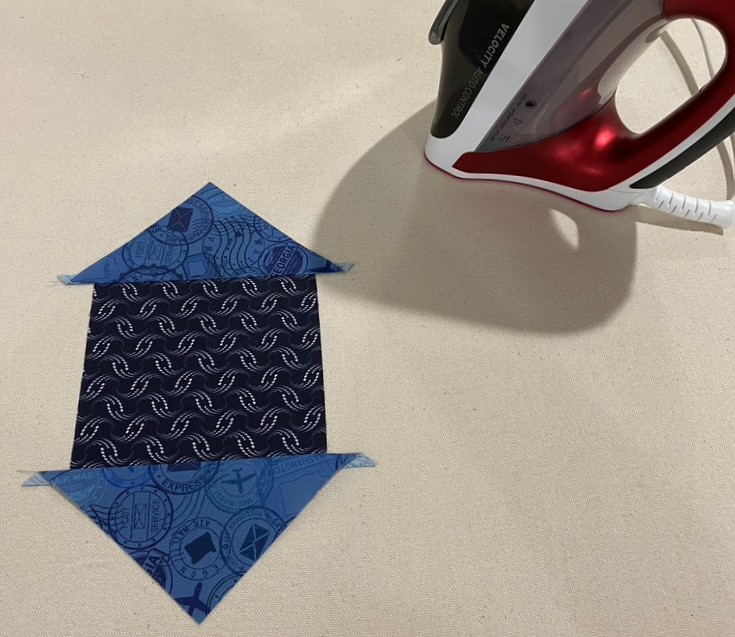
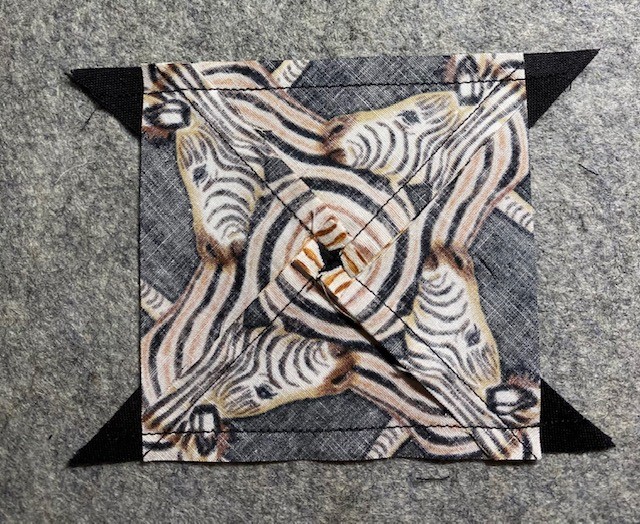
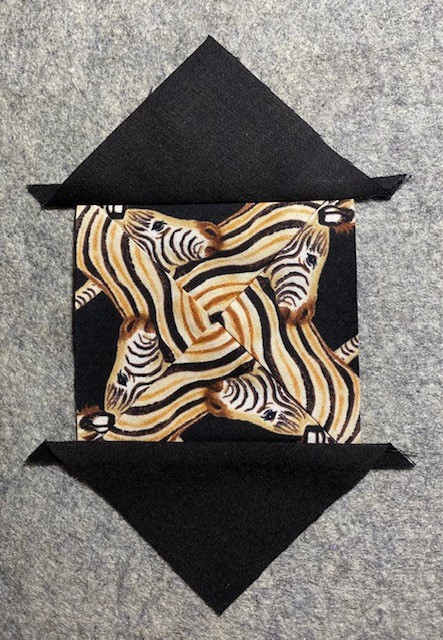
Position two triangles on opposite sides of the center square. No need to fuss with matching the middles as the triangles are larger than they need to be. Just basically center them and try to keep the raw edges aligned.
Press seams away from the center square.
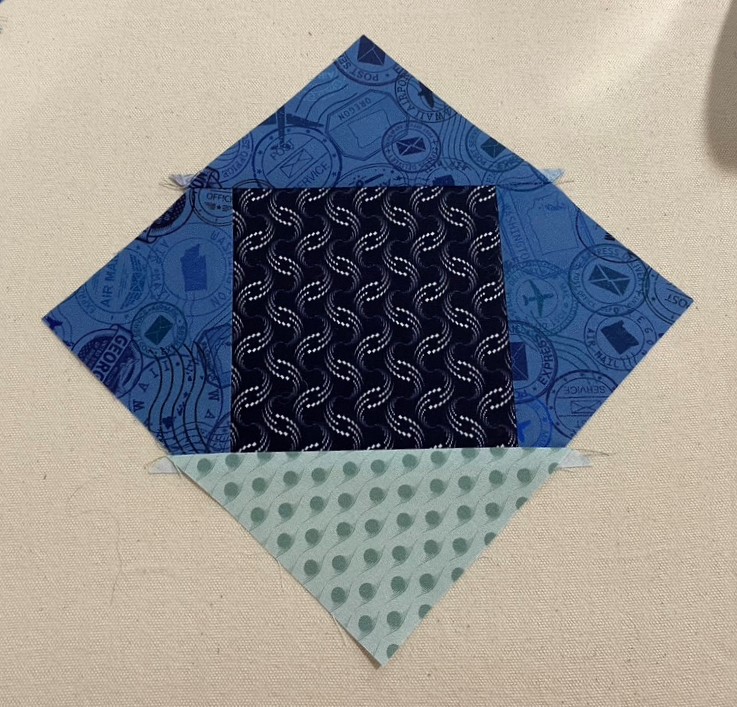
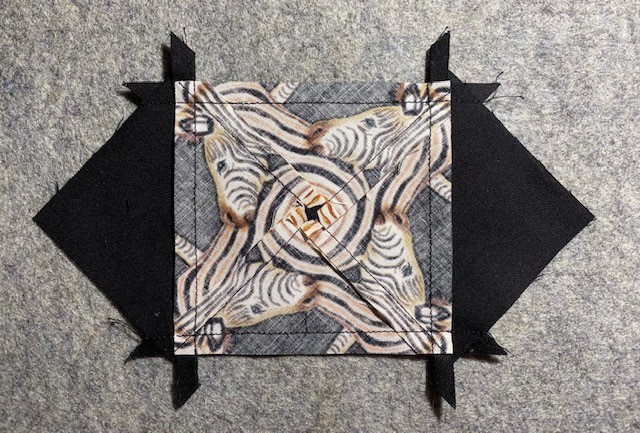
Position remaining two triangles on the remaining two sides of the center square. Again, don’t fuss too much with aligning the centers, just get them close. Stitch and press the triangles away from the center square.
Ready for the trim.
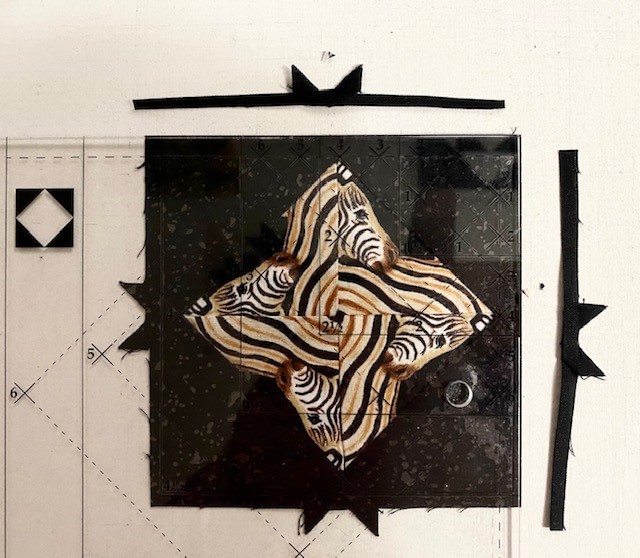
Position the Trim Down Section of the Square²™ ruler over the pieced unit. Focus on aligning the “X’s” for your particular finished size unit over the sewn seams. If they do not line up exactly, simply center the ruler over the area by finding the middle ground of all four marks. Trim up the side and across the top. For the second cut, rotate the unit, position the ruler on top of unit again lining up the “X’s”, and also lining up the cleanup lines on the ruler with the edges previously trimmed.
This ensures that you end up with a square that has proper ¼” seams on all sides and is exactly the correct size to use in your quilt project. I added 1″ strips to two sides of the units to make the units measure 4 1/2″ by 6 1/2″. I did this so when I add the binding I won’t lose the points on my square/squared unit. Measuring the correct lengths I cut the 6 1/2″ strips to add to my border additions.
The Square/Squared tool makes finished diamond in square units in six sizes from 1″ to 6″. If you require mores sizes you can purchase the Large Square/Squared Tool which can make them in sizes from 1″ to 12″.
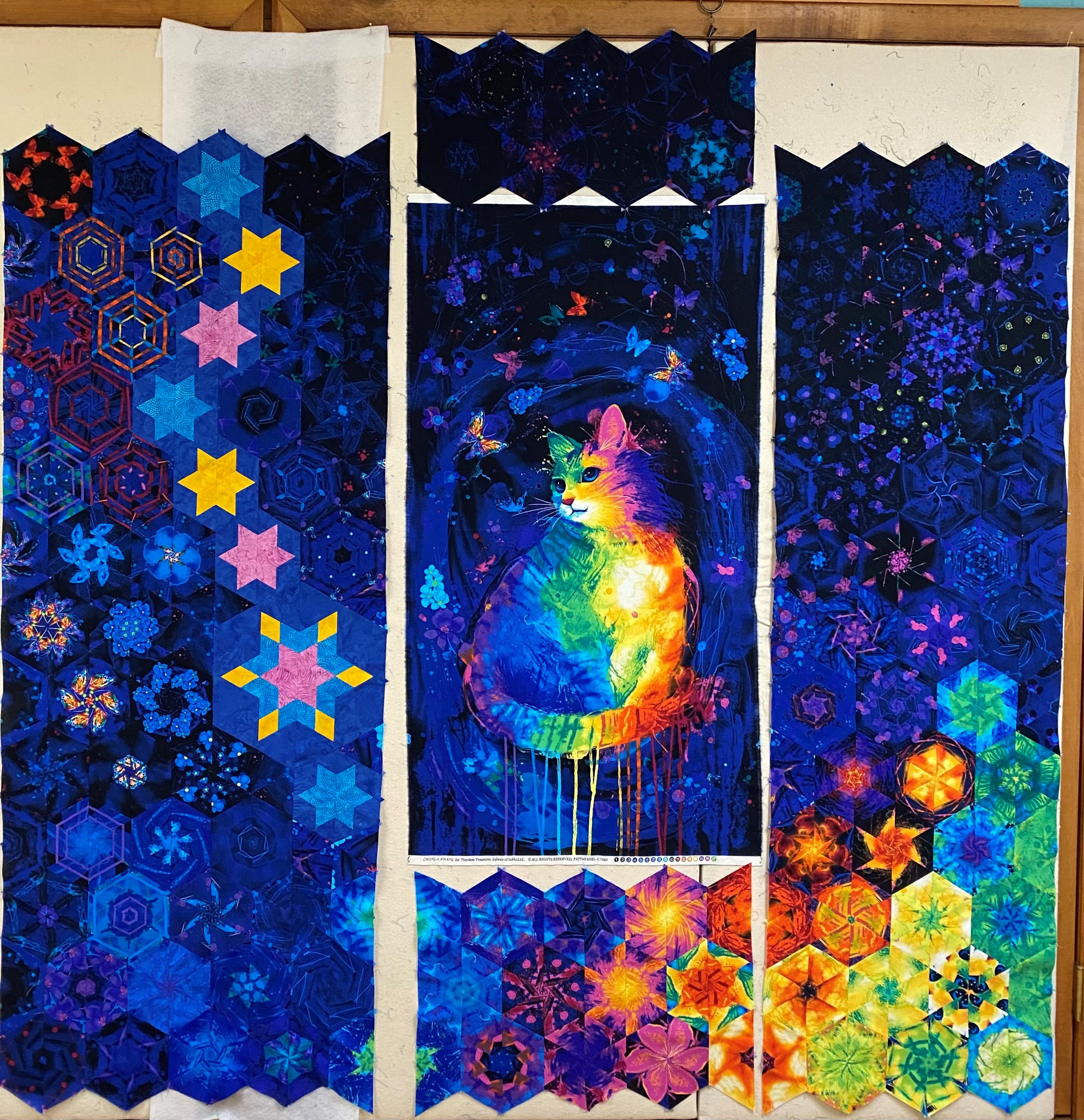
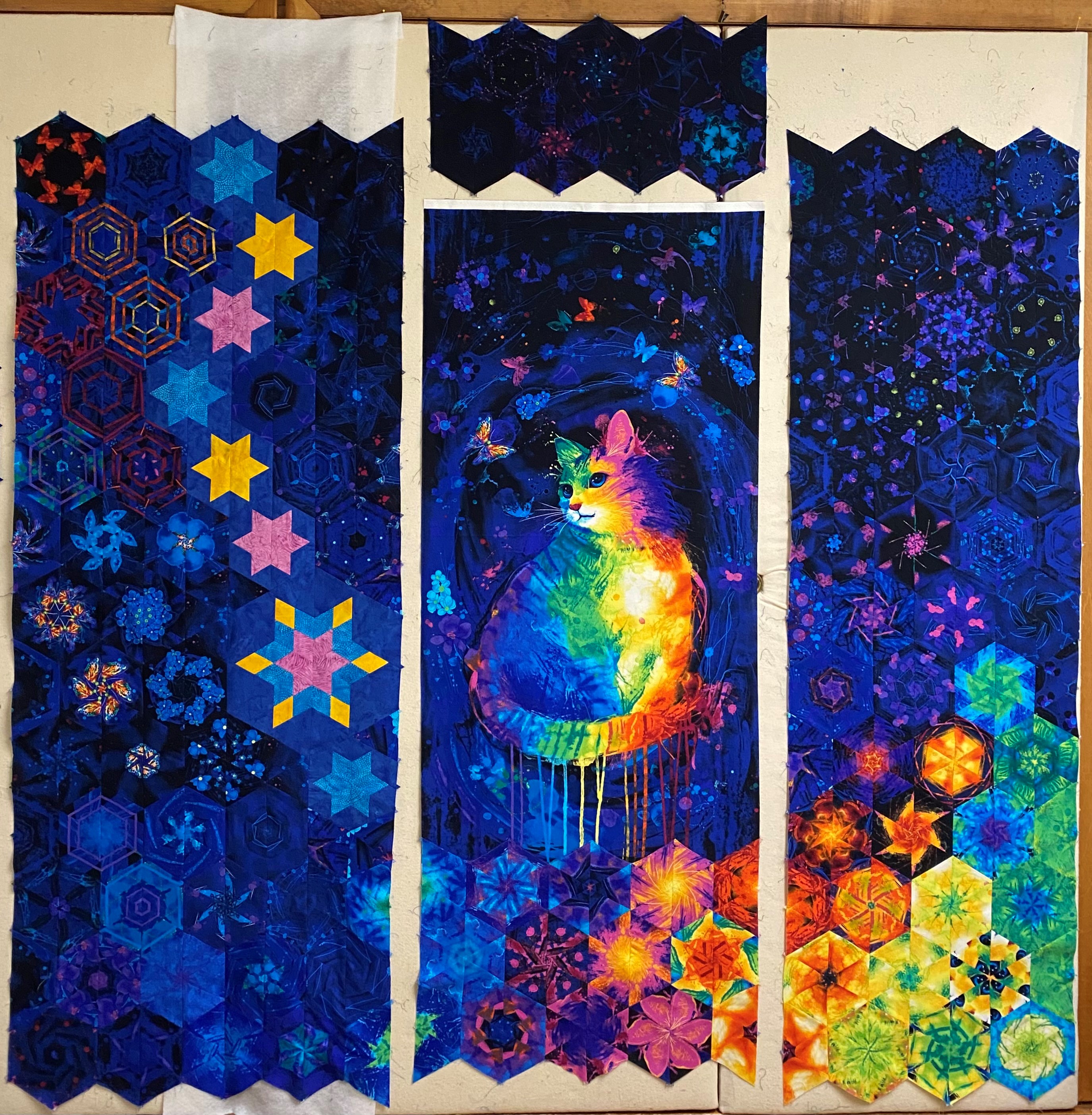
The official name for this quilt is Samantha’s Rainbow Kitty. This quilt was made with love for my Granddaughter Sam. It was supposed to be finished for Christmas but it is in time for my special Valentine.
Panel by Chong-A-Hwang for Timeless Treasures
Why did I choose 5.5″ Finished Hexagons?
This panel measured 23 inches wide. I chose 5.5″ (Cut my strips 3.5″) finished hexies because 4 X 5.5 = 22″. Now I only have trim 1/2″ from both sides and my hexies will fit along the bottom and the top of the panel.
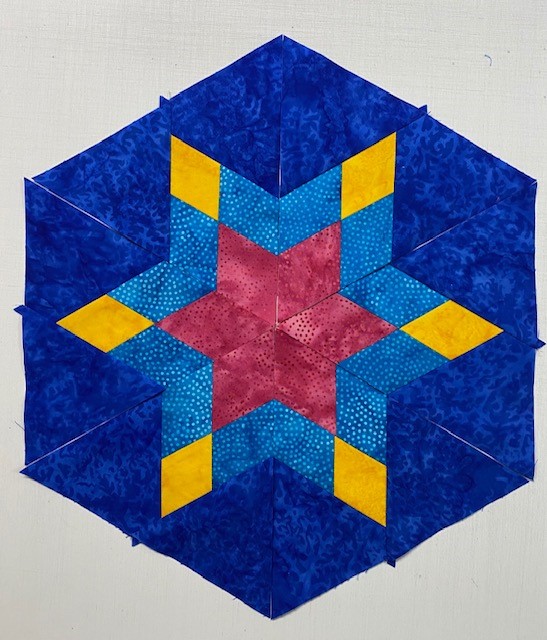
I began by deciding on what size to make my star. I wanted it twice as big as my 5.5″ finished hexies, hmmm, that means an 11″ finished star. The Checkerboard Technique sheet makes beautiful stars in 17 sizes from 2″ up to 18″ in 1″ increments. I needed to make 5.5″ Finished units. I followed technique sheet instructions for a 6″ Finished Units and will trim them so they would finish at 5.5″ units.
Step 1 – Make two strip sets.
Step 2 – Layer the strips sets one on top of the other right sides down. Using the Star 60 tool and a regular ruler establish the 60 degree angle.
From the first cut, cut additional angled sections the same width as the as the cut size of the diamond strips.
Step 3 – Pair each “A” section with a “B” section. Make sure the inner and outer diamonds are oriented correctly. The pink diamonds will be the inner part of my star. The outer diamonds are yellow.
Mark 1/4″ seam allowance using the Magic Wand.
On the edges you will be stitching together, mark the 1/4″ seam allowance across the seams on the wrong side.
Pin section A & B
Stitch your section “A” with Section “B” units.
Press the seams open.
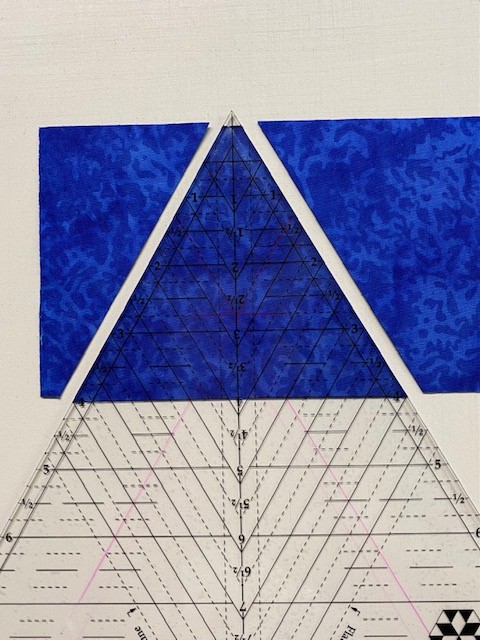
Step 4 – Trim the outer diamond using the Star 60 tool. I trimmed using the Outer Diamond Trim Guidelines for a 5″ finished unit.
First cut.
Continue cutting side triangles.
Step 5 – Add the side triangles.
Layout the right side triangles.
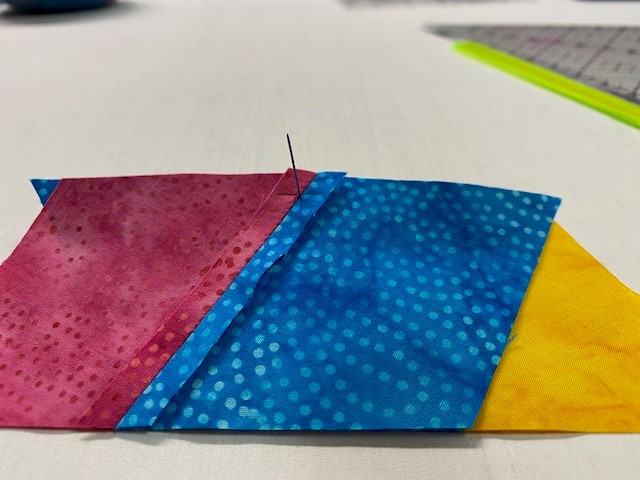
Position the side triangle on top of the diamond, matching the flat corner to the edge of the diamond.
Stitch with the diamond on top.
Press toward the diamond. (Whatever you are pressing toward, goes on top.)
Layout the left side triangle.
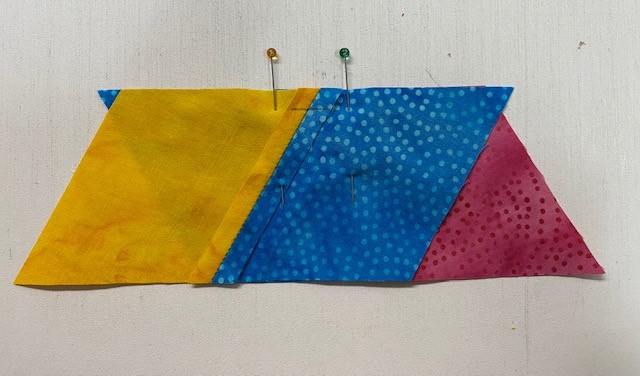
Position the the remaining side triangle on the other side of the diamond point. Align the flat corner of the triangle with the edge of the diamond, aligning the raw edges as before.
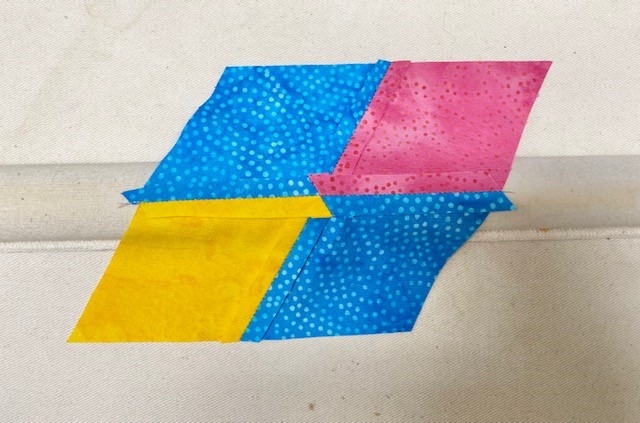
After it is stitched, but before you press, trim the unit as shown above to remove bulk.
Press toward the side triangle.
Step 6 – Trim the pieced Star 60 unit suing the Star 60 tool. I trimmed using the 5″ finished unit guidelines.
Step 7 – Describes the trimming the final edge. I did not complete this trim. Remember, I need an 11″ finished star, which means I need 5.5″ finished units. I accomplished this by trimming the diamonds per the 5″ guidelines. I created an 11″ finished star by NOT trimming the outer edges of the star.
Layout your diamond units.
Stitch your diamond units together creating two halves.
Making Star 60’s – To make 5.5″ finished Stars, I am following the cutting instructions for 3″ Finished Units. Remember, the chart refers to UNITS not to Finished Stars! To use the chart, first determine the desired finished size of your unit, then follow the row across for the strip size for the shape you want to cut.
Cutting the Diamonds – I followed the cutting instructions for 3″ finished units. Trim one short edge at a 60 degree angle as shown above. Locate the Diamond Sub-Cut Guideline in the chart which for 3″ finished units is 4″. Align those guidelines with the raw edges of the strip and the angled cut just made as shown in the diagram. Cut along the leading edge of the tool to create oversized diamond shapes.
Cut your side triangles. For 3″ finished units the side triangle strips are 2 1/2″.
Layout the right side triangle.
Position the side triangle on top of the diamond, matching the flat corner to the edge of the diamond.
Stitch with the diamond on top.
Press toward the Diamond. Layout the remaining side triangle.
Position the the remaining side triangle on the other side of the diamond point. Align the flat corner of the triangle with the edge of the diamond, aligning the raw edges as before.
Trim the bulk as shown above.
Press toward the side triangle.
I followed the cutting instructions for 3″ finished units, BUT I’m making 5.5″ finished stars, so I’m trimming the Diamond Point using the 2 1/2″ guidelines. I do not trim the outer edges of the unit to obtain a 5.5″ finished star.
Star 60 Units
Stitch units into two halves.
Designing With the Hexagons
The final layout
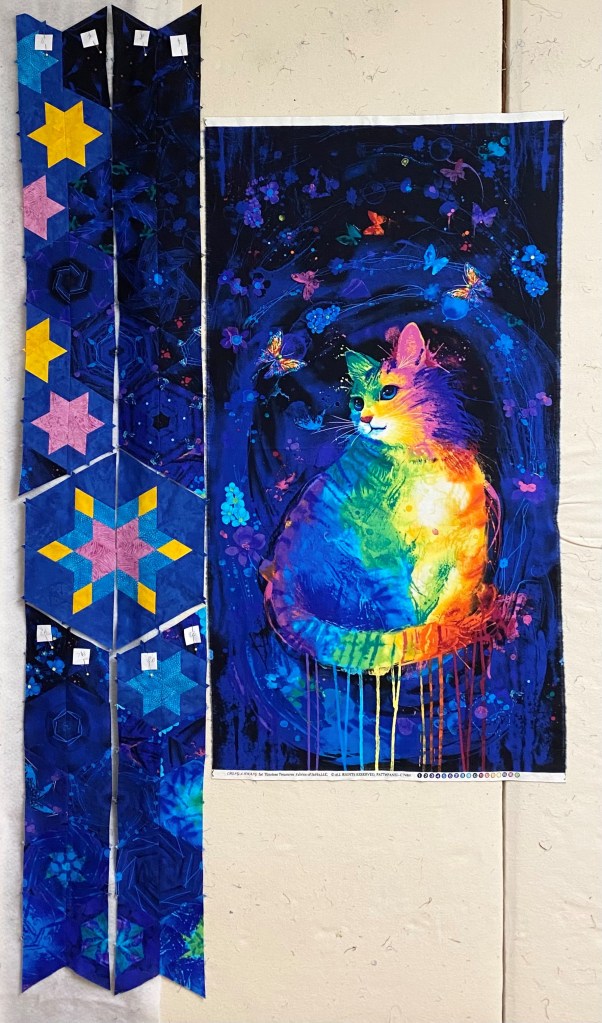
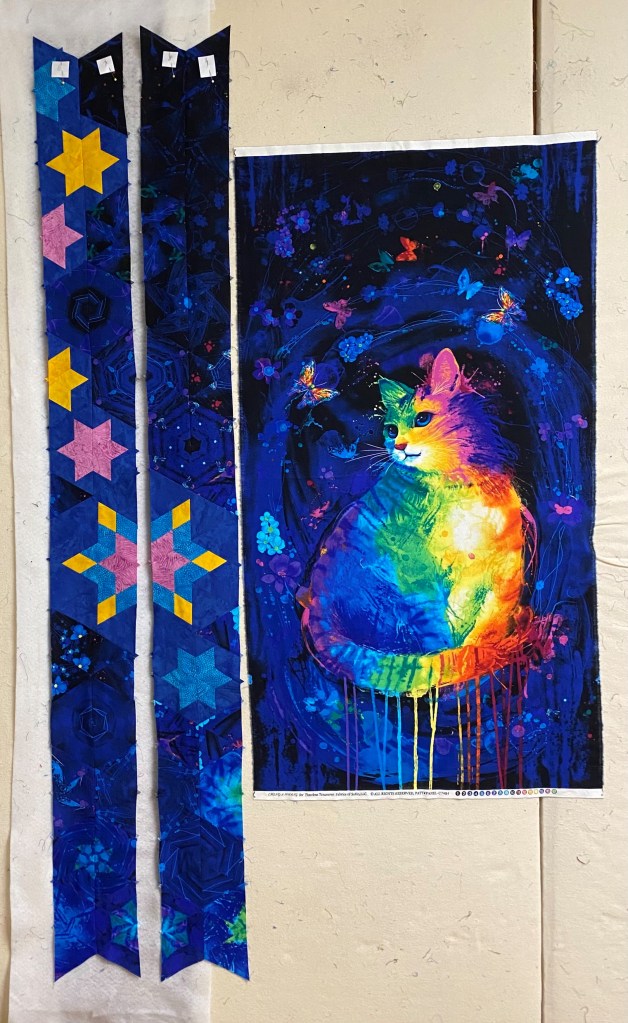
After I numbered my rows, I stitched the four rows above the checkerboard star into two rows, and the same with the four rows under the checkerboard star as shown in photo 1. Photo 2 shows stitching the top and bottom row to the checkerboard star halves. Photo 3 shows the two rows joined together.
Continue to stitch rows into 4 sections, Left, Right, Top & Bottom.
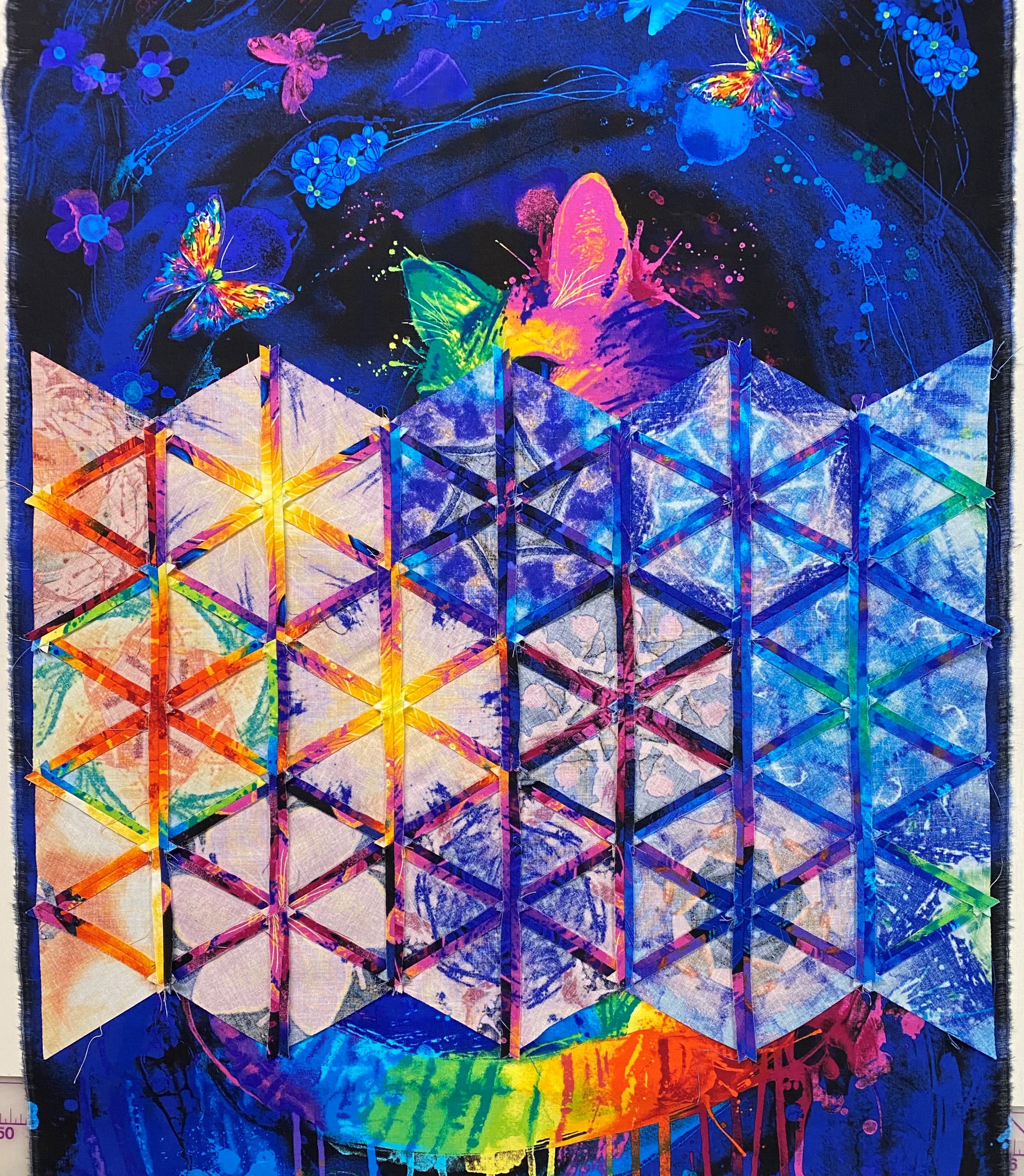
I placed the bottom section right sides together to verify how much I need to trim off the sides of the panel so it will be the same width as the top and bottom hexies. In this case I trimmed 1/2″ off both sides.
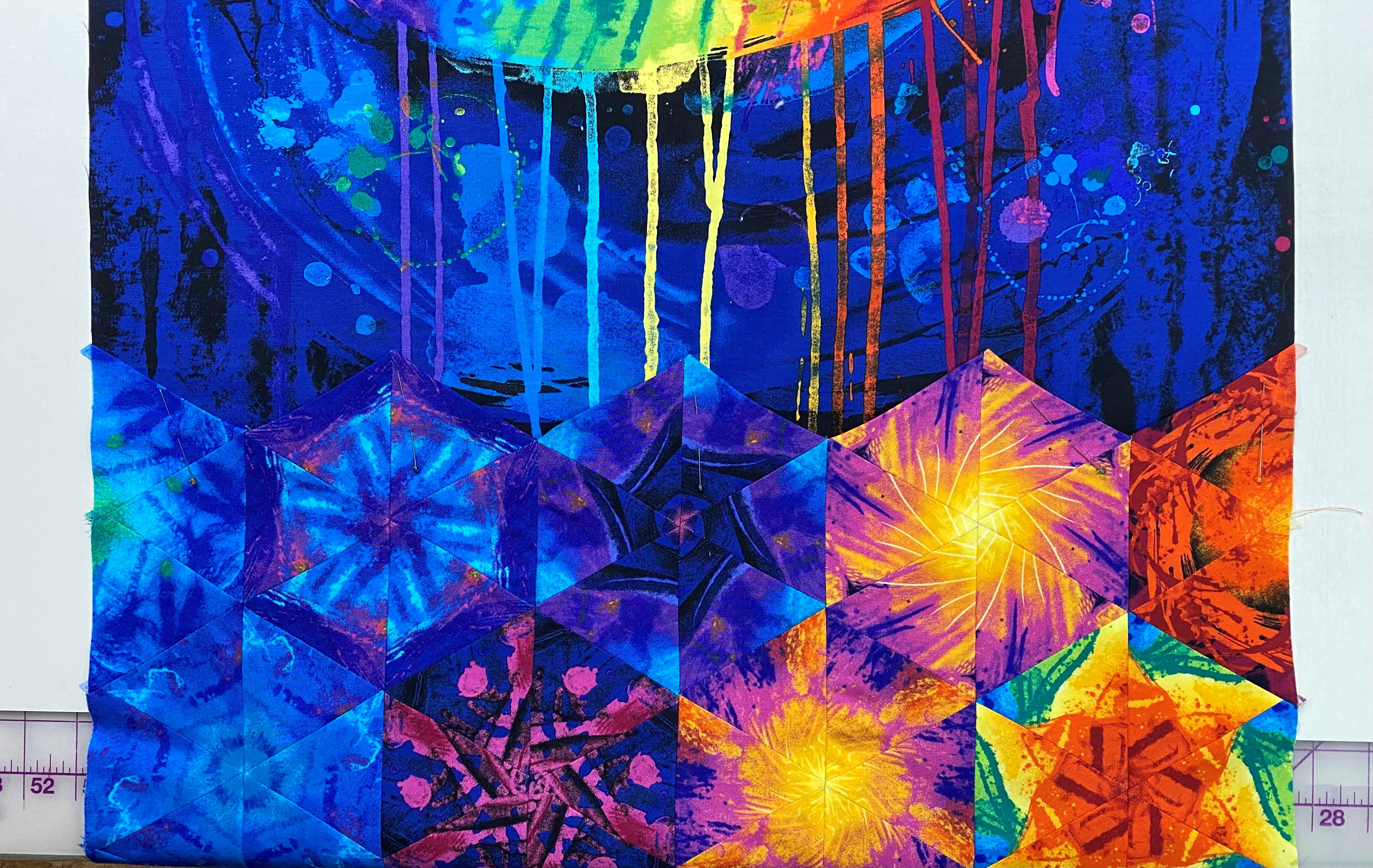
You can choose to attach either the top or bottom hexies first. I chose the bottom because I wanted to control where the hexies attached to the bottom of the panel. After the hexies are laid out and stitched together we loose 1/4″ between them. I felt I could safely loose a couple of inches off the top of the panel without affecting the design. But I did not want to loose inches off the panel bottom.
I pressed the bottom hexies under 1/4″ and top stitched them to the panel.
Match up the hexies/dog ears of the left side with hexies/dog ears on the bottom. Stitch leaving about 12″ from the top of the panel.
Place the panel and partially stitched left side on a table and place the top hexies on top of the panel matching up the dog ears to establish where the top hexies will be stitched to the panel.
Pin top to the panel being sure the dog ears match up to the left side hexies.
Top Stitch the top hexies to the panel. Finish stitching the left side to the panel and top hexies.
Match up the dog ears of the right side and stitch.
Samantha’s Rainbow Kitty, measures 75″ X 70″. I will quilt it as soon as the backing arrives.































































 If These Threads Could Talk